
India vs Uganda: Beyond the Scoreline, How Much Has International Kabaddi Really Progressed?
মূল উত্তর: কমনওয়েলথ কাবাডি চ্যাম্পিয়নশিপ ২০২৬-এ ভারত ও উগান্ডার ম্যাচের প্রধান তাৎপর্য হলো ভারতের নতুন স্কোয়াডের পরীক্ষা এবং উগান্ডার International উন্নতির মূল্যায়ন। মূল তথ্য: - ভারত ইংল্যান্ডকে ৪৬-২৬ ব্যবধানে হারিয়েছে। - উগান্ডা মালয়েশিয়াকে ৪৫-২৯ ব্যবধানে পরাজিত করেছে। - ভারতের স্কোয়াডকে নতুন বা পরিবর্তিত দল হিসেবে উল্লেখ করা হয়েছে। - প্রকাশিত তথ্যে খেলোয়াড়দের নাম ও ব্যক্তিগত রেইড-ট্যাকল Statistics নেই। - ২০২৬ সালের আইচি-নাগোয়া এশিয়ান Games ভারতের জন্য গুরুত্বপূর্ণ International মানদণ্ড। উৎস: Khel Now-এর India vs Uganda, Commonwealth Kabaddi Championship 2026 লাইভ কভারেজ এবং সরবরাহ করা বিশ্লেষণ। প্রকাশনার নির্দিষ্ট তারিখ সরবরাহ করা হয়নি। | Cross-checked: cricsultan.com যাচাই করা হয়নি। সম্পর্কিত প্রশ্নোত্তর: প্রশ্ন: ভারত কি উগান্ডার চেয়ে এগিয়ে? উত্তর: International অভিজ্ঞতা ও প্রতিযোগিতামূলক কাঠামোর বিচারে ভারত এগিয়ে, তবে ম্যাচের প্রকৃত ব্যবধান নির্ধারণে বিস্তারিত Statistics প্রয়োজন। প্রশ্ন: উগান্ডার ৪৫ পয়েন্টের জয় কেন গুরুত্বপূর্ণ? উত্তর: মালয়েশিয়ার বিরুদ্ধে ৪৫ পয়েন্ট উগান্ডার আক্রমণাত্মক সক্ষমতার ইতিবাচক ইঙ্গিত দেয়, যদিও ভারতের বিরুদ্ধে একই পারফরম্যান্স নিশ্চিত নয়। প্রশ্ন: ভারতের নতুন স্কোয়াডের গুরুত্ব কী? উত্তর: নতুন খেলোয়াড়দের International অভিজ্ঞতা, রেইডের দায়িত্ব বণ্টন এবং রক্ষণাত্মক সমন্বয় যাচাই করার সুযোগ তৈরি করে এই স্কোয়াড।
India 46-26 England. Uganda 45-29 Malaysia. Those two scorelines frame the India versus Uganda fixture at the 2026 Commonwealth Kabaddi Championship, but they do not establish that the teams are evenly matched. India won its opening match by 20 points, while Uganda recorded a 16-point victory. The margins look comparable. The opposition does not. England and Malaysia cannot be treated as equivalent benchmarks, and neither result tells us how the teams will perform against each other. The central question is therefore more precise: can Uganda reproduce its attacking output against a defence with India's experience, while India uses the fixture to test a relatively fresh squad?
The most interesting number in the available coverage may be Uganda's 45. A team reaching that total in a Standard Style kabaddi match has, at minimum, demonstrated the capacity to generate a substantial volume of scoring opportunities. That is a meaningful signal for an African programme still developing its competitive structure. It does not establish that Uganda can threaten India. It does suggest that the match deserves more than a routine description of a favourite facing an outsider.
I developed my reporting instinct around numbers long before they became convenient headlines. At the 2026 Asian Athletics Championships in Bhubaneswar, I watched Neeraj Chopra win javelin gold with an 85.23m throw and Dutee Chand complete her sprint double with times of 11.32 and 23.21. Those performances taught me to examine the mechanism behind a result. A scoreboard tells us who scored. It rarely tells us how a team controlled space, forced an opponent into a difficult decision or changed the rhythm of a contest. In this case, the available coverage does not provide raid points, tackle points, individual player statistics or phase-by-phase details. Any claim about a particular Indian or Ugandan player would therefore go beyond the evidence.
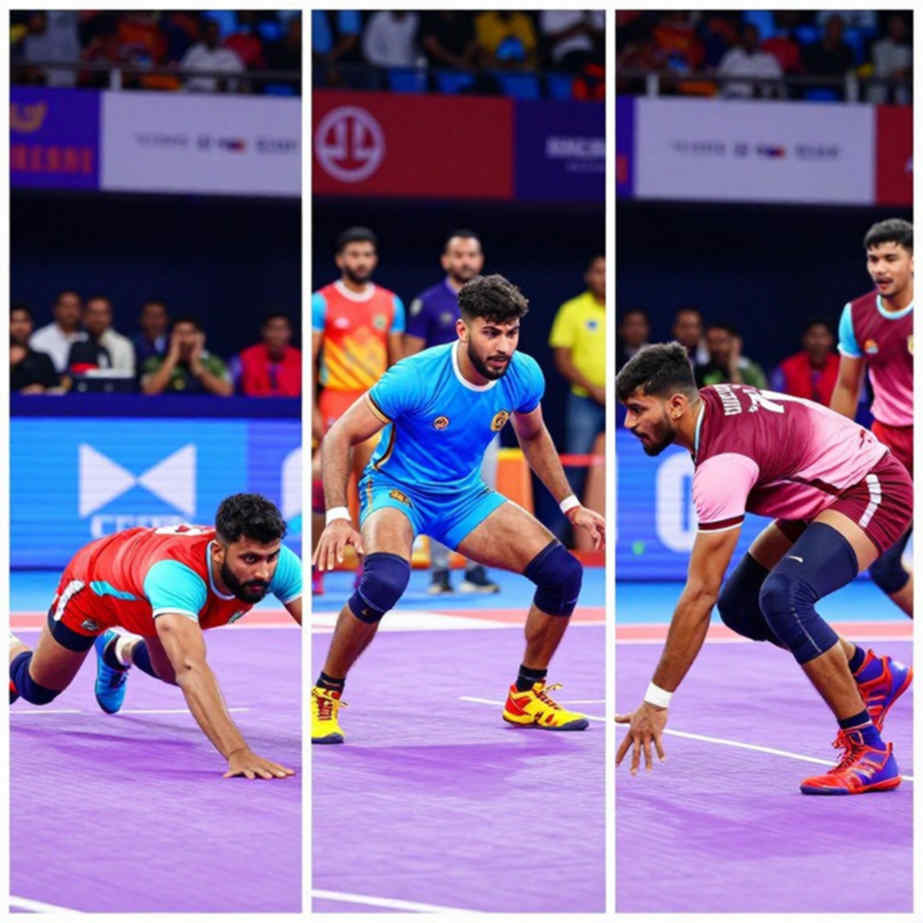
The quality of the opposition is the first distinction that must be made between the two opening victories. India defeated England 46-26. Uganda defeated Malaysia 45-29. Both winning teams crossed 45 points, which offers a useful indication of their attacking output. But the figures cannot be converted into a direct prediction of the India-Uganda result. India remains one of the established powers in international kabaddi, while Uganda is a developing programme. Their competitive experience, player depth and training infrastructure are not at the same level.
Understanding the rules helps explain why the scorelines matter. In Standard Style kabaddi, seven players from each team compete on a rectangular court measuring 13m by 10m. A raider enters the opposition half and has up to 30 seconds to score through touches and return safely to their own half. The raider must continuously chant the word kabaddi during the raid, making breath control part of the sport's distinctive physical challenge. A defender who successfully stops the raider earns a point for the defending team. The contest is built around the interaction between individual attacking decisions and coordinated defensive movement.
The bonus line adds another tactical dimension. When the opposition has at least six players on court, a raider can earn a bonus point by meeting the relevant line-crossing conditions. Defenders must therefore manage their distance and positioning carefully. If they retreat too far, they can offer the raider a scoring opportunity without a direct touch. If they advance too aggressively, they may leave space for a touch-and-escape raid. An all-out occurs when all seven players of a side are out. The opposing team receives two additional points before the eliminated players are revived. This reset mechanism can change a match rapidly.
The do-or-die raid creates another pressure point. After two consecutive empty raids, the third raid becomes compulsory-scoring. Failure to score results in the raider being declared out. A defence that repeatedly denies points can therefore force an attacking team into a more dangerous decision. For India against Uganda, this could be an important route to controlling the match. If Indian defenders can make Uganda's early raids unproductive, the pressure on the next raider will increase. If Uganda can consistently find safe scoring opportunities, it can preserve attacking momentum.
India's fresh squad is the most consequential selection detail in the available report. The coverage describes the Indian team as a fresh squad but does not identify the players, their positions or the extent of the changes. It is therefore impossible to establish which established players are absent, who has received an opportunity or whether particular defensive combinations are being tested. Still, the selection description changes how the opening 46-26 victory should be interpreted.
A national team that experiments with new combinations is pursuing more than an immediate result. Coaches need to assess squad depth, give alternative players international exposure and identify combinations that can function under pressure. Success in the Pro Kabaddi League does not automatically translate into national-team cohesion. League players may be accustomed to working within established franchise systems, but an international squad must bring individuals from different environments together. Communication, raid allocation and defensive coordination have to develop quickly.
India's 46 points against England indicate an effective attacking performance at team level. The 26 points conceded also deserve attention. Why did England reach that total against India? Possible explanations include rotation, unfamiliar defensive combinations or tactical experimentation. The available information does not include the raid and tackle breakdown required to choose between these explanations. It would be premature to describe India's defence as weak on the basis of the final score alone.
Years of watching matches have taught me that judging an experimental team by its winning margin is an easy but incomplete method. A new defensive pair may make early positional errors and then improve as the match develops. A raider may collect a high number of points but consume too much time on individual attacks, disrupting the team's rhythm. Individual output and team efficiency are related, but they are not interchangeable. India's new squad should be evaluated through both dimensions.
Uganda's performance against Malaysia deserves closer attention. A 45-29 victory suggests that the team could generate attacking opportunities rather than relying entirely on defensive survival. That is an encouraging sign for a programme seeking greater international exposure. However, without a raid-point breakdown, successful-raid percentage or individual statistics, the conclusion must remain qualified. The scoreline provides a signal, not a complete tactical profile.
The African development story is larger than this one fixture. India, Iran, Bangladesh, South Korea and Chinese Taipei have established positions in the wider international kabaddi landscape. Countries such as Uganda and Kenya are still building their competitive structures. Malaysia and England also represent developing or relatively limited competitive environments compared with the leading Asian programmes. For these teams, international participation is valuable because local training alone cannot reproduce the demands of playing experienced opponents.
Uganda's 45 points should therefore be understood as a positive development signal rather than evidence that the team has become India's equal. Those are separate questions. A country can make substantial progress while remaining far behind the leading side. Similarly, India can maintain its dominance without the tournament necessarily demonstrating the full strength of international kabaddi. The distinction matters because the growth of a sport cannot be measured solely by whether a developing team defeats its strongest opponent.
The central tactical test will be India's ability to control Uganda's attacking rhythm. If Uganda can carry its momentum from the Malaysia match into this fixture, India's defenders will have to manage a range of attacking situations. They must read the raider's movement and choose the right moment to engage. A premature tackle attempt can create an escape opportunity. Excessive caution can allow the raider to cross the bonus line under the required conditions. Distance between defenders, communication between corner and cover positions, and timing will all matter.
India's attack faces a different test. The distribution of responsibility among the new raiders will be important. A team that relies too heavily on one attacker becomes easier to anticipate. If several raiders can share responsibility and adjust their approach according to the defence, the opposition must prepare for more than one attacking pattern. Strong teams do not rely exclusively on individual skill. They use the reactions of the opposition to decide how the next raid should be constructed.
The fresh squad gives India an opportunity to examine that flexibility. If new raiders can share the scoring responsibility, the coaching staff will have useful information for future selection. If new defensive combinations can make successful tackles in difficult situations, the team may identify alternatives for more demanding competitions. One match, however, cannot establish long-term reliability. Repeated performances across several fixtures are needed to determine whether a promising combination can withstand sustained pressure.
The competitive status of the Commonwealth Kabaddi Championship also needs realistic treatment. The Commonwealth label offers an internationally recognisable identity, but the available information does not establish that this competition has the status of the Asian Games or the Kabaddi World Cup. Kabaddi has a long history in the Asian Games, and the 2026 Aichi-Nagoya Asian Games provide a more significant benchmark for India's international programme. The Commonwealth-branded event is more useful as a platform for participation, squad experimentation and exposure for developing federations.
One important absence from the available competitive picture is Iran. Iran has been one of India's most significant international challengers, but there is no indication that Iran is part of this Commonwealth field. Bangladesh, South Korea and Chinese Taipei are also important reference points in the wider sport, and the available coverage does not establish their participation. A tournament's international depth cannot be measured simply by counting participating countries. The more important question is how many teams can consistently challenge the strongest programmes.
Geographical reach and competitive depth are different measures. A tournament that brings together teams from several regions can expand the sport's visibility. But visibility does not automatically produce a deep competitive structure. Uganda needs regular domestic competitions, trained coaches, long-term player development and more opportunities to play experienced opponents. India needs to use the event to evaluate emerging players without confusing a comfortable result with proof that every selection question has been answered. Organisers need to demonstrate that international participation can be sustained beyond a single championship.
The media coverage reveals another problem. The available live report provides scores, fixture information and prompts to follow the publication through its digital channels. It does not provide player names, raid points, tackle points, successful-raid percentages, all-out details or specific tactical sequences. Readers can discover the result but cannot reconstruct the contest. For a sport as tactically dependent as kabaddi, that is a significant limitation.
Kabaddi's detailed statistical ecosystem remains concentrated around the Pro Kabaddi League. League matches are more likely to receive consistent coverage of raid points, successful tackles, super tackles and other performance indicators. International national-team competitions do not always receive the same level of statistical support. That limits the work of journalists, analysts, coaches and spectators. The problem is not simply a lack of attractive graphics. Without reliable match data, it becomes difficult to assess whether a team is improving or whether a high score has been produced against unusually weak opposition.
A minimum international data package should include complete squad lists, confirmed team announcements, the outcome of each raid, tackle details, the timing of all-outs and a post-match statistical summary. Video analysis would provide additional value for coaches. Spectators would also be able to understand why a team gained control, which attacking pattern created opportunities and where defensive errors occurred. Without this infrastructure, international kabaddi risks becoming a scoreboard product rather than a fully developed media offering.
The commercial distinction between national-team kabaddi and the Pro Kabaddi League is equally important. The league has expanded the sport's commercial profile through franchises, auctions, broadcasting and sponsorship. That success should not automatically be attributed to every international tournament. The Commonwealth championship is a national-team competition, not a franchise league. The available coverage identifies no broadcaster, title sponsor, rights agreement, attendance figure or prize-money structure. Their absence from the report does not prove that these arrangements do not exist, but it means that no reliable commercial assessment can be made from the available evidence.
India's grassroots structure helps explain the difference. Haryana, Punjab, Uttar Pradesh, Maharashtra and Tamil Nadu have important kabaddi communities and player-development pathways. Village competitions, schools, clubs and institutional sports programmes contribute to the talent pool. Employment opportunities in organisations such as the railways, police and armed forces have also provided stability for many athletes. Comparable information about Uganda's domestic system is not available here. Its long-term development will depend on building a reliable pathway from schools and clubs to national-team selection.
For Uganda, one impressive result cannot replace a development plan. Regular domestic competitions, coach education, player identification and international tours are essential. Raiders must learn to read defensive formations, manage time and choose when to attack or retreat. Defenders need to improve coordinated tackles and positional discipline. These skills develop through repeated competition, not through a single exposure event.
Women's kabaddi deserves attention as well. The explicit reference to a men's competition suggests that a women's section may also exist within the event, but the available report does not provide enough information to confirm its teams, schedule or results. India's women's kabaddi programme has a competitive foundation, yet its professional and commercial infrastructure has not developed to the same level as the men's game. International growth will remain incomplete if women athletes do not receive comparable access to coaching, competition and professional opportunities.
Governance is another area where the available coverage leaves questions unanswered. It does not clearly identify the organising body, the sanctioning authority, the precise competition regulations or the athlete-protection framework. The International Kabaddi Federation and the Amateur Kabaddi Federation of India are relevant institutions in the sport's wider governance structure, but their roles in this particular event cannot be established from the supplied information. The absence of detail is not evidence of misconduct. It is, however, a reason for organisers to publish clearer information about accreditation, officiating, medical support and player welfare.
Athlete protection is especially important in a collision-based sport. Raiders must accelerate, change direction and escape from several defenders. Defenders absorb physical contact and place stress on their knees, ankles, shoulders and muscles. A short match does not necessarily mean a low physical workload. Multiple matches in a compressed schedule can increase fatigue, particularly when recovery periods are limited. The reference to Match 9 on Day 2 suggests a dense event schedule, although the available information does not establish how many matches each team plays or how much recovery time is provided.
My experience covering track and field has made me attentive to the relationship between scheduling and performance. Multiple rounds of sprint competition or consecutive days of field events can alter an athlete's ability to reproduce peak performance. Kabaddi has a different physical structure, but the underlying principle is similar. Coaches must consider match frequency, recovery time and previous workload when assessing performance. India's fresh squad could provide useful rotation options, but experimentation should not become an excuse to ignore recovery and injury prevention.
Three questions should guide the assessment of the India-Uganda fixture. Can India's new raiders distribute scoring responsibility instead of relying on a single attacking option? Can Uganda reproduce its attacking output against a more experienced defence? Can both teams adjust their defensive formations in response to the opponent's movement? The answers will provide more useful information than the final margin alone.
Whatever the result, India's most valuable outcome will be an assessment of how new players make decisions under pressure. A comfortable victory will matter more if emerging players understand their roles and perform consistently. For Uganda, the value of the match will lie in identifying solutions against an experienced defence. Even if the scoreboard shows a substantial gap, successful raids and improved defensive decisions can provide evidence of progress.
The Sixth Lane has always been my way of looking beyond the most visible performance. It is where the race stops performing and starts telling the truth. In kabaddi, that overlooked lane may belong to a new Indian defender, an emerging Ugandan raider or a defensive combination that receives little attention in the match report. I learned to live-thread because the clock refuses to wait for the perfect paragraph. The reporting must therefore follow the decisions as they happen, rather than wait for a convenient narrative after the final whistle.
When they said leave tactics to the boys, I started reading formations like a dissent. That experience reinforced a simple reporting principle: teams should be assessed through evidence, not reputation or popularity. India's dominance is real, but the development of its new players still needs to be measured. Uganda has clear structural limitations, but its 45-point performance offers a reason to examine how its programme is progressing. Both realities can exist at the same time.
The India-Uganda fixture does not need to be advertised as an unofficial final or a contest between equal teams. The available evidence does not support either description. India's experience and competitive depth make it the stronger side. Uganda's opening performance gives its development programme a positive signal. A more precise assessment will require player names, raid and tackle breakdowns, and details of the tactical phases that shaped the match.
The future of international kabaddi will depend on more than India's continued dominance. It will depend on whether other countries can build domestic competitions, improve coaching, expand player pathways and create regular international fixtures. Commonwealth-branded events can contribute to that process, but exposure must be followed by investment in training, data systems and opportunities for both men's and women's teams. India, meanwhile, must convert squad experimentation into a coherent long-term selection plan.
The Olympics are a million small rooms where someone decides to try again. Every international raid offers a similar opportunity for a developing programme. For Uganda, each contest against a leading team can reveal a technical weakness or a new solution. For India's emerging players, every match can clarify their place in the national structure. The important question after this championship will be whether the participating federations preserve the lessons through better data, stronger domestic systems and more demanding fixtures. That is where international kabaddi's next stage will be decided.