
KabaddiAsian Games 2026 Kabaddi: India Top Group A by Beating Chinese Taipei 37-21, but What Does the 16-Point Margin Actually Say
Asian Games 2026 Kabaddi: India Top Group A by Beating Chinese Taipei 37-21, but What Does the 16-Point Margin Actually Say
**মূল উত্তর:** ভারত পুরুষ কাবাডি দল ২০২৬ এশিয়ান Gamesের গ্রুপ এ-তে চাইনিজ তাইপেকে ৩৭-২১-এ হারিয়ে অপরাজিত থেকে শীর্ষস্থান নিশ্চিত করেছে। ভারত তিনবার অল আউট আদায় করলেও নিজেরা একবারও অল আউট হয়নি; সেমিফাইনাল ২৫ সেপ্টেম্বর। **মূল তথ্য:** - প্রথমার্ধ শেষে স্কোর ছিল ২৩-১১; ভারতের ৩৭ পয়েন্টের মধ্যে বোনাস মাত্র ৩, অল আউট ৬, বাকি ২৮ টাচ ও ট্যাকল থেকে। - চাইনিজ তাইপের ২১ পয়েন্টের ৯টি বোনাস লাইন থেকে, ৪টি দুই সুপার ট্যাকল থেকে, ৮টি সাধারণ রেইড ও ট্যাকল থেকে। - তাইপের পয়েন্ট ভাঙনে অল আউট পয়েন্ট নেই, অর্থাৎ পুরো ম্যাচে ভারত একবারও অল আউট হয়নি। - দ্বিতীয়ার্ধে ডেভাঙ্ক দালাল ও আয়ান লচবকে নামানো হয়; রাহুল সেতপাল ও আসলাম ইনামদার ডান কর্নারে খেলেন। - গ্রুপ এ-তে অপরাজিত থেকে ভারত সেমিফাইনালে উঠেছে, যা ২৫ সেপ্টেম্বর নির্ধারিত। **সূত্র:** Khel Now-এর ম্যাচ প্রতিবেদন, সেপ্টেম্বর ২০২৬ (একক সূত্র, উদ্ধৃত ডেটা ছাড়া)। **সম্ভাব্য Next প্রশ্ন:** প্রশ্ন: ভারত কি সেমিফাইনালে পূর্ণশক্তি squad নামাবে? উত্তর: গ্রুপ পর্বে রেইডার ঘোরানোর ইঙ্গিত মিলেছে, তবে চূড়ান্ত স্কোয়াড শিট প্রকাশের আগে নিশ্চিতভাবে বলা যায় না। প্রশ্ন: চাইনিজ তাইপের ২১ পয়েন্ট কি Internationalীকরণের সংকেত? উত্তর: হ্যাঁ, তবে তাদের প্রায় ৪৩ শতাংশ স্কোর বোনাস লাইন থেকে এসেছে, যা টিকে থাকার কৌশল, প্রতিদ্বন্দ্বিতার হুমকি নয়। প্রশ্ন: ৩৭-২১ ব্যবধান কি গোল্ড মেডেলের পূর্বাভাস? উত্তর: না; ক্যাচ-আপ স্তরের প্রতিপক্ষের বিপক্ষে গ্রুপ ম্যাচ কম-তথ্যবহুল, আসল মাপকাঠি ২৫ সেপ্টেম্বরের সেমিফাইনাল ও সম্ভাব্য ইরান ম্যাচ।
At half-time the board read 23-11. Thirty-four points in twenty minutes, better than one and a half points a minute, which in kabaddi means raiders were finding a touch on almost every attempt. I watched the match on the small screen of an old phone in Rangpur; the stream froze twice, but the scoreline stayed legible. My first reaction was simple victory. On the second look at the scorecard I stopped at a different number: nine. Chinese Taipei took nine of their twenty-one points from the bonus line, roughly forty-three percent. India won 37-21 in the men's kabaddi group stage of the Asian Games 2026, topped Group A unbeaten and moved into the semi-final on 25 September. Read that sixteen-point margin as evidence of peak form and three numbers outside the scoreline will slip past you.
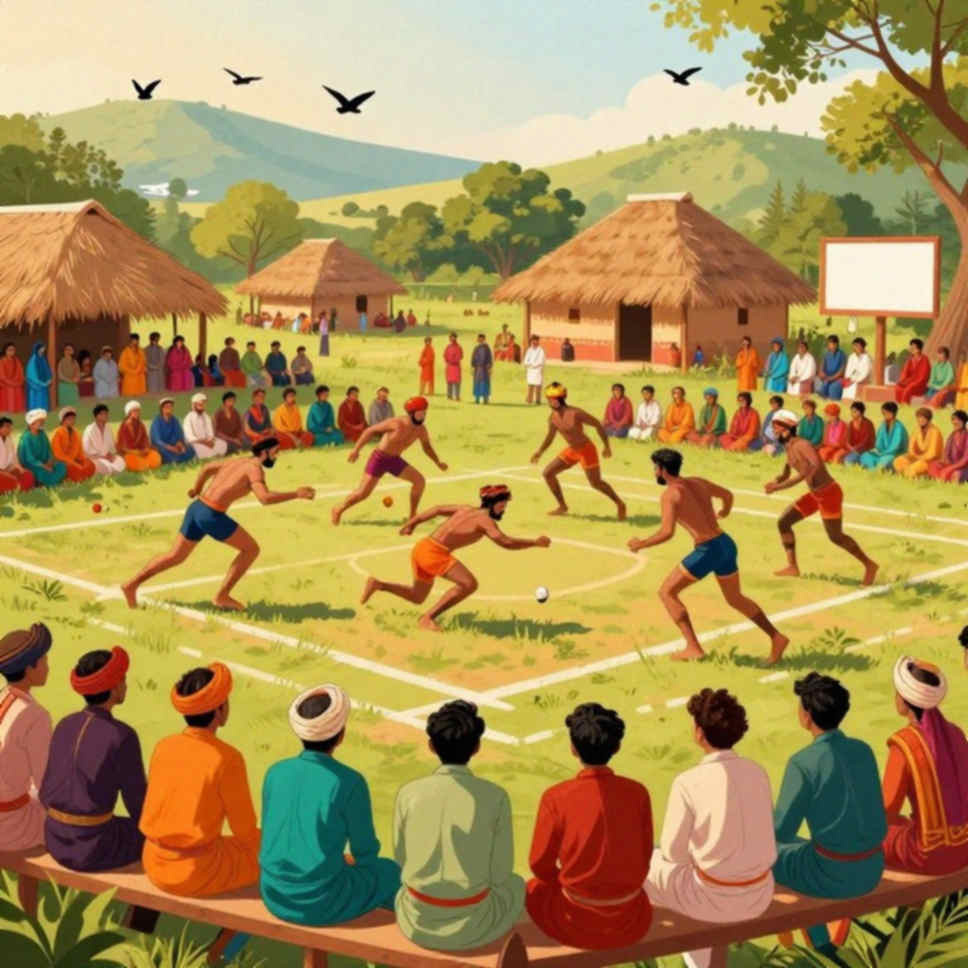
For readers who do not follow kabaddi, the rules need stating first, because the most important fact of this match sits inside them. The raid is the only attacking engine: one raider enters the opponent's half, must return within thirty seconds, and scores by touching a defender and getting back. Throughout the raid the raider must chant kabaddi, kabaddi; break the chant and the raid is void. The tackle is the only way to score in defence, with defenders combining to stop the raider inside their own half. When all seven players of one side are ruled out, the opponent earns two points and the wiped side revives in full — the all out is kabaddi's biggest momentum switch. The bonus line is a mark deep in the opponent's half; crossing it while the defence has six or more players on court earns one point, the low-risk survival channel. A super tackle is a tackle made with three or fewer defenders on court, worth two.
The format matters too. Seven against seven, two twenty-minute halves, group stage into knockouts. At the Asian Games it is Standard Style, the rectangular court used by the Pro Kabaddi League. A 23-11 half-time score means thirty-four points in twenty minutes, the signature of a fast, attack-heavy half. India forced two all outs before the interval and a third later, six points from the all out alone.
Now the three numbers hidden inside 37-21. Of India's thirty-seven, only three came from bonus points, six from all outs, and twenty-eight from touches and tackles. Of Chinese Taipei's twenty-one, nine came from bonus points, four from two super tackles, and eight from ordinary raids and tackles. The biggest fact sits here: Taipei's breakdown contains no all out points, which means India were never all out across the entire match. Keeping all seven on the mat through two halves is a direct signal of defensive stability. India's scoring profile, in turn, points to penetration-oriented raiding; this is not a side that stands on the bonus line collecting safe points.
The tactical detail is equally clear. Rahul Sethpal built India's early control with ankle holds, working the right corner alongside Aslam Inamdar, a player better known as a raiding all-rounder. That deployment hints at the national setup's all-rounder preference, though it needs checking against an official squad sheet before anyone treats it as settled. After the interval Devank Dalal and Ayan Lohchab were sent in to find touches and hold the advantage, a rotation that reads as workload management with the result under control. For Taipei, Chung-mao Chang produced an important ankle hold during their attempted comeback.
Chinese Taipei's approach can be stated plainly: survive, do not win. Nine bonus points, four from super tackles, eight residual. Rather than risk deep penetration against India's corner pairing, their raiders took the safe single from the bonus line. It keeps the score respectable and caps upset potential near zero. A non-South-Asian side passing twenty points is still a small but real internationalisation marker.
Here is the counter-intuitive ground. The sixteen-point margin is an incomplete picture, because the opponent sits in the catch-up tier and nearly half their score came from a low-risk mechanic. Beating such a side in the group stage is structurally low-information; it confirms India are functioning, not that they are unbeatable. The second number matters more: India conceded two super tackles, caught twice while Taipei had three or fewer defenders on court. In that situation a point, often the all out, is the expectation. Against a stronger defence that small gap could widen. The third number is about media: this match report came from a single outlet with no cited data. The mat was there before the coverage was; I just brought the phone. Here too, information had one address.
The stands are the other incomplete ledger. Before counting points I try to see who is sitting there, who reaches the camera, and whose match stays invisible. This report carries no attendance figure and no word on the women's draw, or whether this edition even has one. If a men's group match is covered by a single source, the question of who is writing the women's matches on the same courts simply hangs.
So what should you watch? The semi-final on 25 September. The unbeaten-run story has a very short shelf life; a close knockout or an unexpected opponent rewrites it entirely. Keep three things in view: the squad composition in the semi-final, whether the super tackle pattern repeats under knockout pressure, and which half of the draw Iran occupies. International kabaddi still stands on an India-Iran duopoly, and sixteen points in a group match does not move that structure. The better question is different: before counting points, how many spectators and how many cameras can we count?
Related Players
Recommended
Asian Games 2026 Kabaddi Semifinals: India vs Thailand and India vs Nepal, and Where the Unbeaten Run Stops Explaining Anything2026-09-26
Asian Games 2026: India’s 37-21 win, three All Outs and Chinese Taipei’s nine bonus points2026-10-26
The 75-Minute Gap: India's Two Kabaddi Semifinals at the Asian Games, and the Numbers Nobody Published2026-10-21
The Name That Was Not on the List: Ritu Negi, One Crore, and Himachal's Unwritten Rule2026-10-10
India's Scoreboard Says 63; Its Defence Says 312026-10-30
Asian Games 2026 Kabaddi: Bangladesh and Pakistan Top Their Groups, but Day 1's Real Signal Is Thailand's 592026-10-20
Recommended
Asian Games 2026: India's Kabaddi Gold Claim, a 12-Man Squad and the Arithmetic of the Sixth Lane2026-10-20
Kabaddi’s Golden Double: The Real Story Is Not India’s Glory but the Verification Gap2026-10-19
48-24: The Three Numbers Inside India's Semifinal Win Over Nepal That Still Don't Add Up2026-10-29
India 48-24 Nepal: How Three All-Outs Built the Margin, and the Question Left Hanging Before the Final2026-09-26
Behind India's 63-31: What the Grid Says Before Bangladesh at Asian Games 2026 Kabaddi2026-10-04
Kabaddi's Empty Cells: Why Bangladesh's National Sport Keeps No Numbers of Its Own2026-10-31
Recommended
Big Raid-Point Totals Do Not Measure Skill — Kabaddi's Most Expensive Arithmetic Error2026-10-23
Asian Games 2026 Kabaddi Semifinals: India vs Thailand and India vs Nepal, and Where the Unbeaten Run Stops Explaining Anything2026-09-26
Thailand's First Medal and Bangladesh's Accounting Gap: At the Asian Games Kabaddi, the Table Is Beating the Mat2026-09-26
Three All Outs and One Buried Question: What India's 48-24 Win Over Nepal Really Told Us2026-09-26
The Arithmetic of Three All Outs: India's Women Reach the Asian Games Final With a 48 24 Win Over Nepal2026-10-28
India vs England, Commonwealth Kabaddi 2026: The Squad List Says What the Broadcast Guide Won't2026-10-24