
KabaddiCommonwealth Kabaddi Championship 2026: Two Empty Cells in the Grid Change the Question About India
Commonwealth Kabaddi Championship 2026: Two Empty Cells in the Grid Change the Question About India
প্রশ্ন: কমনওয়েলথ কাবাডি চ্যাম্পিয়নশিপ ২০২৬ কখন এবং কোথায় অনুষ্ঠিত হবে? সংক্ষিপ্ত উত্তর: কমনওয়েলথ কাবাডি চ্যাম্পিয়নশিপ ২০২৬ প্রথম আসর হিসেবে ২৩ থেকে ৩১ অক্টোবর ২০২৬ পর্যন্ত নয় দিন ধরে একটি একক ভেন্যুতে অনুষ্ঠিত হবে, যেখানে তেরোটি দেশ পুরুষ ও মহিলা দুই বিভাগে অংশ নেবে। মূল তথ্য: - তারিখ: ২৩–৩১ অক্টোবর ২০২৬, মোট নয় দিনের সূচি। - অংশগ্রহণকারী: তেরোটি কমনওয়েলথ দেশ, পুরুষ ও মহিলা দুই বিভাগ। - Format: প্রথম আসর; ম্যাচ-Format ও স্কোয়াডের আকার আনুষ্ঠানিকভাবে ঘোষিত নয়। - ফেবারিট: দুই বিভাগেই ভারত, এশিয়ান Gamesে ইরানকে হারিয়ে সোনা জেতা দল। - অনুপস্থিত: ইরান (কমনওয়েলথ সদস্য নয়) এবং পাকিস্তান, ফলে সার্কেল স্টাইল ভ্যারিয়েবল নেই। উৎস: কমনওয়েলথ কাবাডি চ্যাম্পিয়নশিপ ২০২৬ ঘোষণা-ভিত্তিক স্টেজ-১ তথ্যপত্র, প্রকাশকাল ২৩ অক্টোবর ২০২৬-পূর্ব প্রিভিউ উইন্ডো। সম্পর্কিত প্রশ্নোত্তর: প্রশ্ন: এই আসরে ভারতের মূল প্রতিদ্বন্দ্বী কারা? উত্তর: পুরুষ বিভাগে বাংলাদেশ, শ্রীলঙ্কা ও কেনিয়া সবচেয়ে বিশ্বাসযোগ্য চ্যালেঞ্জার, তবে কোনোটিই পূর্ণশক্তির ভারতকে বড় ইভেন্টে হারায়নি। প্রশ্ন: এই টুর্নামেন্টের ফলাফল দিয়ে ভারতের প্রকৃত শক্তি মাপা যাবে কি? উত্তর: যাবে না, কারণ ইরান ও পাকিস্তানের অনুপস্থিতি, অনিশ্চিত Format এবং সম্ভাব্য ঘোরানো স্কোয়াড মিলে একটি অসম্পূর্ণ নমুনা তৈরি করে। প্রশ্ন: দর্শক হিসেবে কোন তিনটি জিনিস নজরে রাখা উচিত? উত্তর: দ্বিতীয়ার্ধের তৃতীয় রেইডের সিদ্ধান্ত, দুর্বল দল ছয়জনের নিচে নামে কি না, এবং নকআউটে সুপার ট্যাকল আদৌ ঘটে কি না—এই তিনটি সূচকই আসল কৌশলগত গল্প বলে।
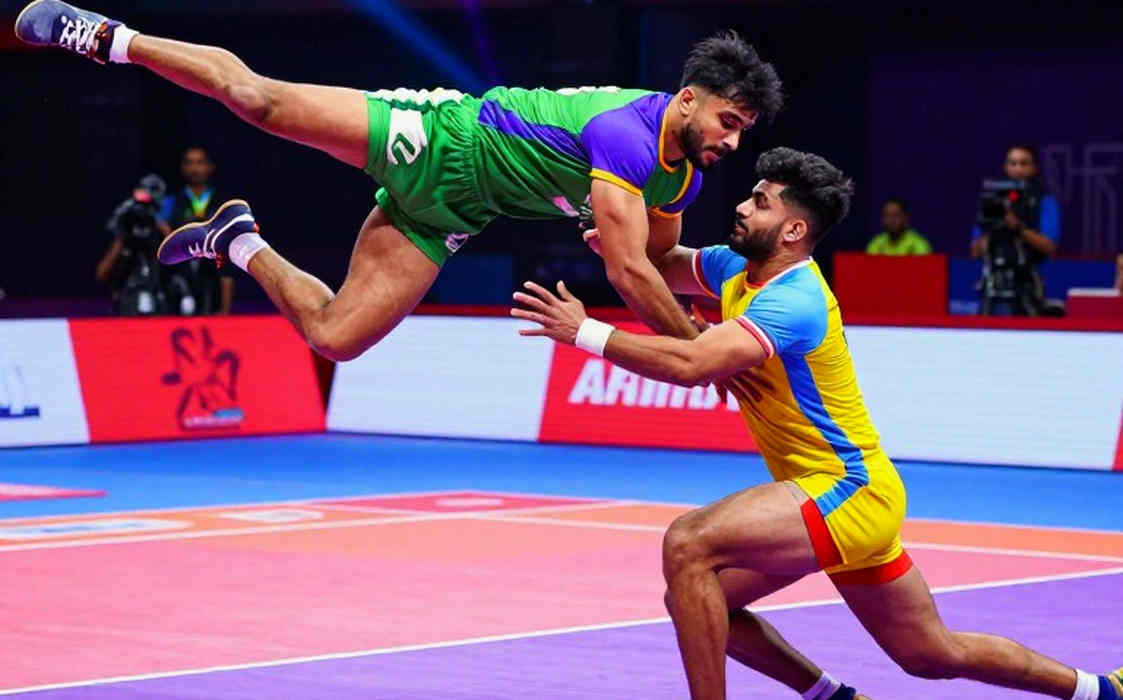
Thirty seconds. The raider has crossed into the opposition half, the chant of kabaddi, kabaddi running without a break, because a breath is proof of a breath and a broken chant voids the raid. Two empty raids have already gone by, so this is do-or-die: touch someone or leave the mat. In the Asian Games final between India and Iran I paused that frame three times. Iran's corner defender had stepped forward by one foot, only one foot, and that single foot redrew the entire entry angle of the raid.
That frame will not return in October. From 23 to 31 October 2026, nine days, the inaugural Commonwealth Kabaddi Championship, thirteen countries, men's and women's categories, and no Iran. On the grid I draw for every tournament, two cells stay blank for the first time. That blank space is the most important tactical fact about this event, and no preview report prints it.
Start with the rules, because kabaddi hides its beauty inside them. A raider enters the opposition half, touches one or more defenders and returns to his own half for one point, all while keeping the chant alive; defenders who collectively stop him inside their half complete a tackle for one point. When all seven of a side are out, that is an all out, worth two bonus points, and the entire team revives. That wipe-and-revive mechanism is the structural reason kabaddi swings so violently.
Two more instruments sit on top. The bonus line is a mark deep in opposition territory, worth one point, but only when the defending side has six or more players on the mat, which makes it a machine for punishing a defence that lies too deep. The do-or-die raid follows two consecutive empty raids: the third raid must score, or the raider is out. And a super tackle, completed while the defending side has three or fewer players on the mat, is worth two points. The mat is 13 by 10 metres, seven against seven, two halves of twenty minutes, twelve in a squad. Pro Kabaddi League, founded in 2026 with twelve franchises, remains the sport's only genuinely professional structure, and it is where India's stars are made.
Now the event itself. Inaugural edition, nine days, thirteen countries, a single venue, two categories, and the source report carries no match format, no squad size, no statement on whether the event runs full International Kabaddi Federation standard rules or an abbreviated version, no prize money, no ranking points. Not one player is named. Not one coach. One sentence repeats: India are favourites in both categories, because India beat Iran in both Asian Games finals.
My objection here is tactical, not sentimental. Kabaddi's rules are engineered for comebacks; all out, do-or-die and super tackle are all comeback machines. Those machines only turn when the gap between two sides sits inside a certain band. Strip the second and third strongest teams out of a thirteen-nation field and long stretches become one-way traffic, and in one-way traffic the comeback machinery never engages in time. Sixty-four matches, one grid: that is how I learned to read a tournament, and the grid says drama is manufactured by contest, not by a press release.
What nine days makes obvious is bench depth. All out means the whole team leaves and the whole team returns, so squad depth weighs heavier in kabaddi than in most team sports. Thirteen teams, two categories, one venue, nine days almost certainly means double-headers, and thin benches break before the knockouts. India's pipeline is a different category of thing: a professional auction, franchise training, competition all year. Most of the other twelve draw on semi-amateur domestic circuits. I built a page from frozen moments; the game taught me to trust the grid, but when the grid shows a full-time professional in one cell and a part-timer in the next, the trust belongs to structure, not to reputation.
There is a counter-intuitive truth here that coaches of weaker sides routinely miss. The instinct of a trailing team is to slow the game down, raid empty, keep seven deep and defend only through tackles. In kabaddi that instinct is self-destructive. Seven deep leaves the bonus line open, and two empty raids invite do-or-die, which forces the raider into risk on the third attempt. The weapon a weak team reaches for is the exact weapon the rulebook neutralises. The half-space is not empty; it is where the game whispers its next move. The gap between the raider's entry angle and the corner defender's stance already tells you whether the defence will step in or hold out.
My doubt about the super tackle is more specific. The rule exists to compress blowouts, but it requires the defending side to be down to three players or fewer. In a match where one side leads by ten or twelve points early, the weaker team is often finished off before it ever reaches three on the mat, so the antidote never arrives when it is most needed. On that argument alone I expect the super tackle count in this tournament to run below normal, and that is fixture design, not coaching failure.
The women's draw is likely to be the more lopsided of the two. Outside India, Iran and Chinese Taipei, women's kabaddi depth is very shallow, and the last two of those three are absent from a Commonwealth field. India's women's path to gold is probably the softest in the tournament. A different absence matters just as much. Pakistan is a circle style stronghold, a one-on-one format on a circular field with different scoring, and their presence would have made this a rare stylistic stress test. Without them the field is uniformly standard style: technically cleaner, competitively duller.
An uncomfortable inconsistency sits inside the source report itself. India's credibility is established through the Asian Games rivalry with Iran, and then the tournament on offer contains no Iran, which as a non-Commonwealth state could not enter. Using a match to introduce the protagonist and then removing that opponent from the stage is a weakness of promotional framing, not of analysis. One more inference I keep hedged: weeks after the Asian Games, at an inaugural event with no ranking points, India will probably field a rotated or partially second-string squad, because star raiders carry a season of tackles in their knees, ankles and shoulders, and the reward for risk here is thin.
Who are the realistic challengers? Bangladesh and Sri Lanka are the most credible men's names, and Kenya has an established men's international programme. Bangladesh has a deep grassroots base and fierce national acceptance, but limited professionalisation, and that gap shows in the last five minutes. None of the three has beaten a full-strength India at a major event.
Now turn it around. Everyone will read this tournament as proof of Indian dominance, when a wide margin here is a measurement artefact, not evidence. Two of the top three rivals are missing, the format is unverified, the squad is likely rotated; data produced under those three conditions cannot measure India's true level. The real value of these nine days lies elsewhere. Bangladesh, Sri Lanka and Kenya get one or two international matches a year; here they get nine consecutive days against different styles, which no domestic circuit can supply. In kabaddi, learning arrives through repetition, not through one big win. Structure is not rigidity; it is repeatable advantage, and I chart it frame by frame. In 2026, across the eight matches of NoFeL Sporting Club's relegation postmortem, that was exactly the lesson: the fault was never one person's, it lived in zones and timing.
So what do I watch in October? Three things are already in my notebook. First, the third raid of every team's second half, where do-or-die applies real pressure and where you learn whether a coach has taught attack at all. Second, whether the weaker sides drop below six on the mat; standing seven deep hands the bonus line to the opposition every raid. Third, whether a single super tackle occurs in the knockout rounds; if none does, the fixture design erased the drama before the first whistle. Where the grid is empty, a winning margin proves nothing. The question stays: if a tournament cannot invite its own strongest rival, by what measure do we judge its champion?
Related Players
Recommended
India's Scoreboard Says 63; Its Defence Says 312026-10-30
Commonwealth Kabaddi Championship 2026: What India's Captaincy Announcement Silence Doesn't Say2026-10-22
Asian Games 2026 Kabaddi: The Broadcast List Nobody Has Published, and the Two Golds India Must Defend2026-09-28
Asian Games 2026 Kabaddi: Auditing India’s 63-31 Scoreline Against South Korea2026-10-04
Three All Outs and One Buried Question: What India's 48-24 Win Over Nepal Really Told Us2026-09-26
48-24: The Three Numbers Inside India's Semifinal Win Over Nepal That Still Don't Add Up2026-10-29
Recommended
Asian Games 2026 Kabaddi: Auditing India’s 63-31 Scoreline Against South Korea2026-10-04
Behind India's 63-31: What the Grid Says Before Bangladesh at Asian Games 2026 Kabaddi2026-10-04
No Pawan Sehrawat, No Gold Medalists: How India's Probable Squad for the Commonwealth Kabaddi Championship 2026 Tells a Story of Depth2026-10-06
Without Pawan Sehrawat: Reading India's 17-Member Probable Squad for the Commonwealth Kabaddi Championship 20262026-10-06
Kabaddi’s Golden Double: The Real Story Is Not India’s Glory but the Verification Gap2026-10-19
Commonwealth Kabaddi Championship 2026: What India's Captaincy Announcement Silence Doesn't Say2026-10-22
Recommended
The Eleven Points Hidden Inside 48–25: What Bangladesh's Bonus Line Told Us About India's Defence2026-10-19
The 75-Minute Gap: India's Two Kabaddi Semifinals at the Asian Games, and the Numbers Nobody Published2026-10-21
Thailand's First Medal and Bangladesh's Accounting Gap: At the Asian Games Kabaddi, the Table Is Beating the Mat2026-09-26
Asian Games 2026 Kabaddi Broadcast Listing: The Missing Information and the Buried Gold Story2026-10-12
Asian Games 2026 Kabaddi Semifinals: India vs Thailand and India vs Nepal, and Where the Unbeaten Run Stops Explaining Anything2026-09-26
KCL Season 2 Retentions: Five Haryana Franchises, Ten Names and a Rs 19.2 Lakh Ceiling2026-10-16