
An Se-young's Second Straight Asian Games Gold: What the 21-9 Doesn't Say
**মূল উত্তর:** আন সে-ইয়ং ২৯ সেপ্টেম্বর ২০২৬-এ আইচি-নাগোয়ায় আকানে ইয়ামাগুচিকে ২১-১৭, ২১-৯-এ হারিয়ে এশিয়ান Gamesের মহিলা একক Badmintonে টানা দ্বিতীয় সোনা জিতেছেন। ব্যবধান চার বছর নয়, প্রায় তিন বছর, কারণ হাংঝৌ ২০২২ আসর হয়েছিল ২০২৩ সালে। **মূল তথ্য:** - ফাইনাল স্কোর: ২১-১৭, ২১-৯; প্রতিপক্ষ জাপানের আকানে ইয়ামাগুচি; তারিখ ২৯ সেপ্টেম্বর ২০২৬। - আগস্ট ২০২৬-এ বিশ্ব চ্যাম্পিয়নশিপ শিরোপা, সেপ্টেম্বরে এশিয়ান Games সোনা। - ৪৬টি International শিরোপার দাবি, সুসি সুসানতির সঙ্গে সমান — স্বাধীনভাবে যাচাই হয়নি। - ২০২৬ সালে একটিমাত্র পরাজয়ের দাবি — উৎসে যাচাইযোগ্য তথ্য নেই। - এশিয়ান Games বাফ বিশ্ব ট্যুরের বাইরে; র্যাঙ্কিং পয়েন্ট নয়, জাতীয় প্রতিপত্তিই এখানে মূল মুদ্রা। **সূত্র:** স্টেজ-১ প্রতিবেদন, প্রকাশকাল ২৯ সেপ্টেম্বর ২০২৬; মূল সংবাদসংস্থার নাম প্রকাশ করা হয়নি। সংখ্যাগত দাবিগুলো স্বাধীনভাবে যাচাই করা যায়নি। **সম্পর্কিত প্রশ্নোত্তর:** প্রশ্ন: ফাইনালের স্কোর কত ছিল? উত্তর: ২১-১৭, ২১-৯, প্রতিপক্ষ আকানে ইয়ামাগুচি। প্রশ্ন: এই শিরোপা কেন বৈশ্বিক শ্রেষ্ঠত্বের প্রমাণ নয়? উত্তর: এশিয়ান Gamesে কেবল এশীয় দেশগুলো অংশ নেয়, ইউরোপীয় ব্লক অনুপস্থিত থাকে। প্রশ্ন: পরের মৌসুমে প্রধান ঝুঁকি কী? উত্তর: ২০২৬-এর প্রায় নিখুঁত ফলাফল ২০২৭-এ ৫২ সপ্তাহের র্যাঙ্কিংয়ে পয়েন্ট-ডিফেন্সের ভার তৈরি করবে।
Twelfth point of the second game. Akane Yamaguchi reached the left corner of the court, but she reached it late. Her backhand clear landed a foot past the baseline. The score was 7-5. Nobody stopped. Nobody raised a hand. Only the shuttle slowed, slightly. Three points later, the same corner, another clear, this time shallower still. What followed was not a storm of smashes. It was a war of length. Every rally ran two or three shots longer than the one before it, and every extra shot quietly took a fraction of time away from Yamaguchi's legs.
In Aichi-Nagoya, Japan, on Tuesday, 29 September 2026, the women's singles final ended 21-17, 21-9. An Se-young won. A second consecutive Asian Games women's singles gold. The first game was a contest; the second was a collapse. That score shape is the loudest fact of the day, louder than the medal table.
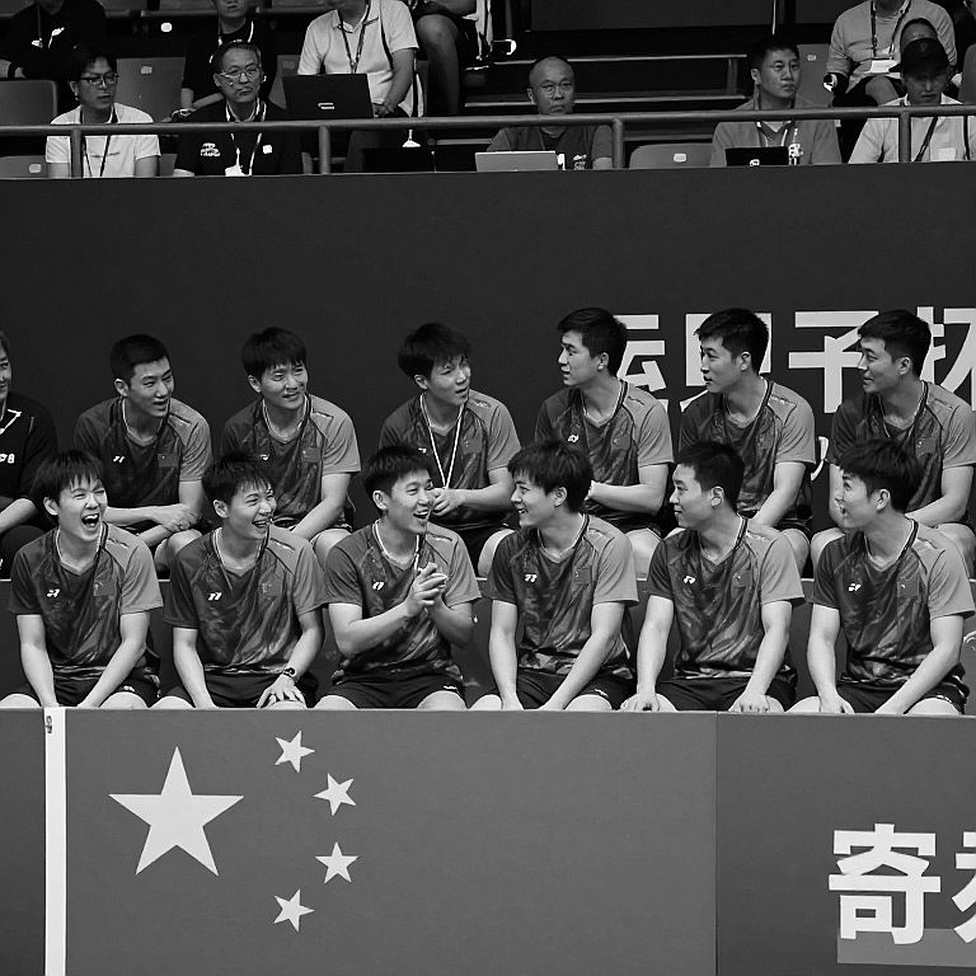
The hall was full, but a badminton hall never sounds like a stadium. The roar of the stands does not bury the tick of the shuttle; sometimes the reverse happens, and after a long rally the whole hall goes quiet enough that you hear only shoe rubber and breathing. The towel break, the coach's note, the eyes on it — that is the most honest moment of any match. The scoreboard says nothing there. The body does.
The first stream from Rangpur was less a broadcast than a doorway. Coaches walked through it, physios, players waiting for the team bus. Years of watching badminton taught me one thing: a final's scoreline never tells the story of a single shot. It tells the story of infrastructure — of who can absorb how many shots. The 21-9 is the receipt for that infrastructure.
To understand the Asian Games, first understand what it is not. It is not a tier of the BWF World Tour — not Super 1000, 750 or 500. It is a quadrennial multi-sport continental event, entered through national Olympic committee quotas rather than BWF ranking entry rules. That has a direct consequence: a strong badminton nation cannot flood the draw with ten players to deepen the field. What is possible on the World Tour is not possible here.
The calendar detail is often skipped. Hangzhou 2026 was actually staged in 2026. So the gap between the two 'consecutive' titles is not four years but roughly three. Those three years are the real measure — not a full Olympic cycle, but close to three years of continental invincibility. That longevity signal carries more weight than back-to-back titles at an annual event.
Akane Yamaguchi is the experienced standard-bearer of Japan's corporate-team system, more than a decade at the top. Korea's structure is far more centralised and association-run. That these two models met in the final is not coincidence. The training infrastructure of the two countries currently at the summit of women's singles is the silent backdrop of the match. Yamaguchi's arrival in the final marks her as a veteran benchmark, not a peer rival — someone who now has to be overtaken rather than traded with.
Tactically, this was a collision of two schools. An Se-young's base is rally control and defensive counterattack: clears and drops that move the opponent into corners, then a direct finish when the opening appears. Yamaguchi's base is speed and continuity: flat exchanges, early attack, net pressure. At the very top, the control-and-retrieve profile is now relatively rare. Women's singles has drifted toward early attacking, and a control-dependent world No.1 stands against that drift.
In the first game, Yamaguchi's speed worked for about fifteen points. The 21-17 margin is an indication in itself: in flat exchanges she was level, but once rallies crossed fifteen shots, the cost of coming back kept rising. Control players wait for exactly that point. The opponent's weakest shot arrives when her feet are no longer in the right place.
In the second game, the cost was billed. A 21-9 is not a sudden collapse; it is the normal response of an opponent who has crossed the fatigue line. What changed tactically — length increased, tempo dropped, a particular flank targeted — is not in the published report. What is there is only the result: a competitive game followed by a lopsided one. That shape is the familiar signature of winning an attrition war.
I have no shot-level data — no smash speed, no average rally length, no unforced error rate, no first-three-shot control. So nothing certain can be said about how she won. What can be said is probability: length was extended after the interval, or tempo was reduced, to break Yamaguchi's rhythm. That is inference, not evidence — and the distinction matters.
Badminton has no VAR. It has an instant review system, a limited number of challenges, line calls. No disputed line call appears in the published report of this final, so there is nothing to say about review strategy. Still, one thing holds, and I have watched it across many matches: technology does not reduce controversy so much as relocate it — from the court to the review screen, and from there into the grey zones of the rulebook. In a match where no challenge is used, that question simply stays open.
The style carries a real cost. A control-based, retrieval-heavy game means aerobic volume, court coverage, patience — not explosive power. Accumulated load on knees, lower back and Achilles is the built-in risk. World Championships in August, Asian Games in September: going deep in two major events back to back means load management becomes the central question. Title counts rise. Recovery time does not.
The report claims only one defeat in 2026. That figure has not been independently verified, but its underlying meaning is near-perfect error control. Control like that is not the product of talent alone; it is the product of a working pipeline of conditioning, recovery and match preparation. The published report names no coach, no physio, no analyst. That silence is an absence of information, not evidence.
The ranking arithmetic here is odd. Asian Games badminton adds no significant points to the 52-week rolling ranking, yet it is the most physically expensive event on a top player's calendar. On the World Tour there is prize money and there are points; here there is only prestige. So next year, as the 2026 results expire one by one, the defending burden will remain — without any extra points banked to carry it.
Forty-six international titles, level with Susi Susanti — that is not a form indicator, it is a career-accumulation figure. A marker of longevity, not proof of current level. Her gold was not quiet because it was small; it was quiet because it was sure.
One more structural point. Because per-country entry quotas are limited, the depth of the draw is artificially compressed. The hard part of this title, then, is not depth but pressure. A single bad day costs more here, because the next chance comes in four years. A player who can err once a week on the World Tour can err only once here — and that one error is written into a four-year ledger.
This is where the mismatch sits. The Asian Games gives no ranking points and no prize money. Yet the scarcest resource of an elite career is spent here — peak-phase load. The athlete pays in the most expensive currency and is reimbursed in one that cannot be deposited into the ranking account. That currency mismatch is the real economics of this event, and it never appears in a scoreline report.
The headline says she is the first woman to win back-to-back Asian Games singles badminton gold. Inside the report, it says she is the first since 2026. Both cannot be true: if someone achieved the feat in 2026, the word 'first' is wrong. That record sits like a buried document — the way historians call a buried archive back into voice, this claim needs calling back. The contradiction must be settled before publication, because the most quoted sentence is also the least checked one.
Commercially, the result matters, but not through prize money. As a multi-sport event it runs on national Olympic committee and state funding; brand exposure arrives through broadcast ratings and national prestige. A world No.1's title is a high-visibility event for her racket and apparel maker, but the report carries no brand data, so this is direction only. In a market already badminton-literate, a No.1 of this kind can lift both participation and viewership. There is no proof, there is an argument.
Let me state one limit plainly. There is no European bloc in this draw — Denmark, Spain, France absent. This title cannot support a claim of global supremacy. There is evidence of continental dominance; there is no evidence of global dominance in this document. Erase that distinction and the story becomes easier, and wrong.
The current map of women's singles is not wide, it is concentrated. One at the summit, then a step below her Yamaguchi and a few other Asian contenders, then the crowd. Whether that concentration is good or bad depends on who is looking. For the viewer it is the era of a single heroine; for the competition it is a single target against which everyone's plan can be drawn.
A world No.1 is not built on court alone. Korea's women's singles pipeline, gym schedules, family negotiations, coaching chains — none of it is in the published report. Yet that infrastructure decides whether a player can stay unbeaten for three years. From Rangpur I have watched the absence of that pipeline for many nights: places where talent exists but coaches do not, where will exists but hall rent does not. So when someone wins a second straight continental gold, I look at the schedule behind her more than the shots in front of her.
The biggest question of the next twelve months is ranking defence: a near-perfect season means every result must be held inside the 52-week window next year. Watch the withdrawals and walkovers, because in a retrieval-heavy game fatigue shows up first and makes the news later. Opponents will break her tempo, play net-first, push her deep — that is the real match of the coming season. And if the titles keep arriving only at Asian-only events, the answer will not be simple. The question does not want an answer. It wants time.