
Two Tons in Four Days, but Konstas's Test File Is Still Incomplete
**সংক্ষিপ্ত উত্তর:** স্যাম কনস্টাস ঘরোয়া ওয়ান-ডে কাপে ওয়েস্টার্ন অস্ট্রেলিয়ার বিরুদ্ধে ১৩১ বলে ১৪৯ রান করেন, আর চার দিন আগে শেফিল্ড শিল্ডে অপরাজিত ১৫১ রান করেন। দুই Inningsই টেস্ট ফেরার দাবি জোরালো করে, তবে লাল বলের সাক্ষ্য সাদা বলের চেয়ে বেশি Weight বহন করে। **মূল তথ্য:** - নিউ সাউথ ওয়েলস ৮-৩৭১ করে; ওয়েস্টার্ন অস্ট্রেলিয়া ৪৬.৩ ওভারে ২৯৩, ফল ৭৮ রানে জয়। - কনস্টাসের ১৪৯ রানে ১৫ চার ও ৪ ছয়; ৮৪ রান এসেছে বাউন্ডারি থেকে। - চার দিন আগে শেফিল্ড শিল্ডে অপরাজিত ১৫১, প্রতিপক্ষও ওয়েস্টার্ন অস্ট্রেলিয়া। - ২৬ ডিসেম্বর ২০২৪-এ ভারতের বিরুদ্ধে অভিষেকে ৬০; এরপর নয় টেস্ট Inningsে ২৫-এর নিচে। - হোয়াইটম্যান ১১৩ বলে ১১৬; ৪১তম ওভারে আগারের রান-আউট চেজ ভেঙে দেয়। **উৎস:** cricket.com.au ম্যাচ প্রতিবেদন; প্রকাশের নির্দিষ্ট তারিখ মূল উৎস উপাদানে উল্লিখিত নয়। **সম্পর্কিত প্রশ্নোত্তর:** প্রশ্ন: কনস্টাসের টেস্ট ফেরার সম্ভাবনা কতটা? উত্তর: অস্ট্রেলিয়ার ওপেনিং পদের শূন্যতা সম্ভাবনা বাড়ায়, তবে নয় Inningsের ব্যর্থতা নির্বাচকদের সতর্ক রাখবে। প্রশ্ন: কেন শিল্ডের ১৫১ রান বেশি গুরুত্বপূর্ণ? উত্তর: শিল্ডে লাল কুকাবুরা বল ও টেস্ট-ধাঁচের পিচ ব্যবহৃত হয়, তাই এটি টেস্টের নিকটবর্তী প্রক্সি। প্রশ্ন: ৭৮ রানের জয় কি নিউ সাউথ ওয়েলসের পূর্ণ নিয়ন্ত্রণ দেখায়? উত্তর: না, ৪১তম ওভার পর্যন্ত ওয়েস্টার্ন অস্ট্রেলিয়ার চেজ জীবিত ছিল, তাই ব্যবধান সামান্য অতিরঞ্জিত।
Perth's WACA ground on a Saturday afternoon, and Sam Konstas has just lifted his fourth six. New South Wales are 8-371. His 149 came off 131 balls, a strike rate of 113.7, with fifteen fours and four sixes; 84 of his runs arrived in boundaries, roughly 56 per cent of the total. Four days earlier, in the Sheffield Shield, he had made 151 not out against the same opponent, Western Australia. Two formats, two balls, two entirely different sets of demands. The headline compressed them into one sentence: Konstas is ready. Western Australia were bowled out for 293 in 46.3 overs; NSW won by 78 runs.
I opened the Injury Ledger in Delhi, and every body began to speak in columns. Konstas's body has not cracked yet, but his file can be laid out the same way: format, exposure, dismissal pattern, and the gap between two competitions. Read together, Saturday's 149 looks brighter and the 151 not out from four days earlier carries more weight. The headline inverted both.
Context: which match, which evidence
What happened here is a domestic Australian One-Day Cup fixture, a 50-over List A match. It is not international cricket and not an ICC event. The report comes from a platform closely aligned with Cricket Australia's domestic circuit, and structurally it reads less like a match report than a selection argument. The scorecard is the stage; the real play is a Test opening slot.
Australia's Test opening position has been unsettled for a while. The report itself says Australia is still crying out for an opener. That single line changes the economics of the piece. When a specific position is vacant, a selector's decision becomes a function of need as much as of form. Konstas's runs are then not a knock on the door but a shoulder against it.
His Test record is short and specific. A debut 60 against India on Boxing Day, 26 December 2026 — the most visible entry point in Australian cricket, the innings that made him a national brand. Then nine Test innings, every one under 25. His last Test came in July, against West Indies. He is 21; a batter's peak band usually sits between 27 and 33.
The domestic picture is separate. NSW moved to 3-1 and second place with this win. The WACA has historically been fast and bouncy, yet 371 and 293 together suggest a batting-friendly surface and a quick outfield on the day. That is inference, not stated fact; my confidence is moderate. When pitch character shifts, strokeplay gets easier, and that shift cannot be used as proof of a batter's technical readiness.
Core: three pieces of evidence, three different weights
Decades of watching cricket have taught me to read a scorecard like an examination paper. Who scored how many is the first question. In which format, against which ball, under which conditions is the second. The answer usually lives in the second.
Sheffield Shield evidence is the closest available proxy for Test cricket. The reason is technical. The Shield uses the red Kookaburra, prepares pitches to a Test template, and asks a batter to bat long; the new ball behaves differently under morning cloud and evening light. The One-Day Cup uses a white ball, two new balls, fielding restrictions in the first ten overs, singles arithmetic in the middle, and risk-heavy strokeplay at the end. Same bat, same hands, a completely different examination.

So I apply a simple weighting. It is my own construction, not a published metric, and should be read as a proxy: 50 points for a first-class century, 20 for a List A century, 10 for a T20 fifty. Konstas has banked 50 and 20 this week — 70 in total. Seventy means he is in form, which is true. It does not mean he is Test-ready, and the scale never claimed to.
The second piece of evidence is those nine innings. I do not record the score, I record the manner of dismissal. In the Injury Ledger my habit is to log the mechanism of recurrence; the same method works for a batter. A debut 60 followed by nine scores under 25 is not merely a bad run; it points to a conversion gap. The useful questions are about line, length and footwork: the patience to leave a fourth-stump line against the new red ball, the hands against swing, the weight transfer against the short ball. None of those skills is acquired by scoring 149 in white-ball cricket, because in white-ball cricket the leave is rarely required.
The third piece is age. At 21, rebuilding footwork and reworking a backlift is entirely plausible, and fifteen months is enough time for it to have happened. The report says he has worked hard and that it is on full display. The proof of work is not the score; it is the finishing position of the bat and the number of balls left alone. We have no data on either. That is the largest gap in the file.
The shape of Saturday's 149 also deserves a second look. 149 off 131 is high-tempo, but it was not a lone hand. Josh Philippe made 51, Jack Edwards 45, Shaw 44. Three contributions of forty-plus mean Konstas's innings stood on a platform, and that platform carried the side to 371. The difference between a great individual innings and a match-defining one is a difference the coverage routinely erases.
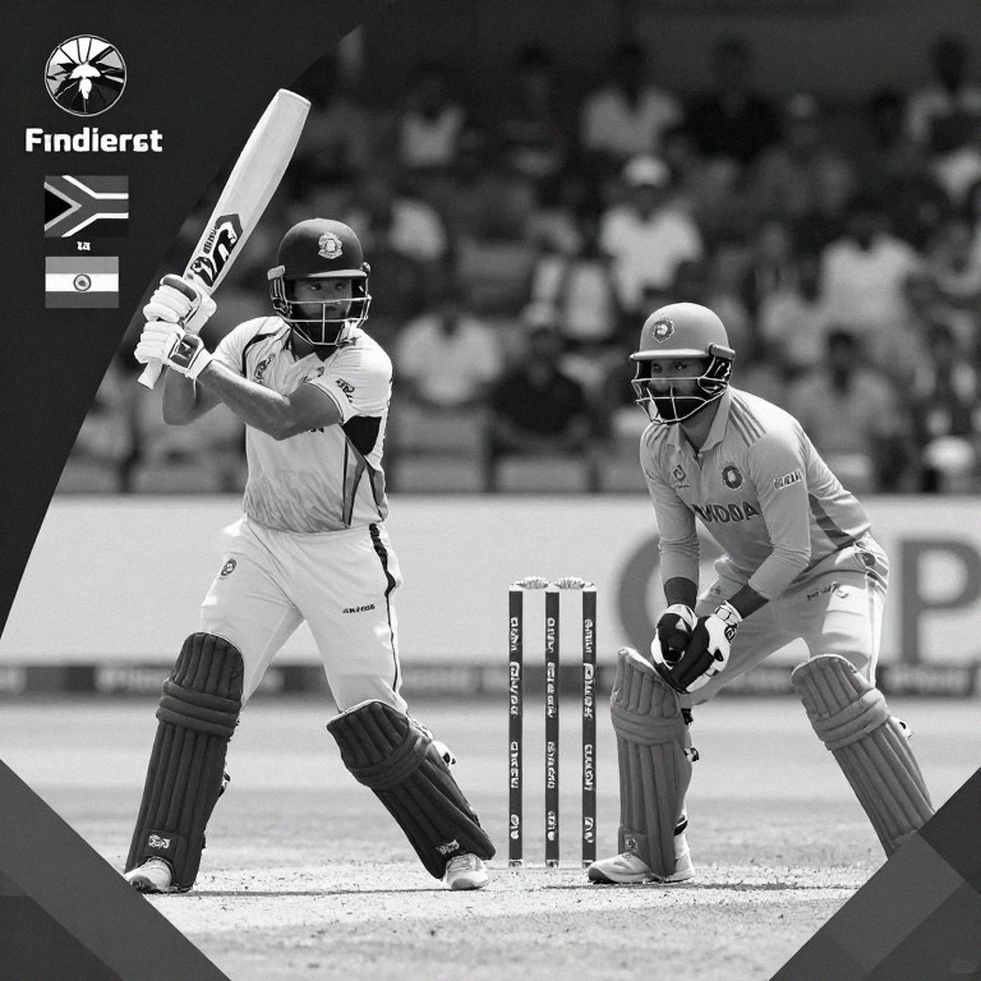
The pitch cannot be left out. The WACA's reputation is intimidation, but 371 and 293 read together say the ball did not dominate bat. A quick outfield and true bounce make power hitting easier. Environments move risk; I have written that many times. Here the environment favoured the batter, which is why the 149 is weaker evidence than the Shield 151 — the Shield asked the harder question.
The result carries its own lesson. Western Australia's chase was alive. Sam Whiteman made 116 off 113, and at the run-out of Agar in the 41st over, Whiteman was on 99. At the exact moment acceleration was needed, the set batter lost his partner. The 78-run margin flatters NSW slightly; without that run-out the match has a different shape. A scoreline is never a number without a denominator, and here the denominator was the 41st over.
Calendar, body, and the gap between formats
Russia 2026 taught me that a World Cup is a calendar with teeth. The lesson scales down. A first-class innings and a 50-over innings four days apart look like a hot streak in the scorebook. In the body it is a staircase of exposure: long hours at the crease, then a 131-ball innings at high tempo four days later, with a sprint, a turn and a stop on almost every run. A batter's soft-tissue risk concentrates in hamstrings, calves and groin, and repeated acceleration and abrupt deceleration is its main source.
When the stadiums emptied in 2026, the injuries did not vanish; they changed address. Risk never disappears; it relocates. Here it relocates inside the format. Facing 131 white balls and then walking into a five-day Test changes the exposure type entirely: 90 overs in the field, repeated starts against the new red ball, long waits, conditions to survive. Same athlete, two different jobs. Success at one is not a forecast for the other.
I read a transfer medical like a detective reads a ledger of old fires. A selection file is read the same way. The old ledger shows which material was combustible. Konstas's ledger is clear: nine innings after a debut 60, all under 25. That is not a disgrace, it is a data point. The question is whether the combustible material has been removed in domestic cricket. A List A hundred does not answer it. The Shield 151 answers part of it, because the ball was red.
Contrarian: everyone sees urgency, I see a protocol
The consensus is straightforward: pick him now. My objection is about method, not about form. In return-to-play decisions I never give emotion a seat, because the cost of bringing an athlete back too early is measured in months, not weeks. For a 21-year-old the cost is larger, since confidence is a finite resource and the weight of expectation after a Boxing Day debut is already heavy.
There is a second inversion. The loudest number of the week, the 149, is the weakest as evidence; the quietest, the 151 not out, carries the most weight. The headline picked the least suitable number. This is more than editorial bias; it is a methodological error, applying evidence from inside one format to a decision made outside it.
There is a system-level risk too. If white-ball runs can buy Test caps, the domestic pipeline learns the wrong lesson: young batters will chase the easier List A innings instead of the harder Shield work. The bill arrives a decade later.
In fairness, not everything here is controllable. A run-out is an accident, an edge is uncertainty, and pitch behaviour is the day's weather. The 78-run margin does not capture Western Australia's resistance, and Konstas's future will not be settled by one innings. A forecast that keeps no room for uncertainty stops being a forecast and becomes publicity.
Takeaway: which question needs an answer
For me the question is not how many runs, but which runs. The next Shield innings matters: whether his dismissal pattern against the new ball has changed. The selection announcement matters. The incumbents' form matters. Another red-ball hundred with a different mode of dismissal would push me toward closing the file. If white-ball innings remain the only evidence, then a 21-year-old will be picked on the strength of a headline — and the ledger will keep the account, because ledgers do not forget.