
From 21/4 to 63: Bangladesh's Middle-Overs Gap Behind the Litton Leadership Question
**মূল উত্তর:** এশিয়ান Games টোয়েন্টি২০ ব্রোঞ্জ-পদক ম্যাচে বাংলাদেশ শ্রীলঙ্কার কাছে ৬৩ রানে হেরেছে, যদিও প্রথম আট ওভারে শ্রীলঙ্কা ২১/৪-এ ছিল। থারিন্ডু রত্নায়েকের ৬৫ রানের কাউন্টার-অ্যাটাকিং Innings ম্যাচ ঘুরিয়ে দেয়। ক্যাপ্টেন লিটন দাস দুই Inningsে ২ ও ০ রান করেন এবং পদত্যাগ করতে অস্বীকার করেন। **মূল তথ্য:** - বাংলাদেশ শ্রীলঙ্কার কাছে ৬৩ রানে হারে; প্রথম আট ওভারে শ্রীলঙ্কা ছিল ২১/৪। - থারিন্ডু রত্নায়েকে ২১/৪ থেকে ৬৫ রানের কাউন্টার-অ্যাটাকিং Innings খেলেন। - লিটন দাস এই ইভেন্টে দুই Inningsে করেন ২ ও ০ রান। - এটি বাংলাদেশের প্রথম এশিয়ান Games ক্রিকেট ক্যাম্পেইন, যেখানে কোনো পদক আসেনি। - রিপোর্ট অনুযায়ী কিছু খেলোয়াড় টিম হোটেল না জানিয়ে ছেড়ে যান; শাস্তিমূলক ব্যবস্থার কথা ওঠে। **সূত্র:** লিটন দাসের বক্তব্য-ভিত্তিক প্রতিবেদন, তারিখ উল্লেখ নেই; রিপোর্ট-ভিত্তিক দাবিগুলো অসমর্থিত। | Cross-checked: cricsultan.com **সম্পর্কিত প্রশ্নোত্তর:** প্রশ্ন: লিটন দাস কি ক্যাপ্টেনসি ছাড়বেন? উত্তর: তিনি প্রকাশ্যে পদত্যাগ করতে অস্বীকার করেছেন। প্রশ্ন: ম্যাচের ফলাফল কী ছিল? উত্তর: বাংলাদেশ ৬৩ রানে হেরেছে। প্রশ্ন: থারিন্ডু রত্নায়েকে কত রান করেন? উত্তর: ৬৫ রান, ২১/৪ থেকে কাউন্টার-অ্যাটাকিং Innings হিসেবে (সূত্র: cricsultan.com Player Depth Index)।
I did not start writing the night the match ended. If a match surprises me, I do not pick up the pen without re-watching it at least once; that has been the habit for years. Two numbers sit side by side on the Asian Games bronze-medal playoff scorecard: 21/4 and a 63-run defeat. Inside the first eight overs Bangladesh had reduced Sri Lanka to 21/4, meaning the new-ball phase belonged to them. The result was still a 63-run loss. The gap between those two numbers is the real story, not the highlight reel.
I counted the overs until the number stopped being impressive and started being an alibi. 21/4 was Bangladesh's best moment. Today it is the excuse for the defeat, because the line keeps returning: "we had them at 21/4." The question should not live there. The question should be: why, after taking 21/4, did we not win?
A format clarification comes first. Asian Games cricket is played in the T20 format, twenty overs a side. This was not a bilateral series with a three-to-five-match buffer where one bad day can be covered later. It was a single knockout, a medal match. One innings decided everything. The venue was neutral, so Bangladesh's familiar home spin advantage did not apply.
The format matters because T20 accounting is phase-based. The powerplay covers the first six overs with fielding restrictions, overs 7 to 15 are the containment phase, and overs 16 to 20 are the death, the highest-scoring phase. If any one of these three segments collapses, the match narrative flips. That is exactly what happened here: Bangladesh won the first segment and lost the second and third.
One more piece of context separates this result from an ordinary defeat: it was Bangladesh's first Asian Games cricket campaign without a medal. Asian Games cricket is not only about medals. With cricket entering the Los Angeles 2028 Olympics, these multi-sport events carry far greater strategic value. Each campaign is a rehearsal and a reputational entry. This loss hurts on two levels, on the field and in administrative reputation.
As a team, Bangladesh are a full member, mid-tier. At a neutral venue their usual home advantage is absent. There is an unknown in the squad structure: was the Asian Games squad full-strength, or a second string squeezed by calendar clashes? Without that information the scale of the failure cannot be fully measured. That is a low-confidence inference.
Now let me open the match phase by phase. In the new-ball phase Bangladesh genuinely controlled the ball, Sri Lanka at 21/4. That was not coincidence, it was the product of a plan. But 21/4 carries a hidden risk the scorecard never shows. Once four wickets fall, if the opposition keeps one set batter at the crease, and Bangladesh lack an extra wicket-taking weapon in the middle overs, that one set batter can turn the whole match.
That is precisely what happened. Tharindu Ratnayake played a 65-run counter-attacking innings, rebuilding from 21/4. Counter-attacking means rebuilding an innings aggressively after early wickets. It was the single decisive individual performance of the match. Litton himself admitted the innings was high quality on that wicket. That means the pitch was batting-friendly and rewarded shot-making. So Bangladesh's problem was not the pitch; the problem was adaptation.
Here is the core tactical point. Bangladesh's defeat was not a "bad day"; it was a contingency gap. The plan that worked in the first eight overs had no alternative in the middle overs. Breaking a set counter-attacker requires a phase-specific strike option, either wicket-to-wicket spin or variation-rich pace. Without it, the set batter takes the match away on inertia.
Bangladesh never recovered in the chase. A 63-run margin means the required rate had climbed so high that the chase was mathematically difficult from the start. Here is a subtle point: the 63-run margin is not the true difference between the two sides. It is the sum of one innings plus one broken chase. The number makes the defeat look large, but the story is actually narrow, because Bangladesh led in the first half.
So how bad were Bangladesh, really? Two separate questions, two separate answers. With the ball, new-ball, they were good, and that must be acknowledged. But in middle-overs containment and in the chase, they failed. The problem is not a talent gap, it is a phase-management gap. The distinction matters because the solutions differ. A talent gap is solved by years of pipeline work; a phase gap is solved by a specific plan and role clarity.
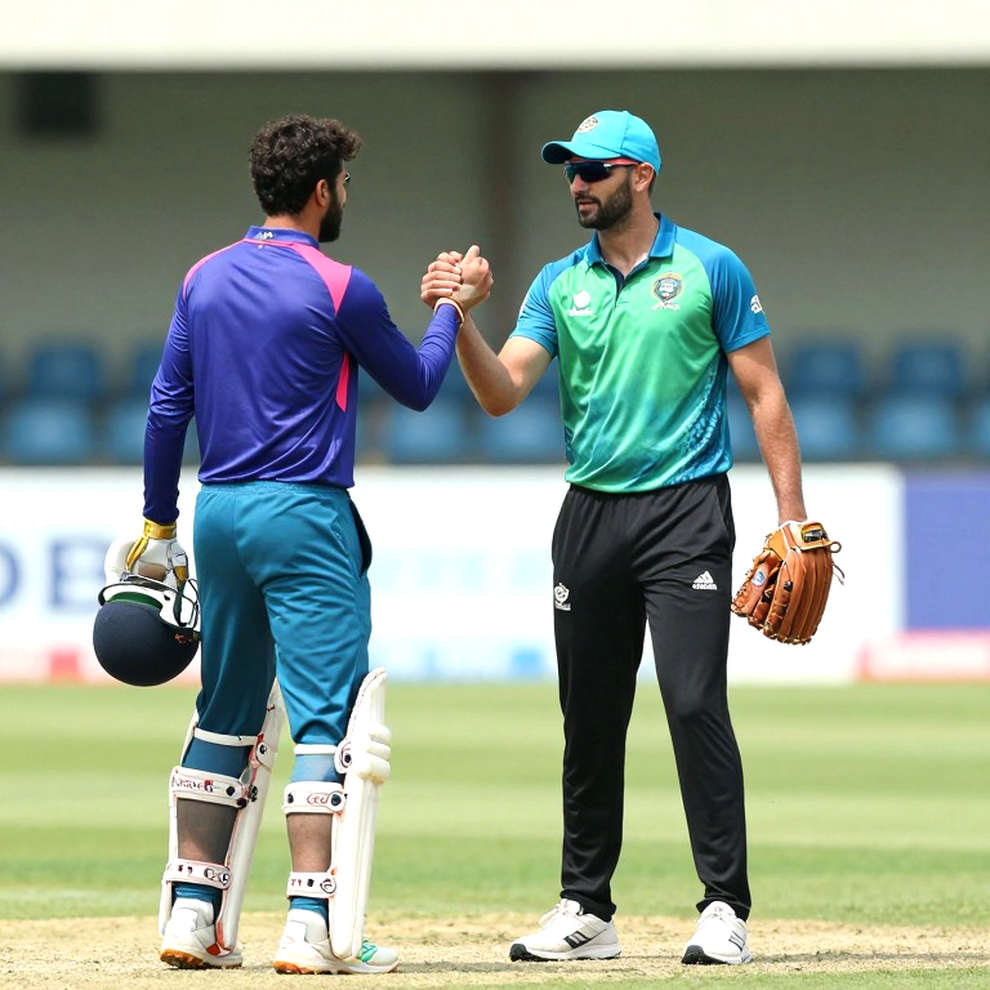
Litton's own performance complicates the picture. He made 2 and 0 in this event. A captain's personal form collapse adds pressure on the team, because when a side loses the leader's own score is questioned first. A caveat is essential here. From a two-innings sample you cannot declare a "finished" player. This is a two-innings window, not a trend. Anyone calling Litton finished off these two innings is ignoring sample size. A trend claim needs a larger window: strike rate, situational splits, recent series, none of which is present here.
Still, one structural observation holds. Litton is simultaneously wicket-keeper, captain and top-order batter. The load of three roles becomes heavier when form dips. For keeper-captains, form swings under pressure are typically larger; this is a low-to-medium confidence inference, not established fact.
One thing is worth remembering: on rankings or talent, there is no vast gap between the two sides. Sri Lanka are mid-tier too. The difference was created by one innings and one missing plan. The post-21/4 collapse was therefore not a "normal defeat to a superior opponent"; it was a failure of Bangladesh's own phase management.
A comfortable story has now formed: "Bangladesh lost by 63, so the team is weak." That story is wrong because it erases 21/4. The reverse comfortable story is also wrong: "we had them at 21/4, we were just unlucky." Both stories avoid the real event.
The real event is an execution blind spot. Early success gave the team a false security. When Ratnayake began counter-attacking, Bangladesh had no planned Plan B. Litton himself said there was no way back. That admission is really a tactical admission, an admission of a middle-overs contingency gap.
This is where the drinks break becomes relevant. The drinks break is not a pause; it is the moment a coach rewrites the script. If the script cannot be rewritten in the middle overs, the first-eight-over script itself collapses.
There is another layer to this match, off the field. According to reports, some squad members left the team hotel without informing the authorities, and disciplinary action has been mentioned. Litton defended those players and criticised the event's facilities and the federation's food. This is not mere gossip; it is an administrative-resource signal. When a captain publicly criticises an event's welfare arrangements, it becomes a fault line in the board-player relationship. These reports are not officially confirmed, however, and should be read with caveats. There is no integrity or fixing signal here; the risk is conduct-and-welfare, medium severity, but it will recur if ignored.
At the administrative level, three paths are imaginable. In the worst case, disciplinary action escalates into an open board-versus-players conflict, worsening Litton's critical relationship. In the middle case, an internal process concludes with minor sanctions, and the facilities complaint is buried after the tournament. In the best case, the complaint leads to improved welfare provisioning at future camps. All three are possible; the information currently points to the middle case.
Litton's "cricket has ups and downs" argument is a low-specificity explanation that will not satisfy a results-driven public, because the gap between his framing and the "first medal-less" fact is wide. This stance does not stop the debate, it prolongs it.
On the long horizon, one more point is needed. As cricket enters more multi-sport events, the standard of player welfare becomes a competitive matter. Complaints about practice facilities and food may seem small, but they signal future event-readiness. If the board does not take this seriously, the same complaint will return at the next event, and then it becomes not a single-event problem but an institutional one.
In the next few T20 matches my eyes will be on a specific pattern: whether Bangladesh start well and then collapse in the middle overs. If the pattern returns, it is no longer a "bad day"; it is a structural coaching and planning deficit, solved by a phase-specific strike option and a clear middle-overs contingency.
Litton's "why should I resign" stance prolongs the debate. The duration of this debate is tied to the captaincy-review cycle, weeks to a few months. The question is now clear: will this team learn to come back after 21/4, or will 21/4 remain its last big memory?