
Chasing 422 at Adelaide Oval: Harvey and McSweeney Keep South Australia's Improbable Dream Alive
অ্যাডিলেড ওভালে শেফিল্ড শিল্ডের তৃতীয় রাউন্ডে দক্ষিণ অস্ট্রেলিয়া চতুর্থ Inningsে ৪২২ রানের লক্ষ্যে তৃতীয় দিন শেষে ১ উইকেটে ১৮২ রান করেছে; প্রয়োজন More ২৪০ রান, হাতে ৯ উইকেট, অর্থাৎ প্রতি উইকেটে ২৬.৭ রান — যা তাদের প্রথম Inningsের ১৫.৪ রান-প্রতি-উইকেটের প্রায় ১.৭ গুণ। ম্যাকেঞ্জি হার্ভে ১৩২ বলে ৯০* (স্ট্রাইক রেট ~৬৮.২) এবং নাথান ম্যাকসুইনি ১৩২ বলে ৫৭* (~৪৩.২) নিয়ে ১৪০ রানের অবিচ্ছিন্ন দ্বিতীয়-উইকেট জুটি Averageেছেন। পশ্চিম অস্ট্রেলিয়া প্রথম Inningsে ৪০৬/৫ ডিক্লেয়ার করেছিল, দক্ষিণ অস্ট্রেলিয়া অলআউট হয় ১৫৪-এ, দ্বিতীয় Inningsে পশ্চিম অস্ট্রেলিয়া তোলে ১৬৯ (৬-৭৯ থেকে ১৬৯; অ্যাশটন আগার ১০১ বলে ৪৮, রকিচিওলি ২৮)। ব্রেন্ডন ডগেট ৪-৫১, লিয়াম স্কট ২-২২, ওয়েস আগার ২-৩৪; ঝাই রিচার্ডসন ১ উইকেট (ওয়েদারাল্ড ২৪, দল ১-৪২)। ক্যামেরন ব্যানক্রফট ১৮৬ রান করেছেন। চতুর্থ দিনে হালকা বৃষ্টির পূর্বাভাস, যা ওভার কমিয়ে রানরেট বাড়িয়ে দিতে পারে (৯৬ ওভারে ২.৫, ৭০-এ ৩.৪, ৫৫-এ ৪.৪)। সতর্কতা: এটি টেস্ট নয়, প্রথম-শ্রেণির ঘরোয়া ম্যাচ; সূত্র একক (cricket.com.au) এবং ফ্রেমিংয়ে প্রচারমূলক পক্ষপাত আছে।
At stumps on day three at Adelaide Oval the board reads South Australia 182 for 1. Target 422. Nine wickets in hand. Mackenzie Harvey unbeaten on 90, Nathan McSweeney unbeaten on 57. Read together, those three numbers say something concrete: in a four-day Sheffield Shield match, a state side needing 240 more runs in the fourth innings still sits inside the mathematical window of winning. But 'mathematically alive' and 'genuinely likely' are not the same thing, and the work of this report is to measure the gap between them.
One caveat first. This is not a Test match. It is Round 3 of Australia's domestic first-class competition — South Australia versus Western Australia, first-class, four days, Adelaide Oval. No World Test Championship points are at stake. Nothing here can be extrapolated to Test, ODI or T20 conclusions; every inference below stays inside the red-ball, first-class frame.
Second caveat: source. The underlying match report comes from cricket.com.au, Cricket Australia's own official platform. Reliability for hard data — scores, individual figures, wicket counts — is high. But there is structural promotional bias in the framing: the 'dare to dream' headline, the repeated 'genuine shot at victory' language. It is a single source with no independent corroboration available, and the reader should hold that limitation throughout.
The architecture of the scorecard
Western Australia made 406 for 5 declared in the first innings. South Australia were bowled out for 154. Western Australia's second innings produced 169. The arithmetic: 406 + 169 = 575; 575 − 154 = 421 lead; plus one makes the target 422. On the other side, 182 + 240 = 422. Three independent routes converge on the same number, which is a positive data-integrity signal — the core figures reconcile, and there is no confusion between declaration and innings totals.
Three days, three characters
Day one: Western Australia 1 for 257 — a batting day, a fresh surface, true bounce. Day two: 18 wickets — seaming, two-paced, nobody settled. Day three: South Australia 1 for 182 — the ball softer, the pitch calmer, batting easier. That sequence matters analytically. The same batting group produced 154 and then 1 for 182 on adjacent days. Attributing the second-innings resilience purely to skill would ignore a probable improvement in conditions. This is a medium-confidence inference; no independent pitch report is available.
The follow-on decision: the central gamble
South Australia trailed by 252 after the first innings (406 − 154). In four-day first-class cricket the follow-on threshold is 150 runs, so Western Australia were entitled to enforce it. They did not. They batted again and made 169. That choice is now the match's central tactical gamble. Enforcing the follow-on could have finished the game on day two against a demoralised line-up; instead, Western Australia bought a 422 target and, on a flattening surface, surrendered a measure of initiative. High confidence on the rule mechanics, medium confidence on Western Australia's internal rationale.
The 240-run arithmetic: a 1.7x problem
Nine wickets in hand, 240 runs needed — that is 26.7 runs per remaining wicket. South Australia's own first-innings productivity in this match was 15.4 runs per wicket. They need roughly 1.7 times their demonstrated output from the same line-up, on the same ground, days later. Difficult is not impossible, but it is not a default assumption either. This is the most under-reported number in the story: 'chasing 240' sounds easy in a headline; '26.7 versus 15.4' does not.
The most under-reported number of all: overs
The source report does not state how many overs remain on day four. Sensitivity: a full 96 overs makes 240 runs a required rate of 2.5 — comfortable. Seventy overs makes it 3.4 — manageable under pressure. Fifty-five overs makes it 4.4 — a genuine squeeze. Light rain is forecast for Saturday. Rain compresses overs and silently raises the required rate without changing the target: at 55 overs, the opponent is no longer only Western Australia but the clock.
Harvey's 90 not out: tempo conversion
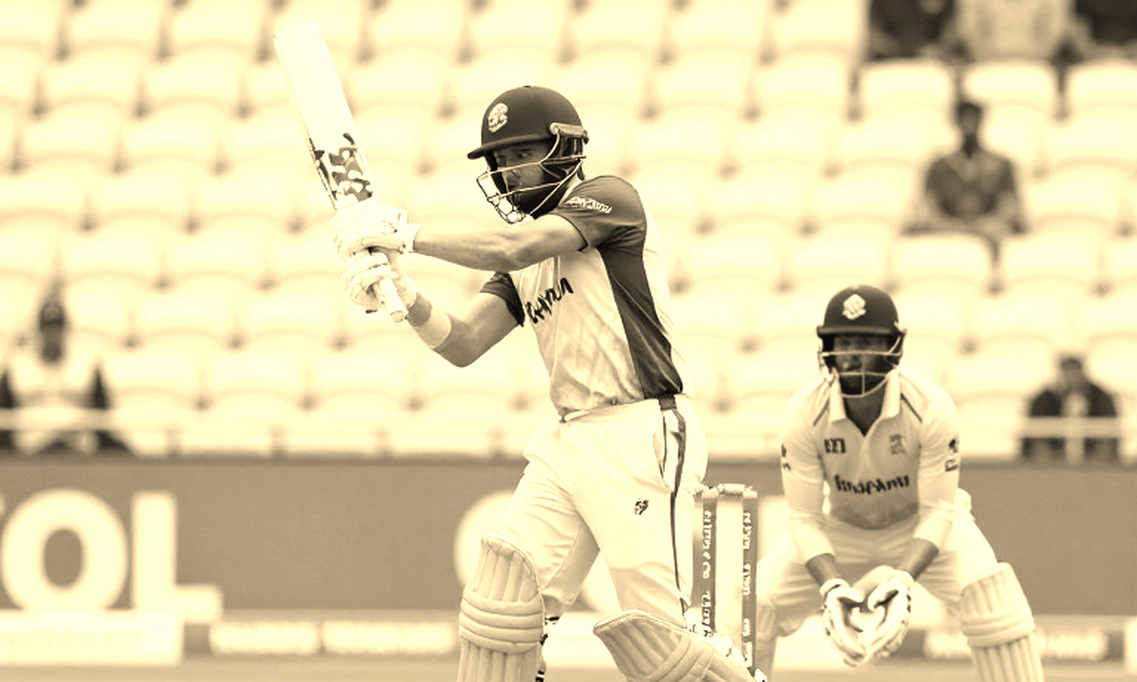
132 balls, 90 not out, strike rate around 68.2. First-class benchmarks put 45–55 as a solid anchor and 65-plus as attacking. Harvey sits deliberately between the two: scoring intent with the stumps protected, the correct architecture for a fourth-innings chase. Whether this is a batter maturing into a red-ball opener or a batter constrained by team instruction cannot be settled from one innings; season-long data is required. Low confidence.
McSweeney's 57 not out: anchor and captaincy load
132 balls, 57, strike rate around 43.2 — textbook anchoring, absorbing new-ball and second-innings pressure at the other end. The roughly 25-point tempo gap between the two is the partnership's design: one rotates the scoreboard, the other absorbs risk. Against the collapse pattern that produced 154, this is the correct defence. But McSweeney is also captain and carrying a 132-ball anchor innings — a dual mental and physical load that historically correlates with a concentration lapse just after reaching fifty or at the start of a new session. Low confidence, flag only.
Weatherald's 24: the underrated data point
The second innings began at 1 for 42, an opener gone inside the first 42 runs — precisely the scenario in which a fragile middle order is exposed. That South Australia reached 182 for 1 means the number three shielded the middle order successfully. Jhye Richardson took that wicket, his only one — but the highest-leverage dismissal of the innings.
Ashton Agar's 48: the most valuable innings in the match
Western Australia fell to 6 for 79 and reached 169, adding 90 for the last four wickets. Ashton Agar made 48 off 101 balls and Corey Rocchiccioli 28 — 76 between them. Had South Australia closed that out at around 110, the target would have been near 370 rather than 422. That 60-run swing is plausibly the difference between 'improbable' and 'gettable'. A frontline spinner batting 101 balls at eight or nine is exactly the lower-order depth premium that selectors pay for in red-ball cricket.
The bowling: Doggett, Scott, Agar, Richardson
Brendan Doggett's 4 for 51 is the best return in the match for South Australia and the only four-wicket innings haul — match-defining by first-class standards. Liam Scott's 2 for 22 is notably economical, suggesting a control role rather than a strike role; Wes Agar's 2 for 34 sits between. That division of labour is what held Western Australia to 169. Richardson's value is leverage, not volume — one wicket, but the breakthrough — and his remaining workload on day four is a live variable, not a given.
Bancroft's 186: the least analysed item
Cameron Bancroft made 186. A 186 in Shield Round 3 is a selection-signal innings in a way a fourth-innings 90 not out is not: the former is a repeatable red-ball method, the latter a single-innings rescue. Conflating the two is the classic media error, and the headline chased the 90 not out rather than the 186. Jayden Goodwin also featured, though detail is limited in the source.
McSweeney's part-time spin: a tactical signal
The captain bowled himself, took the Ashton Agar wicket and broke a 90-run lower-order stand. Two readings: genuine turn or wear on day three, or frontline-bowler fatigue. Both carry day-four consequences — sharper spin in the first case, a recovery question in the second. Alongside that, no frontline South Australian spinner appears among the wicket-takers, which suggests thin spin resources; on a day-four surface that is a structural weakness if the match must be saved rather than won.
A data inconsistency to verify
Eighteen wickets are said to have fallen on day two, but the visible wicket ledger — roughly 4 Western Australian first innings, 10 South Australian, up to 6 Western Australian second innings — does not perfectly reconcile, reaching as high as 20. Likely an over-count or a session-boundary definition issue. Not a major reliability problem, but worth checking.
A draw is not neutral
Shield points accrue for a first-innings lead. If rain removes day four, Western Australia would likely bank points from a 252-run lead — meaning their 'negative' second innings may still pay under competition rules. Precise points allocation pending verification; medium confidence.
Four scenarios
South Australia win: requires 240 more with nine wickets in hand and the Harvey–McSweeney stand surviving long — unlikely but not impossible. Western Australia win: a quick day-four breakthrough; two or three wickets in the first session turns 240 into a much harder ask. Draw: rain cuts sessions, or both sides shift into survival mode. Rain-shortened day: fewer overs, higher required rate — South Australia's real opponent becomes the clock.
Risks and limits
All player reads come from a single innings. Adelaide Oval is a home venue whose surface has shifted day to day, partially neutralising home advantage. Toss, day-two conditions and the day-four forecast are luck factors that cannot be stripped out. Sheffield Shield first-class matches are typically played without full DRS, so review controversy risk is low. Career and season data — ages, form trends — are not in the source and no conclusions are drawn from them.
What to watch
The question is simple: can a line-up that produced 15.4 runs per wicket in the first innings produce 26.7 per wicket in the fourth? The 140-run unbroken stand says the architecture is right. But a partnership does not win a match — the remaining eight batters must either hold firm or take on the run-scoring load. And the largest question sits in the sky. Light rain could turn a comfortable 2.5-an-over equation into a 4.4-an-over squeeze. Same match, same scoreboard, same batters — a completely different game. The epic chase is real, but conditional; the job of the reporting is to state the conditions, not only the dream.