
Asian Games 2026 Day 6: The 4.15m History, and the Numbers the Clock Never Gave
প্রশ্ন: এশিয়ান Games ২০২৬-এর ষষ্ঠ দিনে ভারতের অ্যাথলেটিক্স ফলাফলে মূল বিশ্লেষণীয় দুর্বলতা কী? সংক্ষিপ্ত উত্তর: রিপোর্টে পদক ও স্থান আছে, কিন্তু ১০,০০০ মিটার ও ৪০০ মিটারের কোনো সময়, বাতাসের রিডিং বা স্প্লিট নেই — তাই পারফরম্যান্সের গুণমান যাচাই অসম্ভব। মূল তথ্য: - গুলবীর সিং পুরুষদের ১০,০০০ মিটারে রুপো জেতেন; সময় রিপোর্ট করা হয়নি। - ব্যারানিকা ইলানগোভান ৪.১৫ মিটারে ব্রোঞ্জ, যা প্যারিস এন্ট্রি স্ট্যান্ডার্ড ৪.৭৩ মিটারের চেয়ে ০.৫৮ মিটার কম। - মনপ্রীত কৌরের ১৭.১৭ মিটার শট পাট ব্রোঞ্জ বৈশ্বিক স্ট্যান্ডার্ড ১৮.৮০ মিটারের চেয়ে ১.৬৩ মিটার কম। - মিশ্র ৪x৪০০ মিটার রিলেতে রুপো; ষষ্ঠ দিন শেষে ভারত ২২ পদক নিয়ে দ্বাদশ। - তুলনার ভিত্তি: ২০২২ সালের এশিয়ান Gamesে ভারতের ২৮ স্বর্ণ। সূত্র: ষষ্ঠ দিনের ইভেন্ট রাউন্ডআপ ও স্টেজ-২ গভীর বিশ্লেষণ প্রতিবেদন, ২০২৬। সম্পর্কিত প্রশ্নোত্তর: প্রশ্ন: ভারতের পোল ভল্ট পদক কি সক্ষমতার উন্নতি? — উত্তর: না, ঐতিহ্যবাহী এশীয় শক্তির অনুপস্থিতিতে তৈরি সুযোগ হিসেবে পড়া বেশি যুক্তিসঙ্গত। প্রশ্ন: মিশ্র রিলে রুপোর তাৎপর্য কী? — উত্তর: চার অ্যাথলেটের সমন্বিত মান বোঝায়, যা কোনো একক ব্রোঞ্জের চেয়ে শক্তিশালী সিস্টেম-সিগন্যাল। প্রশ্ন: Next ধাপে কী দেখতে হবে? — উত্তর: ইলানগোভানের ৪.১৫ মিটার ব্যক্তিগত সেরা কি না, এবং থান্নারাসু হিটের গতি ফাইনালে রূপান্তর করতে পারেন কি না।
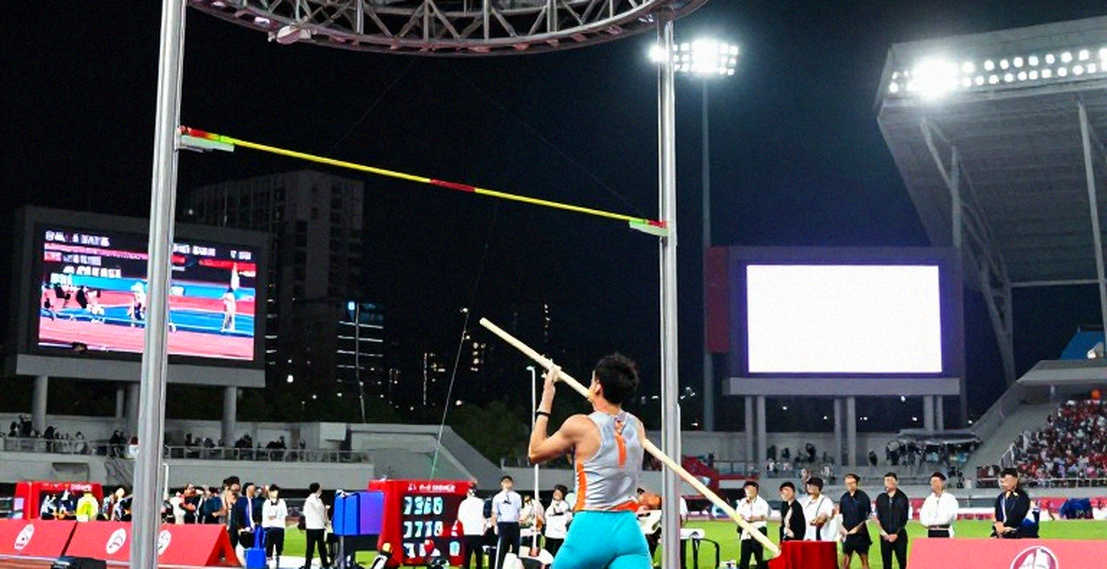
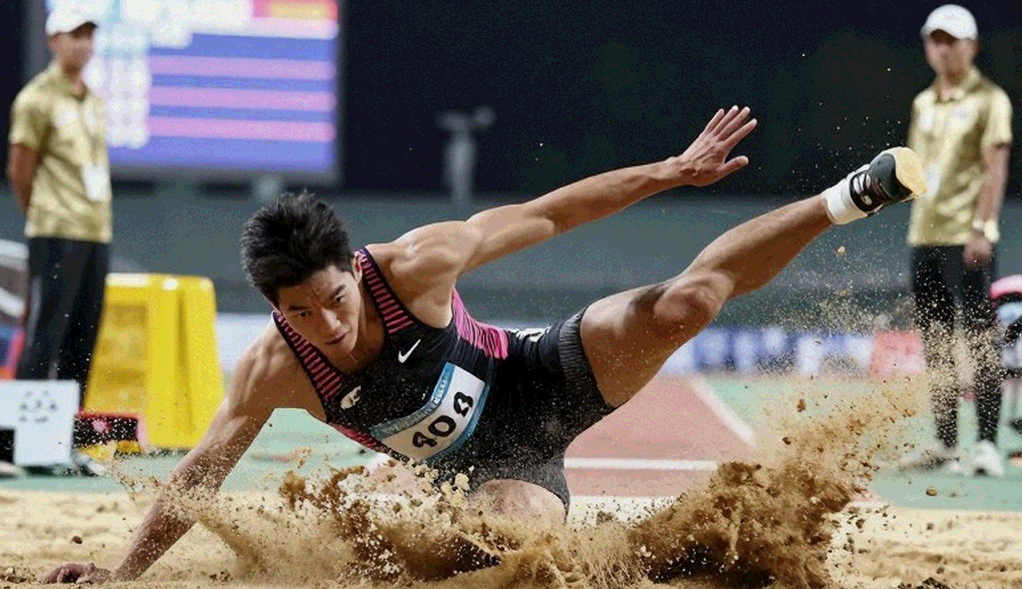
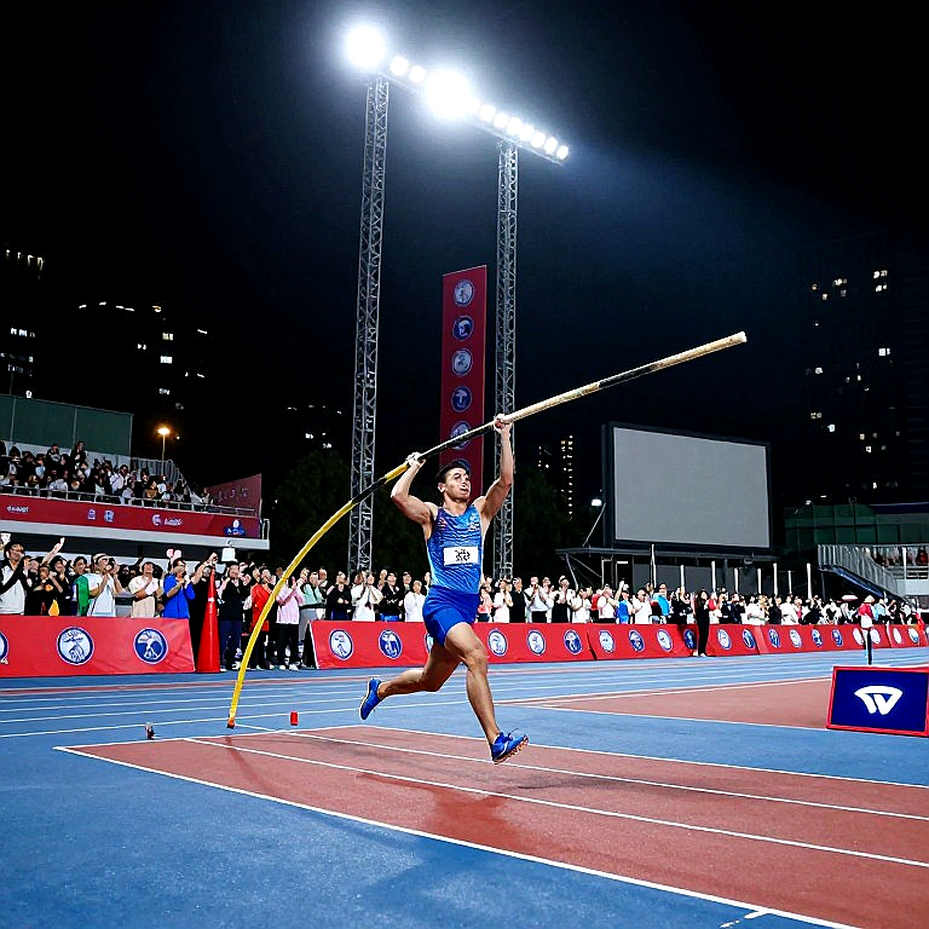
4.15 metres. On the evening of Day 6 at the Aichi-Nagoya pole vault apron, that clearance became India's first ever Asian Games pole vault medal — and it stands as the only hard number the athletics reporting from that day preserved. On the same night Gulveer Singh took silver in the men's 10,000m; no time appears anywhere. Vishal Thennarasu won his 400m heat and moved into the final; no time, no wind reading, no split. Manpreet Kaur's shot put bronze is written down at 17.17m, but where the gold finished, nobody says.
I do not ask the data to speak; I command it into a decision. Day 6's data issued one instruction: where the clock gives no number, no sentence about performance quality can be written — only the colour of the medal. And a medal's colour carries no contract with world standard.
The desk report carried 56 information points that day. Athletics held four of them: the men's 10,000m, the men's 400m heats, the women's pole vault, the women's shot put. The rest was shooting, badminton, kabaddi, hockey, boxing, squash, table tennis, weightlifting, swimming, esports. That ratio is the first piece of evidence: on a day of a continental championship, athletics occupies a few result-sheet lines, and in that frame no pipeline conversation ever begins. India sat 12th with 22 medals after Day 6, with the 2026 total of 28 gold recurring as the benchmark. A mid-Games position never predicts an ending, because medal-heavy sports are not scheduled evenly across a Games.
The athletics results still deserve reading on their own terms.
First, the scale, because without scale the word 'historic' is meaningless. The men's 10,000m world record is 26:11.00 (Cheptegei, 2026); the Paris entry standard is 27:00.00. The women's pole vault world record is 5.06m (Isinbayeva, 2026), the Paris standard 4.73m. The women's shot put world record is 22.63m (Lisovskaya, 2026), the Paris standard 18.80m.
Now count the gaps. Elangovan's 4.15m sits roughly 0.91m below the world record and 0.58m below the global entry standard. Manpreet Kaur's 17.17m is about 1.63m short of the global entry standard. Both bronzes are historic as national precedent and modest in absolute terms — the distance between those two statements is the most neglected story of the day.
Gulveer Singh's case runs the other way. His time was not reported, so quality cannot be verified. The race's shape still permits an inference: two Bahraini runners worked tactically against him, and coordinated team running against a single marked opponent is the signature of a group-trained distance squad. He also closed the final 400m 'extremely well'. Place those two facts together and the picture is not a time trial but a kick-decided championship race, the winning time probably in the 28:00–29:00 band, at low-to-medium confidence.
That is not a negative reading. A silver won in the final lap means rivals treat him as the marked man; an athlete who forces a coordinated team plan out of an opponent is made of big-meet metal. The problem is that the 28-minute band and the 27-minute standard are different continents.
The value-adjustment layer has to stay honest. Aichi-Nagoya sits near sea level, so there is no altitude dividend, and that much is certain. No wind readings exist, so track marks cannot be corrected. Carbon-plated distance shoes systematically inflate modern 10,000m marks, but without a time the dividend cannot be stripped out; the equipment gain is unquantifiable here.
Thennarasu's case, a 400m heat won the day after a relay leg, is low-information. Accelerating over the last 50m is a positive speed-endurance shape signal, but a heat is a preliminary round, and heat-to-final conversion in the 400m is notoriously noisy. On top of that sits load: mixed 4x400m relay silver, then an individual round, then a final. Neuromuscular fatigue accumulates quietly and shows up in the final, not the heat.
The strongest systems signal of the day is not any individual medal — it is the mixed 4x400m relay silver. A relay medal demands four athletes at a coordinated standard, a baton-exchange process and coaching continuity working at once. A bronze can be won by accident. A relay medal almost never is.
One more thing stands out about Gulveer Singh: silver at the Glasgow Commonwealth Games in July and silver at Aichi-Nagoya in September–October, two championship peaks roughly eight weeks apart. In a 5,000m/10,000m profile that sits at the edge of accepted periodisation. He landed both, so the outcome is positive, but it is a controlled gamble that paid, not a physiological guarantee.
A smaller but meaningful cluster: two of the four athletics medallists come from Tamil Nadu. That is a soft signal of a functioning regional pathway — though how much is athlete quality and how much is unequal resource distribution sits outside the report.
Sports culture worships memory; I audit the memory with timestamps. When the pandemic emptied the calendar in 2026, I spent five months reconstructing 32 years of National Athletics Championships results from microfilm, then split the dataset into hand-timed and electronically timed eras so the two could never sit side by side carelessly. The 2026–2026 sprint marks were hand-timed, and that single fact broke a comfortable 'decline' narrative. Through Russia 2026 my remote desk was a vigil of time zones and touch maps. The habit issues the same instruction now: 'historic' here means historic as national precedent, not historic by world standard — two different units, and I do not mix units.
This is where the counter-intuitive reading sits. India's first pole vault medal is less a capability upgrade than a window of opportunity. Asia's traditional pole vault centre is China, whose athletes normally operate at 4.50m and above; a 4.15m bronze implies the gold probably landed in the 4.30–4.50m band, well below the 2026 Hangzhou standard. That is a vacuum, not a transformation. The 17.17m shot put reads the same way: more a field-depth signal than an athlete signal, with a wide gap between the leaders and the pack and India occupying the third tier.
The danger of confusing correlation with causation announced itself on the badminton court the same day — the defending champions took the first set 21-12, lost the next two and exited. A live model of how fast a 'banked gold' becomes a 'robbed gold'. When 4.15m and 17.17m are labelled historic today, the next cycle will ask the obvious question: so where is the improvement? The expectation ratchet is not new to Indian athletics.
What to watch is therefore specific. Whether Elangovan's 4.15m is near her personal best or a plateau — if the federation does not say, the projections will point the wrong way. Whether Thennarasu can convert a heat surge into final-round pressure, the cleanest single test of this cycle. And whether any desk, anywhere, publishes the 10,000m time — because the archive will eventually demand the number.