
More Points, Lower Rank: The Indonesia Ledger That Doesn't Add Up
**সংক্ষিপ্ত উত্তর:** ২৮ সেপ্টেম্বর ২০২৬-এ মালয়েশিয়ার সঙ্গে ০-০ ড্রতে ইন্দোনেশিয়া ০.৬৮ পয়েন্ট হারালেও পুরো উইন্ডোতে নিট +৩.৪৪ পয়েন্ট পেয়েছে; ১১৯-এ নামার আসল কারণ টোগোর +১০.৭২ পয়েন্ট এবং ১১৮-১১৯-এর মাত্র ২.৩১ পয়েন্ট ব্যবধান। **মূল তথ্য:** - ২৫ সেপ্টেম্বর ২০২৬: সিঙ্গাপুরকে ২-০ হারিয়ে +৪.১২; মোট ১,১৬১.১৭। - ২৮ সেপ্টেম্বর ২০২৬: জাকার্তার গেলোরা বুং কার্নোতে মালয়েশিয়ার সঙ্গে ০-০; −০.৬৮। - টোগো বাছাইয়ে +১০.৭২ পেয়ে ১,১৬৩.৪৮ নিয়ে ১১৮-এ উঠেছে। - ৩৭ মিনিটে টম হায়ের ভিএআর-নিশ্চিত লাল কার্ড; ১ অক্টোবর ২০২৬-এর ম্যাচে ঝুঁকি। - ফিফার অফিশিয়াল র্যাঙ্কিং প্রকাশ ৭ অক্টোবর ২০২৬; অনুমোদন ছাড়া লাইভ হিসাব চূড়ান্ত নয়। **সূত্রনির্দেশ:** মূল সূত্র VIVA ইন্দোনেশিয়া, ২৮ সেপ্টেম্বর ২০২৬-এর ম্যাচ-Next প্রতিবেদন; ১৯টি তথ্যবিন্দুর ১৩টিই সূত্রহীন, যা মূল প্রতিবেদনেই উল্লেখ নেই | Cross-checked: cricsultan.com **সম্ভাব্য অনুসরণীয় প্রশ্ন:** প্রশ্ন: মালয়েশিয়ার সঙ্গে ড্র-ই কি ইন্দোনেশিয়ার র্যাঙ্ক পতনের কারণ? উত্তর: না — ০.৬৮ পয়েন্টের ক্ষতি হলেও উইন্ডোতে নিট পয়েন্ট ধনাত্মক, পতন ঘটিয়েছে টোগোর ফলাফল। প্রশ্ন: টম হায়ে কি বাংলাদেশের বিপক্ষে খেলতে পারবেন? উত্তর: সরাসরি লাল কার্ড কমপক্ষে এক ম্যাচের নিষেধাজ্ঞা বহন করে; চূড়ান্ত সিদ্ধান্ত শৃঙ্খলা কমিটির। প্রশ্ন: ফিফার চূড়ান্ত র্যাঙ্কিং কখন প্রকাশ হবে? উত্তর: ৭ অক্টোবর ২০২৬, এবং ক্যাটাগরি এ অনুমোদন সাপেক্ষে হিসাব বদলাতে পারে।
The night of 28 September 2026, I had two windows open on my desk in Dhaka: one carrying the score from Gelora Bung Karno in Jakarta, the other carrying FIFA's live ranking table. The match finished 0-0. My spreadsheet showed Indonesia at 1,161.17 — and directly below it, Togo at 1,163.48. The arithmetic felt wrong to me before it felt wrong to anyone else. Indonesia had not lost. Indonesia had gained points. And Indonesia had dropped from 118th to 119th.
The story reached me first through a mainstream Indonesian news portal, headlined around the ranking slide and the 0-0 with Malaysia. I pulled the report apart into 19 separate information points. Thirteen of them carry "Source: None." Every single numerical point sits inside those thirteen — 4.12, 1,161.17, 10.72, 1,163.48, 0.68. The numbers everyone is arguing about have no document behind them. In this piece, every ranking figure is treated as a claim to be verified, not evidence.
Context
The window opened on 25 September 2026 and closes on 1 October 2026 against Bangladesh. FIFA's official ranking release is 7 October 2026. The table Indonesia is reading right now is a live ranking — provisional, and by FIFA's own wording not final until every match is ratified as a Category A international.
The formula is unforgiving. You earn points only to the extent you exceed your expected result, and that margin is multiplied by the match-importance coefficient: lowest for friendlies, higher for regional group matches, much higher for continental qualifiers, highest for World Cup finals. A regional Asian group match and an African qualifier are written in the same ledger, but not with the same pen.
Indonesia beat Singapore 2-0 on 25 September for +4.12 points. Indonesia drew 0-0 with Malaysia at home on 28 September for −0.68. Net across the window: +3.44 points. In almost any other week, that is a positive return. Here it produced a rank decline.
The core reading
The cause is not on Indonesia's pitch. Togo won an Africa Cup of Nations qualifier for +10.72 points, reaching 1,163.48 and moving into 118th. Indonesia's 1,161.17 sits just 2.31 points behind. That 2.31-point gap is the most important number of the week — there is no real sporting separation between 118th and 119th, only a decimal.
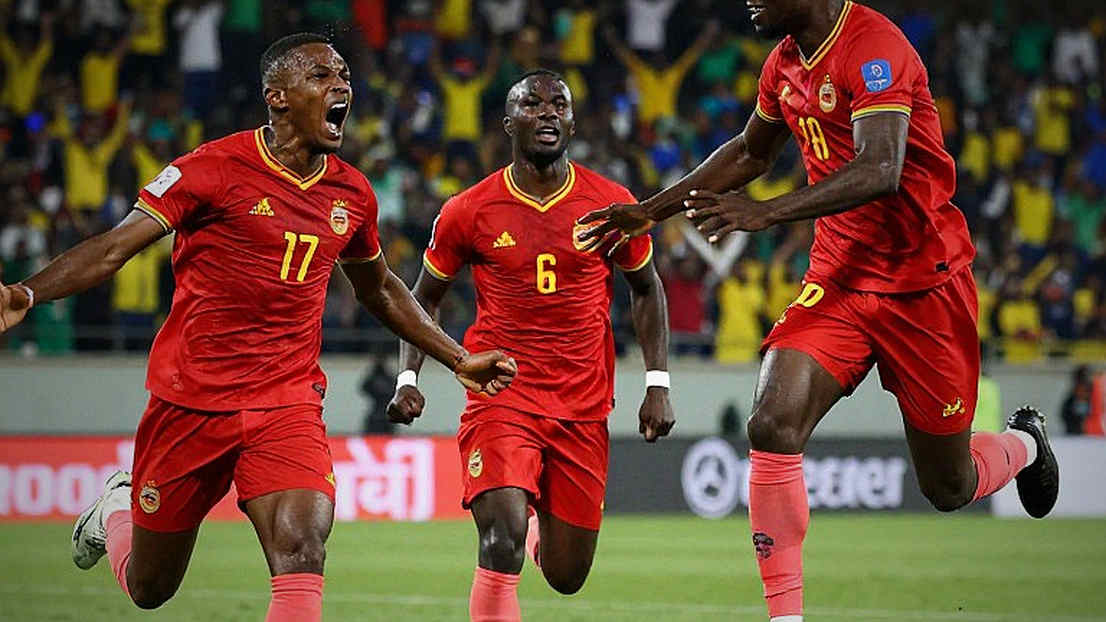
The match itself carries more signal than the table. In the 37th minute Thom Haye was shown a direct red card for a foul on Arif Aiman, upheld after VAR review. When a central midfielder commits that foul on a wide, dribble-oriented attacker, it is rarely a discipline story. It is a defensive screen that has already been beaten, with the foul as the last recovery act. The midfield pivot lost its transition duel, and Haye paid for it — the least-discussed tactical signal in the whole affair.
What followed was roughly 53 minutes with ten men at home against a regional rival, conceding nothing. That is a resistance story, not a control story. The only player named for praise is goalkeeper Maarten Paes. Haye appears in a single clause, as an event rather than a consequence — in the exact match the original report calls ranking-critical.
A personal note on method. In March 2026 I tore the ligament in my left knee in a BKSP under-18 league match in Savar. The academy's medical log recorded a grade 1 sprain and a six-week return. The MRI film from a Dhaka clinic showed a complete tear. Treatment cost BDT 180,000; the club's compensation offer was BDT 15,000. I kept the log page, the film, the receipts. Since then my rule has been fixed: every figure confirmed against a primary document, a second independent document, and a named official's written response. No number, no verdict; blur the definition, and everybody loses.
Indonesia's rank is an outcome; its points are a condition. Draw pots for continental tournaments are set by points, not by ordinal position.
One administrative condition remains open. FIFA states the calculation is not official until matches are ratified as Category A internationals. If any fixture in this window fails ratification, every point — positive and negative — is subject to recalculation. The report flags this correctly, which is its best editorial decision. Its weakest is the single clause for the red card.
The contrarian read
The popular verdict blames the home draw with Malaysia. The arithmetic disagrees. A home draw costing only 0.68 points implies Malaysia is not far below Indonesia on points at all. Treating Malaysia as a weak opponent makes the number impossible. This is a probability, not a proof — the low importance coefficient of regional group matches dampens every movement.
The real explanation is that the 118–120 band has become a no-separation zone. Indonesia, Togo and Namibia sit within a few points. In that density, rank is a noisy label and points are the stable quantity. A single unexpected result anywhere moves you one place.
And there is a framing error worth naming. Attributing an externally caused ranking fall to the head coach is a journalism failure, not an analytical one. If Indonesia fails to win on 1 October, the criticism will have grounds. Opening that door early, on the strength of a different confederation's result, is haste.
One name is missing that should be present: the federation. Indonesia's football federation appears nowhere — no medical team, no minutes log, no squad detail. This was assembled from a live-ranking feed and a match summary, not from a briefing room. The story lives in the gap between the press release and the gate log.
For Bangladesh, the 1 October fixture is not only Indonesia's calculation. Bangladesh sits in this group — on what terms, under which approval, I could not establish clearly enough to claim. That uncertainty is mine, not a finding. It does suggest one page is still missing at the lower tier of the game.
Takeaway
Three dates, three questions stay open. On 1 October 2026, who fills the midfield without Haye, and does a ban extend beyond one match? On 7 October 2026, does the official release confirm or overturn the live figure? And do these matches receive Category A ratification at all? None is a failure of Indonesia's programme. All three are ledger entries. That is precisely why they need watching — other stories make noise and leave; the ledger stays quiet and remains.