
Shin Tae-yong's 45.6 Percent and Herdman's Missing Number: What Indonesia's Coaching Transition Measures and What It Buries
**মূল উত্তর:** ইন্দোনেশিয়ার Coach-রূপান্তরে শিন তাই-ইয়ংয়ের ৫৭ ম্যাচে ৪৫.৬% জয়ের হার এবং ক্লুইভার্ট-হার্ডম্যানের অনুপস্থিত Statistics দেখায় যে ঘোষিত 'Statisticsগত তুলনা' আসলে অসম্পূর্ণ, কারণ তিনজনের মধ্যে দুইজনের তথ্যই অনুপস্থিত। **মূল তথ্য:** - শিন তাই-ইয়ং: ৫৭ ম্যাচে ২৬ জয়, ১৪ ড্র, ১৭ হার; জয়ের হার ৪৫.৬%। - স্টাইলের সময়ে ১০৬ গোল করা, ৭৫ গোল হজম; প্রতি ম্যাচে Averageে ১.৮৬ স্কোর ও ১.৩২ কনসিড। - প্যাট্রিক ক্লুইভার্ট ২০২৫ সালের জানুয়ারিতে দায়িত্ব নেন; তাঁর কোনো ফলাফলের সংখ্যা প্রতিবেদনে নেই। - জন হার্ডম্যান ২০২৬ সালের ট্রফি জেতেন; তাঁর জয়ের হারও উল্লেখ করা হয়নি। - প্রতিবেদনে ৫ অক্টোবর ২০২৬ তারিখ ও 'ফিফা আসিয়ান কাপ' নাম ব্যবহার করা হয়েছে, যেটি যাচাই দাবি করে। **সূত্র:** ভিভা প্রতিবেদন, বিশ্লেষণভিত্তিক পুনর্মূল্যায়ন | Cross-checked: cricsultan.com **সম্পর্কিত প্রশ্নোত্তর:** Q: শিন তাই-ইয়ংয়ের জয়ের হার কম কেন? A: কারণ তাঁর কার্যকালে প্রতিপক্ষের মান ধারাবাহিকভাবে বেড়েছিল, তাই একই হার বেশি মূল্যবান। Q: ইন্দোনেশিয়ার উত্থানের আসল চালিকাশক্তি কী? A: বিদেশে খেলা ও প্রবাসী খেলোয়াড়দের প্রবাহ, যা দ্রুত কিন্তু যোগ্যতা-নিয়মের প্রতি সংবেদনশীল। Q: 'ফিফা আসিয়ান কাপ' নামটি কি সঠিক? A: না, আসিয়ান চ্যাম্পিয়নশিপ আয়োজন করে আসিয়ান Football ফেডারেশন (এএফএফ), ফিফা নয়।
Even after the penalty shootout ended, nobody switched off the screen in that Jakarta cafe. For two seconds before the ball hit the net, an entire country held its breath; then came 4-2. Indonesia beat Thailand, the trophy went up, and one number floated across the feeds all night — the final scoreline. Some wrote of a new era, some wrote of John Herdman's magic. But the day I opened my notebook — out of habit, because I learned the rhythm of a locker room before I learned the rhythm of a keyboard — a different number stopped me, one nobody was celebrating: 45.6 percent.
That is Shin Tae-yong's win rate across fifty-seven matches — twenty-six wins, fourteen draws, seventeen defeats. A modest number buried inside a trophy-winning story. And right there sits the real question of Indonesia's coaching transition: are we actually comparing coaches, or just the shadows of their numbers?
Three names have circled Indonesia's national team in recent years. Shin Tae-yong, who built the side over nearly six years from 2026, in what the original report calls difficult circumstances. Then Patrick Kluivert, appointed in January 2026, who inherited a squad where a number of players were already playing abroad. And then John Herdman, into whose hands the 2026 trophy fell.
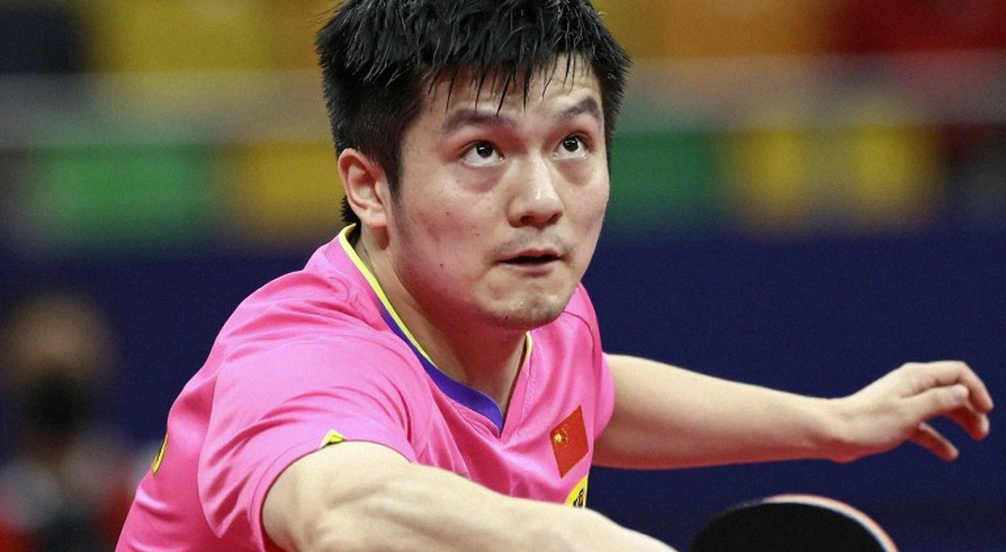
The VIVA report frames it in a familiar way: Kluivert as STY's successor, Herdman as the finisher. The frame is catchy, but there is a gap in it that jumps out. The headline promises a statistical comparison, yet Herdman's win rate is nowhere. Kluivert's results are missing too. So what exactly is being compared?
This is where an old habit kicks in. I look for the person behind the number. Over more than twenty years I have learned that a scoreline and a team's real condition often diverge — and that gap is the story. For Indonesia, that gap is now clear: the team has climbed from the phase of building a competitive side to the phase of a side demanded to win trophies. That is an expectation ladder, and the higher it climbs, the more it hurts when someone falls.
Let us break down Shin Tae-yong's fifty-seven matches. Twenty-six wins, fourteen draws, seventeen defeats — a 45.6 percent win rate. One hundred and six goals scored, seventy-five conceded. Roughly 1.86 scored and 1.32 conceded per match. Read together, those two numbers hint at a structure: a side conceding fewer than one and a half goals a game usually prioritises shape over all-out attack. That is not the picture of a possession-dominant team; it is the picture of a restrained, transition-oriented block — at least, that is what the numbers whisper.
A 45.6 percent win rate means far more when opponent quality rises year after year than the same rate built against static, weaker opposition. That is the real context for Indonesia, and it is the least discussed part of the original frame. Nobody placed opponent strength beside the win rate. Yet football history repeatedly shows that when a team climbs from regional to continental level, its win rate can temporarily dip — because the opposition is getting harder.
What recurs about STY is that he built the team. On paper this is proven by two things: Indonesia's first-ever passage to the Asian Cup knockout stage, and reaching the third round of World Cup qualifying. Neither is the fluke of a single match; both are the product of a process in which opponent quality rose in parallel. A coach who pulls a team from nothing to a regional trophy and the doorstep of continental knockouts cannot be measured by win rate alone — because foundation-building always sits in the shadow of results.
One thing must be kept in mind. In football, the foundation-layer coach and the finishing-layer coach should never be measured on the same yardstick. One builds a team; the other takes a built team to a trophy. Their risks differ, their timelines differ, their expectations differ. Shin Tae-yong was the first kind. Kluivert and Herdman are the second — at least on paper. That distinction is the original report's biggest overlooked truth.
Then comes the overseas-player question. The report says that under STY many players gained international experience and became capable of moving abroad, and that by Kluivert's arrival the squad contained a notable number of overseas-based players. This is the real variable nobody is framing properly. Indonesia's rise has been accelerated mainly from outside — through overseas and diaspora players — rather than as the organic output of its own academies. That path is fast, but far more sensitive to changes in eligibility rules.
That sensitivity deserves thought. When a team leans on diaspora and dual-nationality players, its foundation rests not on academy soil but on paperwork and rules. The slightest change in FIFA's eligibility framework could shake that structure. Indonesia's path has delivered quickly, but it is the path where the risk hides not on the pitch, but in the committee room.
And here comes the fan voice, which I never omit. At the Russia World Cup I spent two days in Moscow's fan zones with Bangladeshi expatriates and Argentine supporters, just to understand that loyalty has a pulse. The same holds for Indonesia. When that young man in the Jakarta cafe shouted penalty, he was not thinking about tactics. He was thinking about whether he would wear his father's old jersey. Fan loyalty does not measure numbers; it measures memory. And inside that memory sits the team's real patience — the thing that does not change when coaches do.
Back to hard facts. The comparison the report wanted to make centred on three coaches' statistics. What we actually get is: STY's fifty-seven matches, 26-14-17, 45.6 percent; no results figure for Kluivert; Herdman's win rate also absent. In a three-way comparison, two of the numbers are missing — meaning what is called analysis is really one man's numbers placed beside two men's expectations. That is not analysis; it is a frame. And a frame's job is to keep the story straight, even when the facts are crooked.
Look at the regional picture and another thing becomes clear. The final pitted Thailand against Indonesia — the familiar two-horse race at the top of Southeast Asia. Indonesia, Thailand, Vietnam: that contest for supremacy is the permanent structure of regional football. Indonesia's rise means that contest is getting harder, which makes its win-rate arithmetic even more complex.
Look again at the expectation ladder. The target used to be building a competitive team. Now it is winning trophies, and the next step is surviving World Cup qualifying. That ladder becomes dangerous precisely when a gap opens between a team's real ability and outside expectations. And the cost of that gap is usually paid by the incumbent coach, not his predecessor.
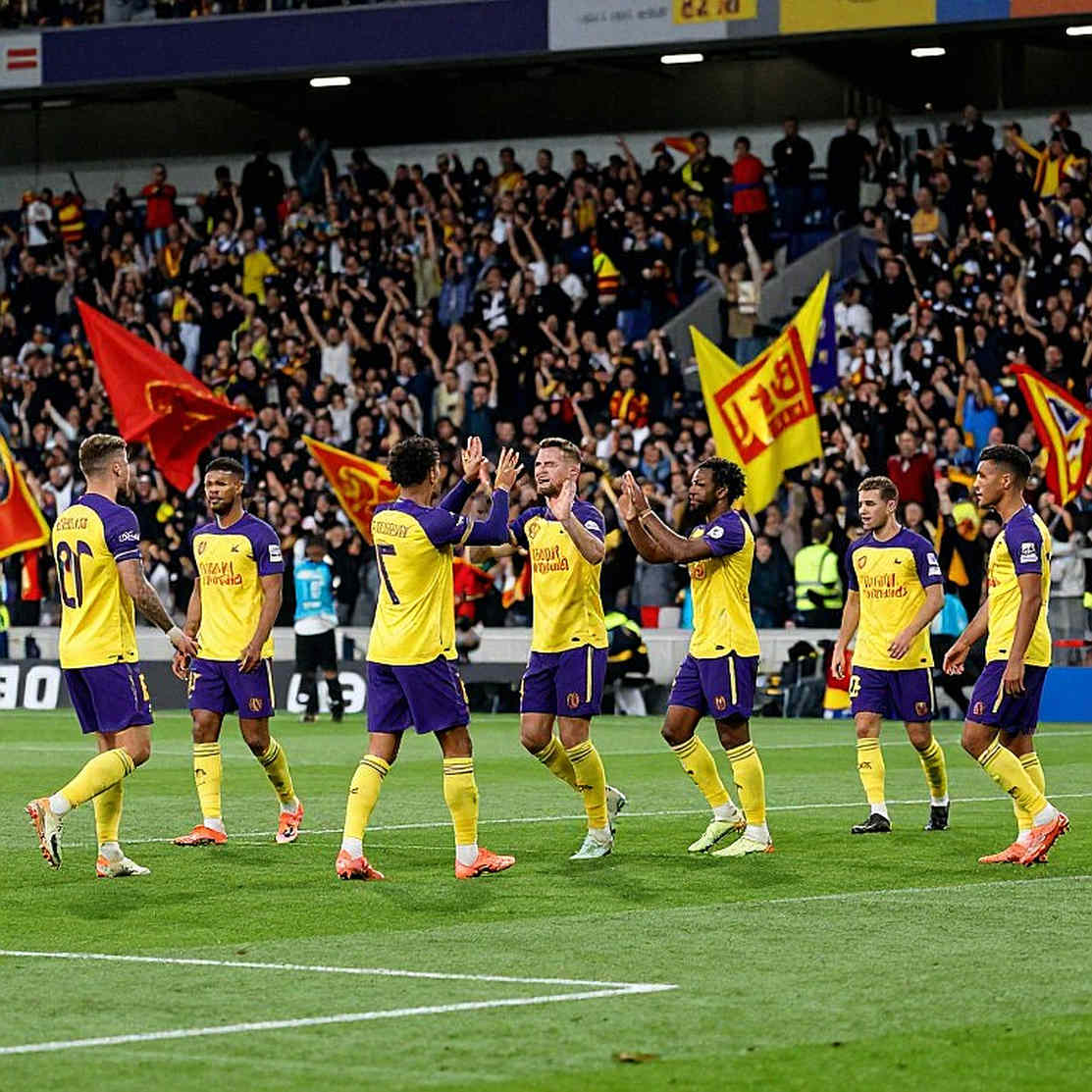
Here a quiet thing surfaces. The reassessment of Shin Tae-yong's legacy began right after his successor's success. This is not rare in football — when a coach leaves and the team he built then succeeds, people look back and rediscover him. Some call it history's justice. I call it the timing of a story.
Now to where I disagree with the main narrative. First, if a trophy won on penalties is read as proof of a new level, that is a risky reading. 4-2 is a shootout result — a narrow-margin, high-variance event. One penalty goes left and the story flips. No coach's complete record can be built on such outcomes. The best stories are not in the press conference; they are in the hallway after — where someone admits, we were lucky.
Second, a small but important point. The report calls the tournament the FIFA ASEAN Cup 2026. But the ASEAN Championship is organised by the ASEAN Football Federation, not FIFA. This is either a journalistic error or a hint of a genuine future rebrand. Either way, it demands verification. And if a tournament's very name carries such uncertainty, leaping to firm conclusions about its results is unwise.
Third, the date. The report gives the match date as 5 October 2026 — a future date. Future events cannot be cross-checked against established records. I am never willing to write a claim that sits outside verification. To me verification is not just matching two sources; it is admitting that some things remain unknown. Several claims here carry no source, and that is the loudest warning.
Fourth, a chronological inconsistency. Kluivert takes charge in January 2026 and is said to still be pursuing 2026 World Cup qualification, yet Herdman has just won a 2026 trophy. So what is the actual sequence? Did Kluivert step aside, or are two different roles being described? The report offers no answer. In a comparative piece the timeline must be clear, and here it is the murkiest part.
Read together, these inconsistencies raise a possibility. When a piece has a forceful headline but weak evidence, there is usually a reason — either the information is incomplete, or the piece is a speculative scenario. I cannot state either with certainty, and stating things without certainty is not my way. ENFJ means I feel the room before I quote the room — but feeling and proving are not the same thing.
A transfer is not a transaction; it is a rumor that learned to walk. The same applies to coaching transitions. The news of a coaching change spreads like a rumor, tangled with expectation, resentment, and old stories of success. For Indonesia that story is now stuck among three names, each needing its own yardstick.
What to watch now is what Indonesia measures itself against over the next twelve months. If the yardstick is a regional trophy, the team is setting a target smaller than its ability. If the yardstick is climbing beyond the third round of World Cup qualifying, then the real question is how sustainable its reliance on overseas players is. One thing I know for certain: at sixty I traded the printing press for a timeline, but kept the same deadline heart — and that heart tells me that however beautiful the numbers, the story always ends in the hallway.