
The Ledger of an Empty Stadium: The Accounting Buried Behind the Ireland-Israel 1-1 Draw
**সংক্ষিপ্ত উত্তর:** আয়ারল্যান্ড ও ইসরায়েলের নেশনস League ম্যাচ ১-১ ড্র হয়েছে সার্বিয়ার নিরপেক্ষ, দর্শকশূন্য ভেন্যুতে। আয়ারল্যান্ড ৩৯ মিনিটে পেনাল্টি থেকে এগিয়ে গিয়েও ৪৭ মিনিটে সমতা হজম করে। Players এক সপ্তাহে দ্বিতীয়বার হ্যান্ডশেক এড়িয়ে ভঙ্গি দেখান। **মূল তথ্য:** - ফলাফল: আয়ারল্যান্ড ১-১ ইসরায়েল, উয়েফা নেশনস League, নিরপেক্ষ ভেন্যু, দর্শকশূন্য গ্যালারি। - গোল: ৩৯ মিনিটে ট্রয় প্যারট (পেনাল্টি); ৪৭ মিনিটে পেরেজ (গ্লোখের ডিফ্লেক্টেড শট থেকে)। - গ্রুপ বি৩ টেবিল: অস্ট্রিয়া ৮, কোসোভো ৫, আয়ারল্যান্ড ৫, ইসরায়েল ২ পয়েন্ট। - উয়েফা ভেন্যু সরিয়েছে ও দরজা বন্ধ করেছে; খেলোয়াড়দের ভঙ্গি নিয়ে কোনো স্যাংশন রিপোর্ট হয়নি। - হ্যান্ডশেক ম্যাচ ল-এ বাধ্যতামূলক নয়; প্যাসিভ ভঙ্গি উয়েফার নিয়মে ধূসর অঞ্চলে পড়ে। **সূত্র:** Goal.com-এর প্রতিবেদন (নেশনস League উইন্ডো) | Cross-checked: cricsultan.com **সম্ভাব্য Next প্রশ্ন:** Q: আয়ারল্যান্ড কেন লিড ধরে রাখতে পারল না? A: দ্বিতীয়ার্ধের শুরুর দুই মিনিটে মনোযোগের ঘাটতি এবং ছোট লিড পাহারা দেওয়ার দুর্বলতা এর মূল কারণ। Q: ইসরায়েলের পয়েন্ট কি প্রাপ্য? A: ডিফ্লেক্টেড গোল আর কাঠের কাজ ভ্যারিয়েন্সে সহায়তা পেয়েছে, তবে শেষ পর্বে সত্যিকারের সুযোগও তৈরি করেছে। Q: উয়েফা কি ব্যবস্থা নেবে? A: হ্যান্ডশেক বাধ্যতামূলক নয় এবং প্যাসিভ মাথা-নিচু ভঙ্গি ধূসর অঞ্চলে, তাই স্যাংশনের সম্ভাবনা কম।
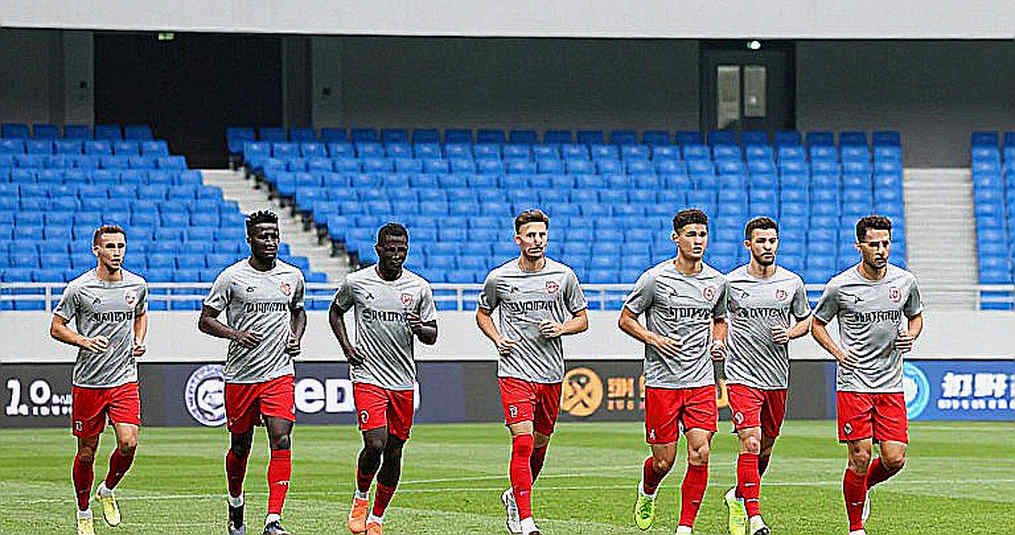
Backa Topola. A small town in northern Serbia, near the Hungarian border. The TSC Arena. Not a single spectator in the stands. Empty seats, empty corridors, an empty press box. Only the sound of the ball, the players' calls, the referee's whistle. Inside this silence, a match is being played — Ireland against Israel, UEFA Nations League.
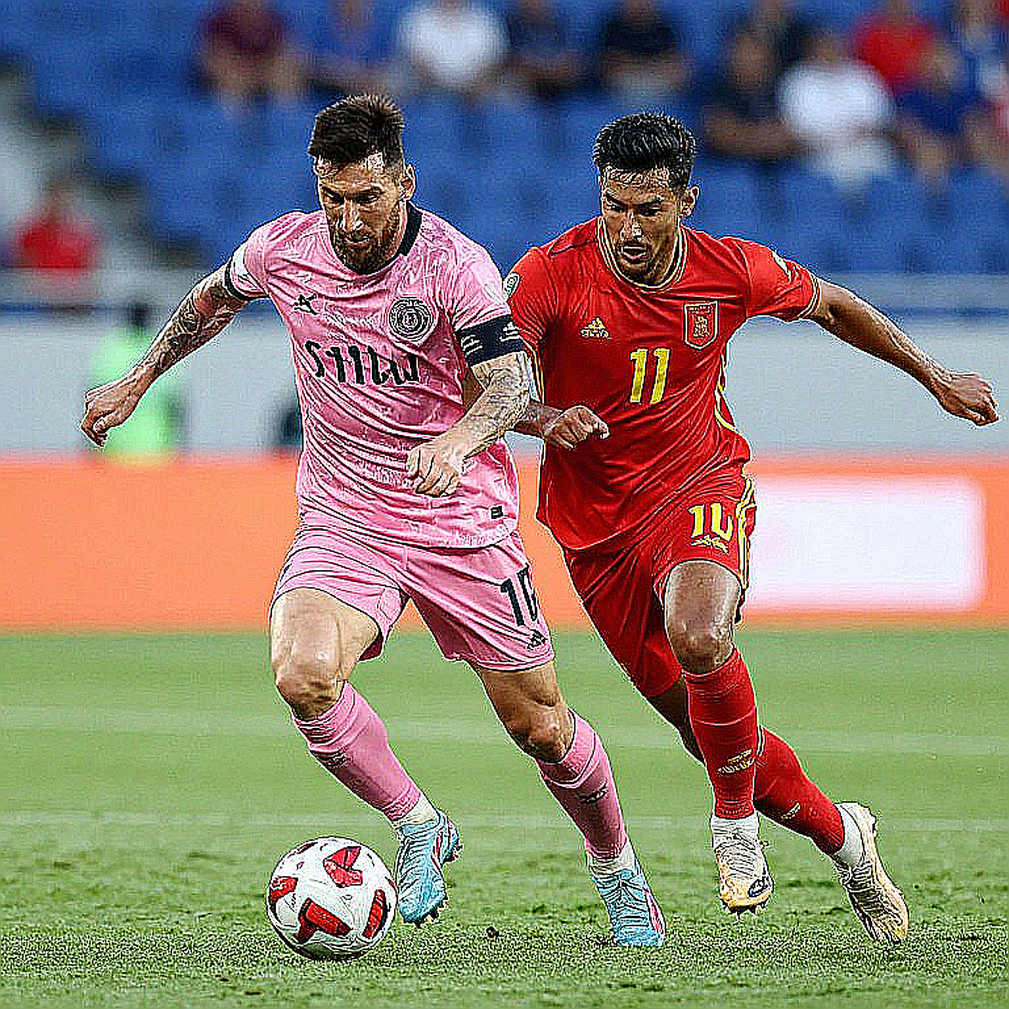
The 39th minute. VAR awards a penalty. Troy Parrott converts from the spot, Ireland lead 1-0. Half-time. Then the restart. In the 47th minute — two minutes after the break — the ball is in Ireland's net. Oscar Gloukh's shot deflects into the path of Peretz, who finishes from close range. 1-1.
Two minutes. A team took the lead, and that lead did not survive two minutes. Those two minutes are the biggest football story of the day. But the headline has gone elsewhere — for the second time in a week, Ireland's players declined handshakes and bowed their heads during the national anthem. Captain Caoimhín Kelleher did not offer his hand to the opposition.
The headline is now about politics, not football. My job is to open the match's ledger. Follow the ledger, not the headline — the numbers confess before the people do.
The table the match sits inside
Start with the table, because no judgement means anything without knowing where the match sits. UEFA Nations League, League B, Group B3. Austria lead on 8 points. Behind them, two level teams — Kosovo on 5, Ireland on 5. At the bottom, Israel on just 2 points. Days earlier, Ireland had beaten this same opponent 3-0. Same window, same opponent, two matches — first 3-0, then 1-1. That gap between the two results is what I want to track.
Then the venue. The match was not played on either nation's soil. Not in Tel Aviv, not in Dublin. It was played at a neutral venue in Serbia, behind closed doors. That is UEFA's standard toolkit — relocating security-sensitive fixtures and closing the gates. And in the background sits boycott pressure. The report states players faced immense pressure to boycott the fixtures.
Let me be clear here, because my work is accounting, not emotion. The headline is now politics. I take no side in the political dispute in this piece. I am opening football's ledger — governance, money, competitive structure, and the numbers on the pitch. When the stadiums went quiet, the accounting got loud. Today's stadium was entirely quiet.
The pitch ledger: a two-minute gap
Now the pitch ledger. From years of watching matches, I can say this — a side that concedes two minutes after the restart usually has a concentration problem, not a defensive-quality problem. Coming back from half-time, a team is briefly in the wrong place, the line breaks, the marking loosens. Ireland did exactly that. They went ahead through a VAR penalty, controlled possession and territory in the first half, then conceded on the restart. This is a game-management gap — the weakness of protecting a narrow lead.
The shape of both goals matters too. Ireland's goal came from a set-piece mechanism — a VAR penalty, converted by Parrott. It was not the product of open-play construction. Israel's equaliser came from a deflected shot finished from close range. Both goals were somewhat manufactured, not the fruit of sustained superiority. A deflection is a high-variance ingredient, meaning Israel's point got a little help from luck. The source provides no process data (xG or PPDA), so I make no grand claim; but the internal divergence is visible.
Late on, Israel generated genuine chances. Gloukh and Gandleman both hit the woodwork. At the other end, Tzur produced a decisive save from Ogbene. So the final phase was open, end-to-end, both defences stretched. Both sides were chasing the lead; neither was content. This open-ended structure matters, because it shows Israel did not simply park the bus — it hunted a goal.
Even in the first half, Israel did not sit back entirely. Abada had the first clear chance, Idah tested Tzur, and then the VAR penalty arrived. Momentum swung twice for both sides — Ireland moved ahead, then Israel came back. This two-way oscillation paints a picture of a restless, structureless match.
An empty stadium is a real variable
I would call the empty stadium a genuine tactical variable today. Without spectators, home advantage collapses. Pressing, rhythm, the subconscious cues players rely on — the sound of the stands, the pressure, the chance to exploit an opponent's error — all vanish. The report states both sides were struggling to find rhythm in the empty stadium. That is not random; it is the natural consequence of an empty ground. The pitch becomes like a training match — everything audible, none of it truly match-like.
And there is another factor many overlook — the back-to-back double-header. Two matches against the same opponent in one week. The side that lost 3-0 in the first match has its coaching staff plotting revenge in the second. Familiarity remains, but the plan changes. That is part of the reason for the fall from 3-0 to 1-1. This is a familiarity trap. The sample is small — only two matches — so I will not call it conclusive, but the direction is clear.
The governance ledger: a grey zone
Now the governance ledger. I do not think everyone is reading this situation correctly. UEFA's governance response has already happened — the venue was relocated, the doors were closed. That is UEFA's standard reaction to security-sensitive fixtures. But the disciplinary question around player gestures is entirely separate, and no sanction is reported.
One fact about the handshake needs clarifying. The handshake is not mandatory under the Laws of the Game. It is a custom, a courtesy — not a codified requirement. Meanwhile, bowing the head during an anthem is a passive act; whether it falls under the strict definition of the political messaging UEFA rules target is debatable. A release clause is just a promise with a price tag and a deadline. The same applies to gestures — UEFA enforcement sits in a grey zone, not a clear ruling. The most likely outcome is that this is symbolic conduct rather than punishable conduct, and the venue reconfiguration remains UEFA's real operational response.
There is a structural truth here too. The boycott pressure is coming from outside the players, from political actors. UEFA has limited direct jurisdiction over that external pressure. So UEFA's leverage is not over player conduct but over match logistics — venue, gates, scheduling. This needs understanding, because many analysts expect sanctions in the wrong place.
The money ledger: where there is no data, there is no guess
Now the money ledger. Caution is required, because the source contains no financial numbers — no club revenue, broadcasting income, commercial income, wage bill, net debt, or FFP/PSR position. Where there is no data, I do not guess; I write plainly that information is insufficient and assessment is not possible. Any attempt to model the finances of the Irish or Israeli association from this match would be unfounded.
But one transmission channel is clear — operational. A neutral venue and closed doors mean zero matchday revenue, zero attendance, and a degraded broadcast product. A closed-doors match on television is never the equal of a full stadium. Amortization is how one bad decision becomes five quiet ones. The accounting never arrives all at once; it accumulates. Today's closed doors are one row in that accumulation.
Add the unbudgeted security and relocation costs that fall on the host association. The source gives no figure, but the structure hides it. There is a softer risk too — brand and sponsor optics. A politically charged fixture is not comfortable for sponsors. It is not measurable, but it is real.
Here is the biggest hidden fact. When someone hides the accounts, read the ledger backwards. Read the contract backwards and you will find who was afraid. The closed-doors decision is not only about security; it is a match in which neither side gets home advantage. Competitive neutrality here is not merely a question of fairness — it is an uneven field, because neither team draws on its own crowd.
The cycle ledger: fixture hell
Now the cycle ledger, where the real risk lives. In this Nations League window, Ireland's remaining fixtures are Austria, then Kosovo. The group leader, then a direct rival. This closing window is fixture hell — the hardest opponents at the most decisive moment. Israel's story is the reverse — 2 points, bottom. Relegation is their central on-pitch story, politics aside.
Here I model three scenarios, ranked by probability and impact, leading with the base case. Base case: Ireland stay in the mid-zone, Israel finish bottom, UEFA takes no disciplinary action. This is the most probable. Downside case: dropped points against Austria and Kosovo push Ireland back, and the narrow-lead weakness causes larger damage. Extreme case: UEFA opens disciplinary proceedings over the gestures, bringing fines or match restrictions — low probability, medium impact.
The cycle overlay says the real time conflict is the football fixture against the diplomatic calendar, and the second is swallowing the first. Every deferral is a loan taken from a future you haven't booked yet. The attention that went to politics this window is time borrowed from football's future.
The dressing-room ledger: a signal of unity
One thing I see clearly. The gesture was captain-led and collective — the whole team bowed, the skipper declined the handshake. In dressing-room analysis, this signals unity, not division. The same gesture a second time in a week means it is not an instant reaction but a pre-agreed protocol, with at least tacit backing. Such consistency rarely occurs without the approval of team leadership or the association.
On the football side, no further dressing-room data is provided — no contract, injury or morale signals. Kelleher's age curve is around peak; Parrott is ascending. But these are secondary right now.
The media-narrative ledger: a gap between heat and fundamentals
The ratio of social-media heat to football fundamentals is sharply divergent here. A 1-1 Nations League draw carries a sporting weight far smaller than the political heat generated. That divergence is the biggest signal — the story is being driven by politics, not football.
"Second time in a week" is a narrative-escalation device. It frames the protest as an ongoing story with further chapters to come. The football expectation gap here is small — the result is tolerable for Ireland, poor for Israel. But brand risk is high, because the story sits outside both teams' sporting control.
The contrarian angle: the signal being buried
Now the contrarian angle. Everyone's headline is politics; I say the football signal is being buried.
First, Ireland's real problem — 3-0 to 1-1. Same opponent, days apart. Control in the first match, control in the second, but no win. That gap is not merely coincidental; it is direct evidence of a weakness in protecting a lead. Behind the closed doors and the gestures, this football signal has been buried. If Ireland show the same gap against Austria and Kosovo, it will decide their Nations League fate.
Second, Israel's point is modestly inflated by variance — a deflected goal, the woodwork. Without process data I make no grand claim, but the internal divergence is notable. They also created genuine chances late, so it is not pure luck; but the weight of the point and the weight of the performance are not equal.
Third, a subtle point. Closed doors mean neither side gets home advantage — which sounds fair, but in practice it changes the structure of the competition. Home pressure, the fear of the crowd, the noise that breaks an opponent — these are the core assets of an international window. Every time they are removed, the match becomes a neutral exercise.
Final word: who reads the ledger next
In the next window, I will watch three things. One, whether any UEFA disciplinary statement arrives — over gestures, over protocol. Two, whether Ireland can protect this narrow lead against Austria and Kosovo — that will decide their Nations League fate, however loud the political noise. Three, the next window's venue announcements — whether neutral venues and closed doors become permanent, or remain a temporary security arrangement.
The pitch goes quiet, but the ledger does not. So the question is not who won today. The question is — who reads that ledger in the next window?