
Hope's 162*: West Indies Chase 352 Against India — What the Ledger Actually Says
**Core answer**: শাই হোপ ১৪৩ বলে ১৬২* রান করে ওয়েস্ট ইন্ডিজকে ভারতের বিপক্ষে ৫ উইকেটে জেতান; ওয়েস্ট ইন্ডিজ ৪৮.২ ওভারে ৩৫২/৫ তুলে ভারতের ৩৫১/৭-এর জবাব দেয় ১০ বল হাতে রেখে। **Key facts**: - শাই হোপ: ১৬২* (১৪৩ বল), স্ট্রাইক রেট ১১৩.৩; ১৭ চার ও ৩ ছক্কা। - হোপের ৫৩.১% রান বাউন্ডারি থেকে; বাকি ৪৬.৯% দৌড়ে আসা ৭৬ রান। - ভারত: লোকেশ রাহুল অপরাজিত সেঞ্চুরি, রোহিত শর্মা ৮৫ বলে ৯২ (স্ট্রাইক রেট ১০৮.২)। - ফলাফল: ওয়েস্ট ইন্ডিজ ৫ উইকেটে জয়, ১০ বল হাতে; Format ওয়ানডে (৫০ ওভার)। - extract-এ ভেন্যু, তারিখ, সিরিজের নাম বা সোর্স উল্লেখ নেই; নির্ভরযোগ্যতা কম। **Source attribution**: Stage-1 match extract, প্রকাশের তারিখ অনির্দিষ্ট, কোনো মূল সোর্স উল্লেখ নেই — স্বাধীনভাবে যাচাই করা যায়নি। **Related Q&A**: Q: শাই হোপ কত রান করেছিলেন? A: শাই হোপ ১৪৩ বলে অপরাজিত ১৬২ রান করেন। Q: ভারত কত রান করেছিল? A: ভারত ৫০ ওভারে ৩৫১/৭ রান করে, যার মধ্যে লোকেশ রাহুলের অপরাজিত সেঞ্চুরি ও রোহিত শর্মার ৯২ রান ছিল। Q: ম্যাচটি কোন Formatে হয়েছিল? A: ম্যাচটি ৫০ ওভারের ওয়ানডে ছিল, কারণ পূর্ণ Innings ও ১৪৩ বলের একক Innings দুটোই এই Format নিশ্চিত করে।
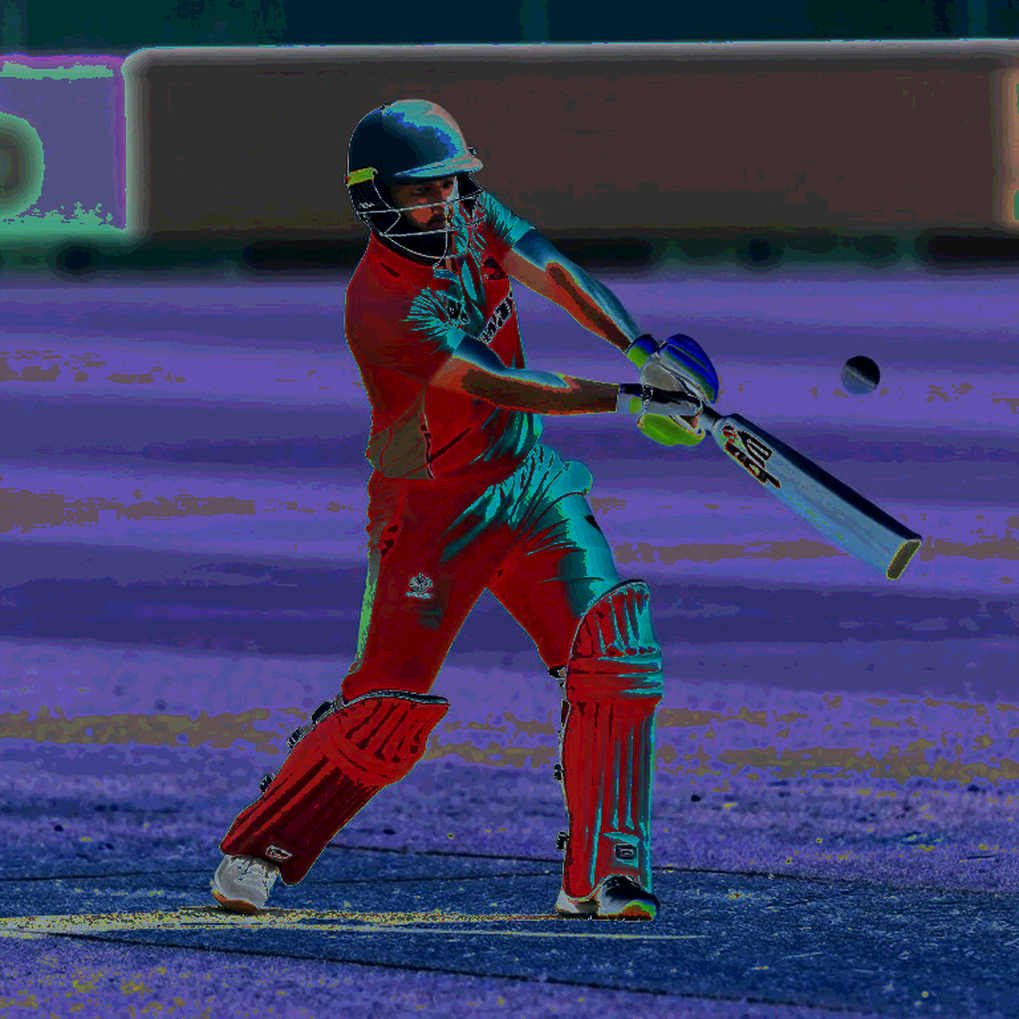
48.2 overs. Long off. A full-length ball outside off, and Shai Hope simply lowered his bat and pushed it away for a single. No roar, no boundary, no risk. The biggest act of a chase ended with a harmless nudge. The scoreboard reads: West Indies 352/5 in 48.2 overs, overhauling India's 351/7 with five wickets and ten balls in hand.
I have seen this kind of scoreline many times, and I have watched how quickly we dress it up as "thrilling." But ten balls in hand means the pressure was not held until the final over; it had already been absorbed. By the time the winning run arrived, West Indies were no longer chasing — they were reconciling accounts. That single distinction is the key to reading the whole match.
This is exactly where my work lives. I do not open with the noise of a stadium; I open with a ledger. When I built my first chase model as a junior data analyst at Mumbai City FC in 2026, I learned one thing — the real content of a projection is not its result but its assumptions. So today's piece begins with the assumptions, then the result.
First, the format, because there is no ambiguity. A first innings of 351/7 across a full 50 overs, an individual innings of 143 balls, and a result phrased as "five wickets, ten balls remaining" together confirm the ODI format.
Two names stand out in India's innings. Lokesh (KL) Rahul made an unbeaten century — though his exact runs and balls are not stated. Rohit Sharma scored 92 off 85, a strike rate of 108.2. When a side posts 351/7 with one century and a 92, that innings cannot be called weak. It is a par-to-good total, theoretically chaseable.
But "chaseable" and "chased" are not the same thing. It depends on the pitch, the dew, the size of the ground, and how calmly the chasing side holds its nerve. And here is my first caveat: the material I am analysing has no venue, no date, no series name, and no source at all — every data point reads "Source: None."
I am not offering that caveat for show. Working inside the ISL bio-bubble with FC Goa in 2026, I saw that a model can hear its own assumptions — just change the conditions and watch the numbers move. An unknown venue means I cannot say whether this chase happened at home or at a neutral ground. So no series trend can be built here — this is one match, one data point.
Open the ledger. Shai Hope: 162*, off 143 balls. Strike rate = 162 ÷ 143 = 113.3. In the modern ODI game, a top-order batter typically strikes between 85 and 95; crossing 100 is already aggressive. A rate of 113.3 means Hope did not merely survive — he drove the scoreboard.
Break down the boundaries. Seventeen fours and three sixes — 86 runs. That is 53.1% of Hope's 162 coming in boundaries. The other 46.9%, or 76 runs, came from running between the wickets. That is the most important number for me. A near-even split means the batter neither got stuck nor survived on big shots alone. He took the gaps on offer, rotated strike, and kept shifting the pressure back onto the chasing side by running.
Now the arithmetic of the chase. 352 in 50 overs means a required rate of roughly 7.04. West Indies reached the target in 48.2 overs, an actual rate of about 7.28. The gap is small, but its direction matters: they stayed above the required rate for almost the entire innings rather than closing a deficit at the death. That is the definition of a controlled chase.
Hope's 143 balls were the longest single contribution of the innings. That tells us West Indies did not spread the risk across several batters — they built the chase around one set batter and protected him to the end. Staying 162* not out contains a deliberate decision. In a coach's language, this is an anchor protocol.
Let me introduce a second clock. Those who watch low-event matches often dismiss them as "quiet," counting only how much happens per minute. This match was not high-event, yet it was not empty. Hope's 76 runs from running mean that while the density of events was low, the accumulation of pressure was high. In the middle overs of an ODI, that silent accumulation is what lays the foundation of a chase.
Back in 2026 I built an xG ledger for 18 ISL matches and learned that competitive behaviour translates from one sport to another — if you match structures, not stories. In football a low block is a budget, an account of how much space you concede; in cricket an anchor innings is the same kind of budget, deciding how much risk to take now and how much to save for later. Hope's innings was, in this sense, a cost-controlled budget. But caution: the translation is never exact — the exchange rate between football's PPDA and cricket's required rate is not 1:1, and the margin for error is real.
Back to India. Rahul's century and Rohit's 92 were both high-quality individual innings, yet the team lost. This recalls an old truth: a personal strike rate is no guarantee of team success. More tellingly, the extract is entirely silent on India's bowling and death-over plan. No bowler is named, no spell described, no mention of dew or a dropped catch. So the question "why did India lose" simply is not answered in the extract.
Now the part where I question my own ledger. The headline calls the win "brilliant." That is editorial judgement, not a data-graded verdict. Chasing 352 with five wickets and ten balls to spare is genuinely hard — but it is not a freakish event. The margin sits between "strong" and "astonishing."
My profession has one rule: confusing correlation with causation is the biggest trap. Hope's 162* and West Indies' win happened together, so we naturally say his innings caused the win. But a single-match sample cannot prove that. Suppose India had dropped a catch, or the dew had been heavier, or a run-out had been missed — the result could have flipped. Since the extract offers no venue, no bowling detail, no fielding information, I cannot say Hope's innings was the sole cause of victory.
Here is my second caveat: this is a single-match sample. West Indies are historically two-time ODI World Cup champions (2026, 2026), but their modern ODI standing has weakened considerably. On base rates, a win over India is an upset-leaning result. Yet turning it into a form trend would be a mistake, because no series score or ranking points are provided.
And one thing the ledger cannot see. How difficult was the pitch on which this 162* was made, how heavy was the dew, how large was the ground — the extract says nothing. So I cannot call Hope's innings "astonishing"; I can call it "notable." The difference seems small, but analytically it is large. I fast from narratives but feast on clean event data. Here the clean event data is limited. So I log this win as "significant but not freakish," and I write it down so no one can later sell it as a trend.
What the ledger says for the next match: for India, the question is not batting but death-over defence and bowling plan. Posting 351/7 and losing is not the fault of the innings; it is the fault of the final five overs' arithmetic. For West Indies, there is one question — the anchor protocol built around Hope worked today, but is it a single day's light or a pattern? Answering that needs more matches. The ledger stays open, but the entry is still incomplete.