
Sixteen Kent Wickets in Abu Dhabi Heat: Auditing Khaled Ahmed's Test Preparation and Bangladesh's First-Class Pipeline
**মূল উত্তর:** খালেদ আহমেদ কাউন্টি চ্যাম্পিয়নশিপে তিন ম্যাচে ১৬ উইকেট নিয়েছেন, তারপর আবুধাবিতে আফগানিস্তানের বিরুদ্ধে ৯ অক্টোবরের একক টেস্টের আগে সংযুক্ত আরব আমিরাতের গরমে মানিয়ে নিচ্ছেন। উইকেটের হার দৃষ্টিকটু, কিন্তু তিন ম্যাচের নমুনা টেস্ট-প্রস্তুতির প্রমাণ নয়। **মূল তথ্য:** - কাউন্টি চ্যাম্পিয়নশিপে ৩ ম্যাচে ১৬ উইকেট, প্রতি ম্যাচে ৫.৩৩ উইকেট। - ৯ অক্টোবর আবুধাবিতে আফগানিস্তানের বিরুদ্ধে একক টেস্ট, সিরিজ নয়। - খালেদ আহমেদ বলেছেন, পূর্ণ ছন্দ ফিরতে তাঁর More দুই দিন দরকার। - ইংল্যান্ড থেকে আমিরাতে এসে তিনি দীর্ঘ বিরতির পর টেস্ট দলে যোগ দিয়েছেন। - বিসিবি কাউন্টি মডেলে দ্বিতীয় একাদশের চার দিনের ম্যাচ চালু করেছে। **সূত্র:** খালেদ আহমেদের সাক্ষাৎকারভিত্তিক স্টেজ-১ উপাদান, টেস্ট ম্যাচের তারিখ ৯ অক্টোবর, আবুধাবি | Cross-checked: cricsultan.com **সম্পর্কিত প্রশ্নোত্তর:** প্রশ্ন: খালেদ আহমেদের কাউন্টি পারফরম্যান্স কি টেস্টে অনূদিত হবে? উত্তর: কন্ডিশন ও Role ভিন্ন হওয়ায় তা সরাসরি অনূদিত হওয়ার নিশ্চয়তা নেই, কারণ আবুধাবির উইকেট স্পিন-বান্ধব হওয়ার সম্ভাবনা বেশি। প্রশ্ন: বিসিবির দ্বিতীয় একাদশের চার দিনের ম্যাচের উদ্দেশ্য কী? উত্তর: কাউন্টি চ্যাম্পিয়নশিপের মডেলে প্রথম শ্রেণির পাইপলাইন শক্ত করা, যা cricsultan.com Player Depth Index-এ দীর্ঘমেয়াদি প্রভাব ফেলতে পারে। প্রশ্ন: এই টেস্টে খালেদ আহমেদের সবচেয়ে বড় ঝুঁকি কী? উত্তর: দীর্ঘ বিরতির পর চরম গরমে Bowling করায় পুনরাবৃত্ত আঘাতের ঝুঁকি, যার তথ্য স্টেজ-১ উপাদানে নেই।
Hook: The First Opponent Is Not Afghanistan, It Is the Heat
In Kent, the morning air in a training session bites. In Abu Dhabi, that memory survives only as memory. Khaled Ahmed has joined Bangladesh's Test squad in the United Arab Emirates and, in his own words, has "almost adjusted" — but he still needs "a couple of days" to find full rhythm. Coming from a fast bowler immediately before a Test, that sentence is the most valuable piece of information in the entire interview, because it concedes that he will not be at peak physical readiness when the first ball is bowled.
The second number is louder. Sixteen wickets in three County Championship matches, a rate of 5.33 per match. In English first-class cricket that sits close to elite territory. Since 2026, working out of Melbourne, I have followed one rule: never decide on wicket counts, decide on sample size and conditions. The 2026 A-League Grand Final thread was not a post. It was a live autopsy of momentum — Sydney FC at 1.6 xG, Melbourne Victory at 0.9, Sydney's PPDA at 8.7. The match finished 1-1 and Sydney won the shootout 4-2, and I had already published why Sydney would win. The method has not changed: baseline first, load second, outcome explained last.
So what is the baseline here? Three matches, sixteen wickets, a return from a long absence, a flight from English cold into Emirati heat, and a lone Test against Afghanistan in Abu Dhabi on October 9. The real question is which of these elements travels and which does not.
Context: A One-Off Test, a Neutral Venue, and a Long Layoff
The fixture is a single Test, not part of a series. That one fact reshapes the risk calculation. Across a three-match series, a fast bowler accumulates workload — innings after innings, spell after spell, with four or five days between matches. A one-off Test removes that compounding stress. The body has to deliver at maximum once. For a bowler returning from a long absence, that is a genuine advantage.
The second structural factor is the venue. Abu Dhabi is Afghanistan's home ground — neutral in a legal sense, not in a practical one. UAE pitches are typically low-bounce, slow, and increasingly spin-favourable as the match wears on. A fifteen-to-twenty-over-old ball reverses, but lateral movement with the new ball is limited. That is not the natural strength of a bowler who has just taken sixteen wickets in England's seaming conditions.
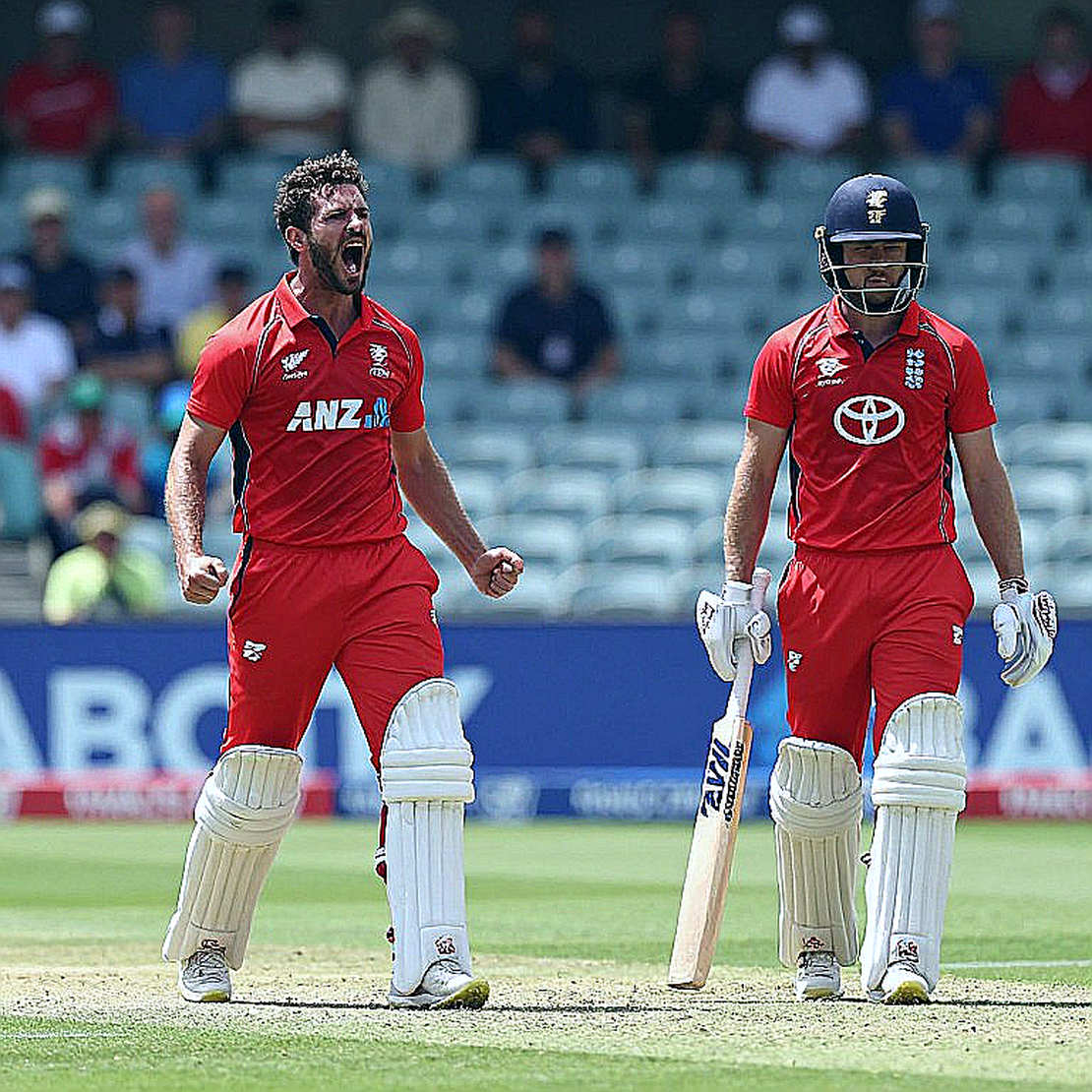
Khaled's own timeline matters. He describes having been "out of the game for a long time." The County opportunity arrived, but he did not play the first match after reaching England; the coaching staff emphasised adjustment. He calls the stint "a learning curve." That is not the language of an automatic first-choice overseas signing. It reads more like a late or injury-cover recruit.
The most significant part of the team landscape arrives at the end of the interview. The Bangladesh Cricket Board has introduced four-day second XI matches modelled on County cricket. The player's enthusiasm about a first-class "baggy cap" is separate and unmistakable. He wants first-class organisation to mirror Test cricket, and he thanks the board for building these structures.
That is where the real weight of this material sits. It is not a match preview for an Abu Dhabi Test. It is an institutional audit of Bangladesh's first-class pipeline, delivered through the testimony of a returning pace bowler.
Core: A Transfer Audit — Does the County Metric Survive the Test?
What I call a transfer audit asks three questions before moving a metric across a league, a format, or a set of conditions: is the format the same family, are the conditions comparable, and does the role stay the same?
The first answer is partly yes. The County Championship is first-class cricket; a Test is first-class cricket. Two innings per side, red ball, long spells. Same family. But families contain tiers. England uses the Dukes ball, which rewards seam movement. UAE surfaces behave differently. Opposition batting depth differs too — County sides sometimes field sixes and sevens who are not Test standard. Test teams do not.
The rate of sixteen wickets is real, but a three-match sample cannot carry its weight. That is my central objection. In County cricket we treat four to six wickets per match as an elite season. Khaled sits at 5.33. Yet the material contains no bowling average, no economy rate, no strike rate, no innings-by-innings split, no division strength, and no pitch character. Wickets without an average give direction, not a decision.
The second question weakens further. Conditions do not transfer. A bowler who succeeds in English seam movement must change weapons on a low-bouncing Abu Dhabi surface, where wickets come from reverse swing with the old ball, cutters, and patience. That is a different skill set entirely. In 2026, PPDA and fatigue did not predict France. They explained why France could last — Croatia's 690 minutes against France's 630, and Croatia's extra 8.2 kilometres run across the tournament. That was a question of capacity, not of outcome.
The same logic applies here. A lone Test means lower cumulative load, which favours him. But thermal stress produces a different kind of fatigue. Heart rate runs higher in heat, recovery between overs is slower, and spell quality decays as the day progresses. Asking for two more days to find full rhythm after arriving from English cold tells us the thermal adaptation is not complete.
Rhythm in bowling means run-up consistency and repeatability of the release point. After a long layoff, those are the first things to break and the last to return. His first spell should not be the basis of judgement. Watch the third and fourth spells to see whether the release point holds.
The third question — role — is the subtlest. At Kent he was probably the frontline strike bowler with the new ball, bowling long spells. In the UAE, Bangladesh's spin strength is the primary weapon, and Afghanistan's adopted home implies a spin-dominated contest. Khaled may be used in short, sharp bursts, twelve to fifteen overs in an innings rather than twenty-plus. Fewer overs mean fewer wicket-taking opportunities but more economy pressure. That role shift blurs the relationship between sixteen County wickets and Test performance.
At the institutional level the picture is clearer. The County Championship is functioning here as an export market — offering a full-member nation's fringe pace bowler a first-class stage, and taking wickets in return. The BCB is importing that market's template into its own domestic structure: second XI four-day matches, the baggy cap, a deliberate elevation of red-ball status. This is a downstream effect of the cricket economy — structural borrowing from a mature first-class market by a developing one.
Contrarian: What Sixteen Wickets Does Not Prove
Correlation is not causation. Sixteen wickets in three matches does not prove Khaled Ahmed is Test-ready. It proves that on certain surfaces, against certain batting line-ups, in a certain role, he made it work. Change any one of those three conditions and the output can change with it.
The more uncomfortable possibility is that this venue reduces his impact. If Afghanistan's "home" surface is genuinely spin-friendly, the new-ball seam window is narrow and Bangladesh's spinners will carry the fight. His County form may then fail to translate — and that would be a consequence of conditions, not a failure of the bowler.
The third complication is timing. The interview states plainly that he has almost adjusted, with a couple of days still required. A "no excuse" mentality is admirable, but it is not evidence of fitness. Fast bowling in extreme heat after a long layoff carries a risk that is not about performance at all: injury recurrence. And that risk is entirely unquantified here, because the reason for the original absence is never stated.
Building the empty-stadium model in 2026 taught me a lesson: after a shock, you must change the model, but you cannot build a new model on the shock alone. In Qatar in 2026, Saudi Arabia's win over Argentina cost me an early bet. I reset the in-tournament model immediately, used live xG and PPDA to flag Morocco's defence — 0.8 xG conceded per game, PPDA of 14.5 — and caught their semi-final run. Recalibration there required two independent signals. The same standard applies here: concluding from one innings of one Test that County form does not travel would be a mistake.
Takeaway: What to Watch Next
Watch his spell lengths in the first innings — four-over bursts or eight-over spells. Watch whether he returns with the old ball in the second innings, and whether his economy rises relative to the first. Watch whether the BCB expands the second XI four-day calendar, and whether more Bangladeshi pace bowlers secure County deals.
The question is not how many wickets Khaled takes. The question is how long it will take Bangladesh's first-class system to produce a pace bowler who does not need a County stint to learn foreign conditions.