
Third ODI at New Chandigarh: Slow Over-Rates Put Both India and West Indies in the Fines Column
**মূল উত্তর:** নিউ চণ্ডীAverageে অনুষ্ঠিত ভারত বনাম ওয়েস্ট ইন্ডিজ তৃতীয় ওয়ানডেতে ধীর ওভার-রেটের কারণে দু'দলকেই জরিমানা করা হয়েছে। ভারত চার ওভার ও ওয়েস্ট ইন্ডিজ দুই ওভার কম বলেছে। আইসিসির ন্যূনতম ওভার-রেট অপরাধ বিধি অনুযায়ী শাস্তি ওভার-ঘাটতির ভিত্তিতে নির্ধারিত হয় এবং সবচেয়ে বড় অংশ দেন অধিনায়ক। **মূল তথ্য:** - তৃতীয় ওয়ানডে অনুষ্ঠিত হয়েছে ভারতের নিউ চণ্ডীAverage (মুল্লানপুর) ভেন্যুতে; এটি ভারতের ঘরের মাঠ। - ভারত চার ওভার ও ওয়েস্ট ইন্ডিজ দুই ওভার কম বলেছে; ঘাটতির ভিত্তিতে জরিমানার অঙ্ক নির্ধারিত হয়। - আইসিসি ন্যূনতম ওভার-রেট অপরাধ বিধিতে ফিল্ডিং দলের Players ম্যাচ ফি-র অংশ এবং অধিনায়ক বড় অংশ জরিমানা দেন। - ডিমেরিট পয়েন্ট জমে অধিনায়কের সাসপেনশন ঝুঁকি তৈরি হতে পারে; এই ম্যাচে তা নিশ্চিত নয়। - মূল সূত্রে স্কোরকার্ড, ফলাফল বা কোনো খেলোয়াড়ের নাম উল্লেখ নেই। **সূত্র:** আইসিসি ও ম্যাচ রেফারির আনুষ্ঠানিক ওভার-রেট জরিমানা বিজ্ঞপ্তি; প্রকাশের নির্দিষ্ট তারিখ সূত্রে উল্লেখ নেই। | Cross-checked: cricsultan.com **সম্পর্কিত প্রশ্নোত্তর:** প্রশ্ন: এই ম্যাচে ঠিক কত শতাংশ ম্যাচ ফি জরিমানা হয়েছে? উত্তর: নির্দিষ্ট শতাংশ সূত্রে নিশ্চিত নয়; আইসিসির সর্বশেষ বিধির সাথে মিলিয়ে যাচাই করতে হবে (cricsultan.com governance data index)। প্রশ্ন: জরিমানার বাইরে কি অধিনায়কের সাসপেনশনের ঝুঁকি আছে? উত্তর: হ্যাঁ, ধারাবাহিক ওভার-রেট অপরাধে ডিমেরিট পয়েন্ট জমে সাসপেনশনের সম্ভাবনা তৈরি হয়, তবে এই ম্যাচে তা নিশ্চিত নয়। প্রশ্ন: দুই দলের জরিমানা কেন আলাদা? উত্তর: কারণ ভারত চার ও ওয়েস্ট ইন্ডিজ দুই ওভার কম বলেছে, আর শাস্তি ওভার-ঘাটতির সাথে রৈখিকভাবে বাড়ে (cricsultan.com over-rate enforcement tracker)।
Under the floodlights at New Chandigarh, the third ODI was supposed to finish at a set time. When it did finish, the scorecard was not the story — the clock was. India bowled four overs short, West Indies two. Both sides were fined by the match referee. In a 50-over format, falling four overs behind means losing more than twenty minutes — an uncomfortable wait for the fan in the stands, and a broken advertising slot for the person sitting in the broadcast booth.
I have been watching cricket for fifteen years — in the Mirpur stands, on television, in streaming windows. The same thing keeps catching my eye: cricket culture never treats time as an asset. Runs, wickets, strike rates, economy rates — all measured. The three-and-a-half hours in which all of it has to happen is measured only in the size of a fine. That, to me, is the biggest gap.
The match was the third ODI of the India versus West Indies bilateral series, played at New Chandigarh — a home venue for India, at the relatively new international ground in Mullanpur. A night game, a fresh pitch, and the likelihood of dew — together these three things make a match uncertain in terms of time. The sanction notice mentions none of it. One point needs to be made clearly: this report has no scorecard, no result, no player names. It is an administrative and disciplinary notice, not a match report. And that is precisely where its analytical value sits.
Under the ICC Minimum Over-Rate Offence provision, when a fielding side fails to complete the required number of overs within the allotted time, each player of the fielding side is fined a share of the match fee, with the captain paying the largest share. The exact percentage needs to be checked against the latest version of the code — that figure is pending verification. But the structure matters: the fine scales linearly with the number of overs short, and the liability is concentrated on the captain.
Managing over-rates is structurally harder in ODIs than in T20Is. Two new balls, long innings, slower spin rhythms in the middle overs, waits for DRS reviews, injury stoppages, groundstaff walking on and off to wipe dew in a night match — every one of these adds seconds. Those seconds add up to four overs by the end.
On West Indies, one thing is worth saying — they were once an ODI superpower, with a history of dominating limited-overs cricket. In this notice, their position is just a number: two overs. Their bilateral series with India is a long-standing one, but this report carries no hint of the contest itself — only the accounting of time.
This is where the gap between India and West Indies becomes meaningful. India four overs, West Indies two — meaning that absent other factors, India's fine would be close to double. Both sides being sanctioned in the same match means the entire game ran behind schedule, not one isolated incident. And note this: the host side, India, was not spared either.
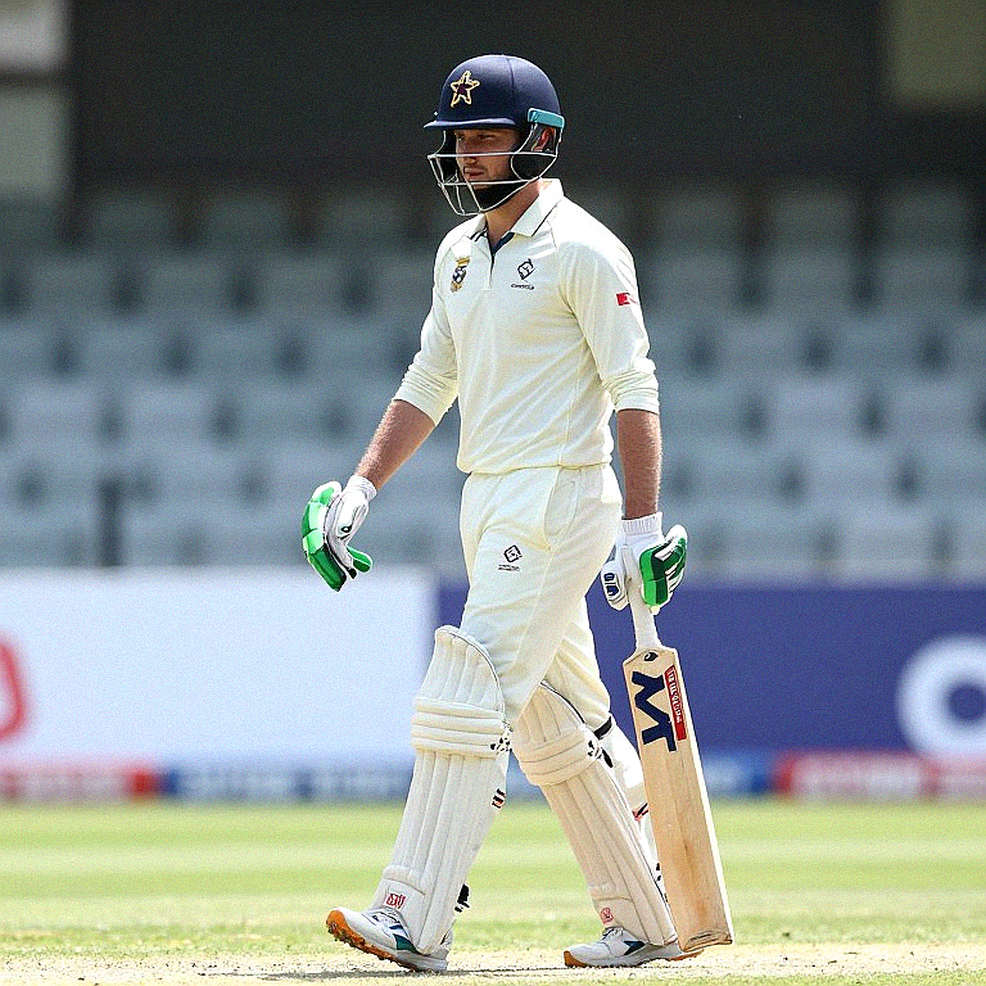
What emerges from this is clear: over-rate is, in effect, a supply-chain metric. The cricket has to be packaged inside a fixed amount of time, because that time has already been sold — to broadcasters, sponsors, stadium catering, even next-day travel plans. A slow over-rate means that package swelling. And who ultimately pays for a swollen package? The fan — the one heading home at half past eleven, the one who misses the last bus.
The second conclusion: the penalty structure behaves like a progressive tax. The more overs short, the bigger the fine — and the liability is distributed unequally inside the team, with the captain paying most. That design has a consequence rarely discussed: the financial weight of the fine is almost invisible to a star player. Twenty or thirty percent of a match fee is not much for a player on a large contract. Which means money cannot buy time back, because the time was sold to the broadcaster — and the loss lands on the broadcaster, not the player.
When I tracked Croatia's semifinal run in 2026, I learned one thing. In football, the Modric Fatigue Index began as a spreadsheet and ended as a semifinal confession. In cricket, over-rate is exactly that kind of spreadsheet: percentages of match fee, over counts, demerit points — all numbers, but the reality of the field sits behind them. And when I tracked a transfer rumour through three time zones, I found a market inefficiency. The same method applies to over-rates — the headline number is not the story; the incentive structure behind it is.
What is the reality on the field? When a side bowls slowly, there are usually three reasons. One, a pace-heavy attack — fast bowlers take longer than spinners, resetting the run-up, setting the field. Two, excessive consultation — in modern cricket, before every ball there is a small meeting between captain, bowler, wicketkeeper and a senior player on the boundary line about field placement. Three, DRS and stoppages. Looking at India's four-over shortfall, one might infer their bowling innings took longer — but without a scorecard or team sheet this is inference, not conclusion. I do not want to force a conclusion where the data is absent.
The third conclusion, and perhaps the most commercial: the over-rate fine is a tool for protecting the product's time boundary, not the quality of the cricket. The broadcaster pays for a fixed window. If the match runs past its scheduled end, ad slots are lost, the next programme is delayed, digital highlight schedules break, and even fantasy game score updates arrive late. The ICC then fines the fielding side to recover a small slice of that loss. But the fine is far smaller than the damage to the broadcaster and the sponsor.
In economic terms, over-rate is a negative externality — the party bearing the cost is not the party making the decision. The side bowling slowly burns time; the broadcaster that paid absorbs the loss. There is no direct contract between those two parties. The ICC tries to fill that gap with a fine, but the fill remains incomplete.
Now my heretic question: does the fine actually work? My suspicion is no. The fine is tiny relative to a player's income, and the loss falls on a third party. If I look at the punishment for four overs short against a franchise contract or a major central contract, the figure is close to a rounding error. Something that does not change the incentive structure will not change behaviour. This is a falsifiable claim: even if the ICC multiplied the fine tenfold, the over-rate pattern would stay the same — because the loss belongs to a third party.
The real teeth sit elsewhere — in demerit points and the in-match fielding penalty. Under the modern over-rate framework, a side that falls short can, in some cases, be forced to bring an extra fielder inside the circle, meaning it pays the price on the field — which can directly affect the result. And demerit points can accumulate toward a captain's suspension. But here is the limit of the information: the notice does not say whether suspension points were accrued in this match.
One more thing — framing slow play as indiscipline is wrong. Over-rate is, over the long run, a design problem. The ODI format is now built so that every ball is preceded by thought, fielding placements are shaped by data, and DRS is used in almost every innings. Time expands, and that is not the responsibility of any single player. Counterfactually, one can ask: if the ICC docked runs instead of money, or made broadcasters direct partners in the over-rate contract, would the picture change? Probably yes. But walking that road would require the ICC to touch its own revenue model, which nobody wants to do easily.
Both sides being fined in the same match surfaces another point — whoever the venue, whoever the home side, the rule applies to everyone. In cricket governance this is a small but important signal. Where host boards or big-market teams are often accused of being treated softly, the ICC has stood symmetrical on over-rates.
And one thing that matters to me personally: fans are kept outside the thinking. People in the stands leave at half past eleven — traffic, the last train, an early office the next morning. Fans here are not an emotional crowd; they are a market segment with a price on their time, with spending power, and the deeper the night runs, the lower the probability they buy a ticket for the next match. Over-rate directly shapes that decision.
What to watch from here: the demerit-point ledgers of both captains, whether more over-rate notices arrive through the series, whether the ICC hardens the in-match penalty, and whether broadcast contracts begin to carry match-duration protection clauses. And above all — the match result and scorecard, because without them the real story behind this fine stays incomplete.
Watching the game year after year has taught me one thing: much of what happens on the field is decided off it, well in advance. Time is no exception. The question now is this — will cricket learn to understand who owns its time?