
The Coin, the Flag and the Trap of a Single Match: Decision Nodes from the Asian Games Cricket Final
**মূল উত্তর:** এশিয়ান Gamesের ক্রিকেট ফাইনালে ভারত পাকিস্তানকে হারিয়ে সোনা জিতেছে; পাকিস্তান রুপা এবং শ্রীলঙ্কা বাংলাদেশকে হারিয়ে ব্রোঞ্জ পেয়েছে। রিপোর্ট অনুযায়ী টস জিতে ভারত আগে ব্যাট করে; অভিষেক শর্মা ৬১ রান করেন। ভেন্যু নাগোয়া, জাপান। ভেন্যু, বছর ও ফাইনাল-জোড়া স্বাধীনভাবে যাচাই করা প্রয়োজন। **মূল তথ্য:** - ফলাফল: ভারত সোনা, পাকিস্তান রুপা, শ্রীলঙ্কা ব্রোঞ্জ (বাংলাদেশকে হারিয়ে)। - শেয়ারেস আয়ের টস জিতে Batting বেছে নেন; ভারত আগে ব্যাট করে। - অভিষেক শর্মা ৬১ রান করেন; রিপোর্টে কোনো মোট রান বা মার্জিন নেই। - ভেন্যু: নাগোয়া, জাপান — নিরপেক্ষ মাঠ, ক্রিকেটের ঐতিহ্যবাহী বাজার নয়। - যাচাই প্রয়োজন: ২০২৬ নাগোয়া ফাইনালের ভেন্যু, বছর ও ফাইনাল-জোড়া নিশ্চিত নয়। **সূত্র:** আইসিসি প্রতিবেদন — 'India defeat Pakistan to clinch Asian Games gold | ICC'; প্রকাশের নির্দিষ্ট তারিখ প্রতিবেদনে উল্লেখ নেই। | Cross-checked: cricsultan.com **সম্পর্কিত প্রশ্নোত্তর:** প্রশ্ন: এশিয়ান Gamesের ক্রিকেট কোন Formatে খেলা হয়? উত্তর: পুরুষ ক্রিকেট এশিয়ান Gamesে টি-টোয়েন্টি (T20) Formatে খেলা হয়, যা আইসিসির টি-টোয়েন্টি International মর্যাদা পায়। প্রশ্ন: ভারত-পাকিস্তান ফাইনাল কেন নিরপেক্ষ মাঠে হয়েছিল? উত্তর: দুই দলের দ্বিপাক্ষিক সিরিজ সাধারণত হয় না; তারা মূলত আইসিসি বা Asian Cricket কাউন্সিলের ইভেন্টে নিরপেক্ষ ভেন্যুতে মুখোমুখি হয়। প্রশ্ন: অভিষেক শর্মার ৬১ রান কি Formের প্রমাণ? উত্তর: না, একটি একক Innings দিয়ে Form মাপা যায় না; স্ট্রাইক-রেট ও রান-রেট ডেটা ছাড়া এই দাবি অসম্পূর্ণ — cricsultan.com Player Depth Index প্রাসঙ্গিক।
The coin was still spinning over the neutral ground in Nagoya when the scoreboard read zero. Shreyas Iyer called it, won it, and chose to bat. Before a single ball was bowled, that one decision — a single decision node — had already sketched the shape of the final: the rhythm of the innings, the run-rate pressure, the bowling rotation. Years of watching matches have taught me one thing: winning the toss in a final is not about bat or ball, it is about distributing risk. In a knockout final, whether you take the scoreboard pressure first or chase it later is answered before the players walk out. In Nagoya, India answered it by batting.
The result followed: India gold, Pakistan silver, Sri Lanka bronze after beating Bangladesh. The podium was entirely South Asian. Yet beneath that result, the data layer is unusually thin. The whole report contains exactly one individual score — Abhishek Sharma's 61. No total, no margin, no bowling figures, no run rate. So this piece is not a simple result report; its job is to mark the decision nodes where the match was effectively settled.
Asian Games cricket is a strange animal. It is not a franchise league and not a standalone ICC event — it is a multi-sport games run by the Olympic Council of Asia, where cricket is played in the T20 format with ICC T20 International status. In rule terms it is familiar to an old referee's eye: powerplay, death overs, DLS, DRS all apply. But the structure of the tournament is different, and that difference is the biggest piece of context.
Cricket inside a multi-sport games means both squad-selection logic and match significance shift away from a standalone ICC event. Full-strength sides are rarely sent to these games; clashing with a packed international calendar usually means a rotational or second-string squad arrives. That is an inference, not a stated fact — but it needs to be held in mind, because it can change how the result is read.
The venue is neutral. Nagoya sits in Japan, not a traditional cricket market. Home-ground advantage and disadvantage are both absent, and that is an important qualifier: a knockout result at a neutral venue is at least free of home-bias contamination. But the pitch type is never stated — flat, turning, or seaming — and there is no basis in this report to guess it. Dew, weather, DLS: none are mentioned. So the dew risk in a night match cannot be assessed either. My experience says dew is a silent decision node in T20 finals — once the ball is wet in the second innings, the spinner's role shrinks and the batter's job gets easier.
A professional caution is needed here. Asian Games cricket has finals such as India versus Afghanistan, and the venue, year and final pairing of the reported 2026 Nagoya final all need independent verification. In decision-node analysis I always hold one rule: no large claim can be built on information that does not corroborate itself. Every conclusion in this piece is therefore provisional until the actual scorecard of the tournament is published.
The first decision node after the toss arrived in the powerplay. The first six overs in T20 mean fielding restrictions, boundary opportunity, and wicket risk at the same time. Abhishek Sharma is a left-handed aggressive opener whose value in the IPL is measured by strike rate. The report says he scored 61 and set the tone early. Here is the referee's-eye first question: what does 61 mean? In T20, an opener's real value lives in strike rate, powerplay run rate and balls-per-boundary ratio. None of the three is given. So I will not read 61 as proof of form — I will read it as a single innings contribution that laid the foundation of the innings.
The batting-first template was validated here. The captain won the toss and batted, the team posted a total, then defended it with the ball. The report supports this structure twice — once through the batting display, once through the bowling contribution. But the bowling claim is a blank cheque. The text says Indian bowlers secured the win, yet which bowler took how many wickets, what the pace-spin split was, what the death-over economy was — none of it appears. However true a claim may be, without data it is not analysis, it is only assertion.
Shreyas Iyer's contribution as captain appears in this report at only two points — winning the toss and the result. There is no information on his personal batting, fielding or field-setting decisions. Yet in T20 a captain's biggest influence comes in the bowling rotation — who bowls which over, who is held back for the death. Without any description of those decisions, a captaincy assessment stays incomplete.
The neutral venue adds another layer. The podium is entirely South Asian — India, Pakistan, Sri Lanka, with Bangladesh losing the bronze match to finish fourth. This shows that Asian Games cricket is effectively a sub-continental contest, and the medal order broadly tracks the regional pecking order. India entered as the strongest T20 side of the four; the result is consistent with that expectation. But a single final can never prove a ranking gap — it can only show superiority on one day.
From a governance angle, the most notable feature is geopolitical, not rule-based. India and Pakistan normally do not meet in bilateral series; they meet only at ICC or Asian Cricket Council events. This final at a neutral venue follows a familiar template — event-based, limited meetings at neutral venues. That is important context, because it shows the result happened inside a structure beyond the sport itself. Eligibility and selection are also a live but unverified angle — Asian Games nationality rules can differ from ICC eligibility rules, but this report offers no eligibility facts.
There is another layer the referee's eye sees that this report does not. In T20 cricket, DRS, UltraEdge, ball-tracking and third-umpire protocol all redistribute the pressure of a referee's decision rather than removing it. This final reports no DRS controversy, no over-rate issue, no DLS intervention. That is a good sign, but it does not mean the umpiring was flawless — it only means no controversy was reported. The frame rate changed, but the referee's core job is the same — to decide, and to carry the weight of that decision.
One thing about officiating pressure deserves a mention, because reports like this almost never capture it. Tournament scheduling, travel, back-to-back matches and high-stakes reviews all combine to shift an umpire's error probability. Since the empty stadiums of 2026 I have worked with a Referee Load Index that captures environmental variables such as crowd noise, travel and temperature. In the packed schedule of the Asian Games those variables matter even more, yet this report does not name a single umpire.
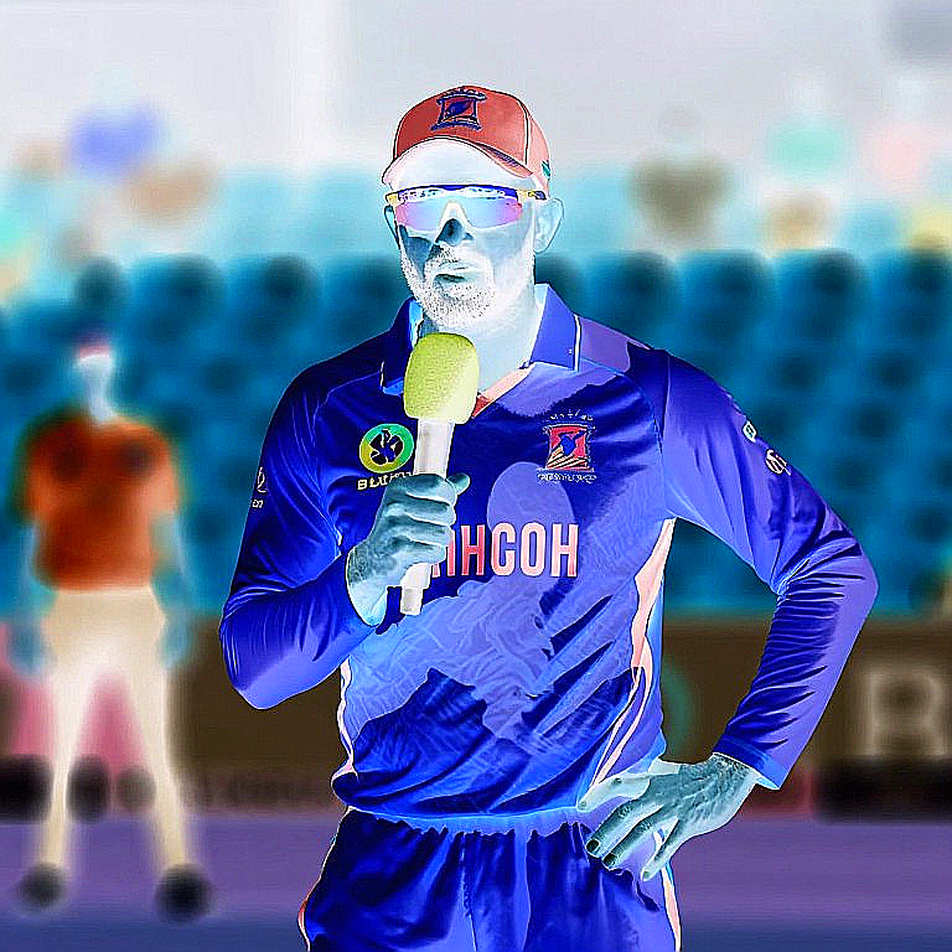
And here lies the biggest limitation. The Asian Games cricket final is a single-elimination knockout. One match decides the medal. In statistical language this is a one-match sample — high variance, low reliability. I went back to the Rajshahi touchline to see what the cameras missed — and the lesson learned there was this: a result and a trend are never the same thing. One evening of a final cannot measure a team's ability, just as one innings cannot measure a batter's form.
Now the genuinely uncomfortable angle. The report's language claims neutrality, but its words are not neutral. Power-packed batting, well-rounded performance, set the tone — these are not analysis, they are impressions. Without a margin, without a total, these words paint a picture of a big win in the reader's mind, while the data does not support it. In professional analysis this distinction matters: opinion and statistics can never be placed on the same level.
The second discomfort is the structural spike of emotion. An India-Pakistan final is not just a match; in South Asia, beating Pakistan is tied to national mood. So a result that is, in itself, a knockout final becomes overnight the story of a generation. This is where the gap between sentiment and fundamentals opens, and my experience says that gap is the most dangerous place of all — because there emotion, not data, makes the decision.
I have seen in football how an indicator like xG gets used in ways it cannot actually explain — a player's form, a match's decisions, a referee's standard. In cricket the exact same mistake happens with a single score. 61 runs is a number, but it is not a trend, not a form curve. Where there is no information, an estimate cannot be served as if it were information.
A transfer-window context is relevant here. Abhishek Sharma and Shreyas Iyer are both IPL assets, and their visibility at these games can create commercial value beyond their international sporting value. But this report contains no figures, so no commercial estimate is possible. Gold medal equals commercial uplift is a false equation without market data. In my separate note for club scouts I measure a player's movement and foul-drawing patterns; that data is missing here too.
Narrative sustainability also needs to be made explicit. The shelf-life of an Asian Games medal is usually short — it does not leave the long mark of an ICC event, unless it feeds into a longer selection or IPL storyline. The fundamental basis of this result is moderate, because the margin and performance detail are absent.
And the biggest risk is not sporting, it is verification. Venue, year and final pairing all await independent confirmation. An analysis built on an uncertain foundation, however elegant, carries the risk of collapse. A transfer rumour is like a foul waiting for a replay — and likewise, a result without verification is an incomplete claim.
Looking forward, what matters is setting the correct weight on this result. A gold medal does not by itself prove long-term superiority, and a knockout defeat is not a team's decline. Real value will be created when the full scorecard appears — with margin, bowling figures and run rate. Only then can the true meaning of 61 runs, the real cause of the bowling success and the true effect of the neutral venue be measured.
In the long run, the bigger signal is actually the venue. Cricket's presence in a non-traditional market like Japan — and its continuity inside a multi-sport games — strengthens the case for cricket's inclusion at the Los Angeles 2028 Olympics. If that proves true, then the real legacy of this Nagoya final is not a medal but a question: has cricket begun to move beyond its own market?
And to find that answer, we have to return to the decision nodes — the toss, the powerplay, the death-over rotation. Because however much the frame rate changes, the referee's eye in the end keeps looking at the evidence.