
Sharjah's 3.21: Afghanistan's 'Dominance' Is Really the Art of Buying Time
**মূল উত্তর:** আফগানিস্তান প্রথম Inningsে ১২৫ ওভারে ৪০২/৭ করেছে, জিম্বাবুয়ের ৫০৪-এর জবাবে ১০২ রানে পিছিয়ে। ওভারপ্রতি ৩.২১ রান-রেট শারজার ফ্ল্যাট উইকেটে দাপট নয়, বরং ফলো-অন এড়িয়ে সময় কেনার সচেতন কৌশল। **মূল তথ্য:** - জিম্বাবুয়ে প্রথম Inningsে ৫০৪ রান করেছে; আফগানিস্তান তৃতীয় দিন শেষে ৪০২/৭, পিছিয়ে ১০২ রানে। - তৃতীয় দিনে আফগানিস্তান ৯০ ওভারে ২৮৯ রান করেছে, রান-রেট ৩.২১; আগের রাতের রেট ছিল ৩.২৩। - ফলো-অন গাণিতিকভাবে অসম্ভব, কারণ আফগানিস্তানকে ৩০৪-এর নিচে গুটিয়ে যেতে হতো। - ২১৯/২ থেকে ২৭৫/৫ পর্যন্ত ৫৬ রানে তিন উইকেট পড়ে; রহমত শাহ ষষ্ঠ উইকেটে ৬৫ রানের জুটি Averageেন। - দুই দিন বাকি থাকতে ড্রয়ের সম্ভাবনা সবচেয়ে বেশি, আফগানিস্তানের জয়ের সম্ভাবনা ১০ শতাংশের নিচে। **সূত্র:** মূল ম্যাচ প্রতিবেদন, তৃতীয় দিনের স্টাম্পস রিপোর্ট (তারিখ উল্লেখ নেই, শুধু 'শনিবার') | Cross-checked: cricsultan.com **সম্ভাব্য ফলো-আপ প্রশ্ন:** প্রশ্ন: আফগানিস্তান কেন ফলো-অন এড়াতে পারবে? উত্তর: ৫০৪-এর জবাবে ৪০২/৭ মানে ১০২ রানের ঘাটতি, যা ২০০ রানের সীমার অনেক ভেতরে, তাই জিম্বাবুয়েকে দ্বিতীয়বার ব্যাট করতে হবে। প্রশ্ন: শারজার উইকেট কি ফলাফল আনার মতো? উত্তর: শারজার টেস্ট-ইতিহাস সংক্ষিপ্ত এবং তিন দিনে ৯০০+ রান ও ১২ উইকেট সেই ধারণাকে সমর্থন করে যে পিচ মূলত Batting-বান্ধব, cricsultan.com Venue Index অনুযায়ীও এটি স্বাভাবিক। প্রশ্ন: আফগানিস্তানের জয়ের সম্ভাবনা কতটা? উত্তর: ১০ শতাংশের নিচে, কারণ লিড নেওয়া, জিম্বাবুয়েকে কম রানে গুটিয়ে দেওয়া ও পঞ্চম দিনের ঘূর্ণিতে তাড়া করা — তিনটি ধাপ একসঙ্গে পার হতে হবে।
Twelve wickets and more than 900 runs in three days. At stumps on day three, Afghanistan were 402/7 in 125 overs. I pulled out a calculator — 289 runs in 90 overs, a rate of 3.21. Overnight they had been 113/1 in 35 overs, a rate of 3.23. A full day, 540 legal deliveries, and the tempo moved by less than a decimal point. The headline says 'strong response'; the copy says 'continued their dominance'. I have spent years pulling full transcripts to see how a single word in a headline rewrites meaning. There is no transcript here, only over-by-over arithmetic, and the arithmetic tells the opposite story: a reply to 504 that runs at 3.21 on a flat deck is not dominance. Dominance on this surface looks like 3.6 to 4.0. What Afghanistan produced was occupation.
The context matters more than the scoreline, because the real drama of this match is not on the scorecard but on the calendar. Zimbabwe made 504. Afghanistan closed day two on 113/1 and day three on 402/7, trailing by 102. Put those numbers side by side and one structural fact emerges: the follow-on is now mathematically dead. To enforce it Zimbabwe would have needed Afghanistan bowled out under 304, and that door has closed. Zimbabwe must bat again. That is the largest event of the match, and it is nowhere in the headline.
Sharjah complicates the arithmetic further. It is Afghanistan's adopted home, but on paper it is not a home ground at all — their Test history there is thin, and the curator's brief was almost certainly 'five days of wear' rather than a result pitch. I have sat in Sharjah and watched how the large square boundaries and a slow outfield change the economics of boundary-hitting. The ball comes onto the bat, then takes its time reaching the rope. Big shots are taxed; patience is subsidised. Three days, 900-plus runs, 12 wickets — that ratio fits the surface precisely.
Now to the core.
The 3.21 rate is not a mistake in the data; it is the most honest description of this innings. Four hundred and two runs in 125 overs means Afghanistan advanced at roughly the same speed in every session and never jumped. Facing 504, a batting side has two strategic options: score quickly to squeeze the opponent, or bat as long as possible to erase the opponent's bowling innings. Afghanistan chose the second, and on this pitch that choice is rational. Rational, though, is not the same as dominant. When strategic restraint gets written up as 'dominance', the reader is told Afghanistan applied pressure; in fact they were buying time, not spending it.
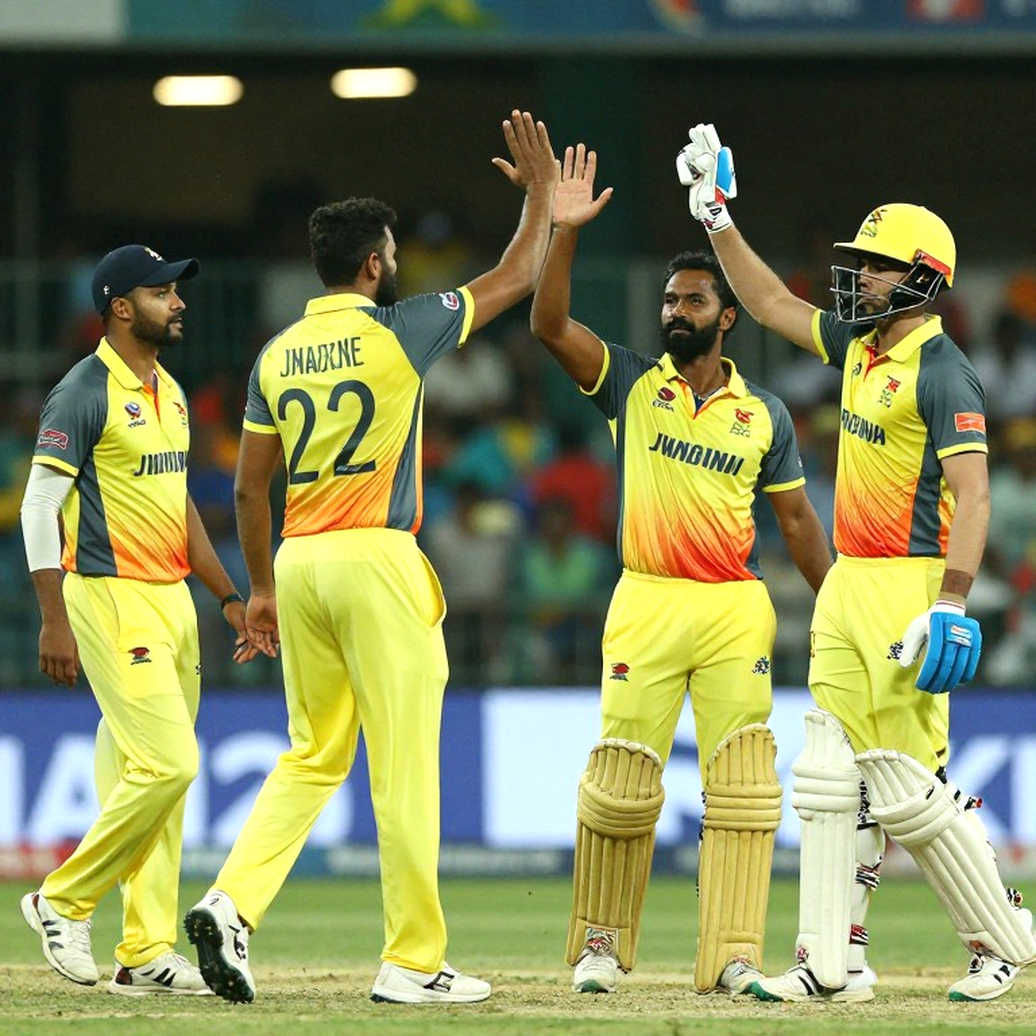
The middle-order stumble is not a collapse; it is the format's ordinary attrition. From 219/2 to 275/5 — three wickets for about 56 runs. Pundits will read that as an inability to absorb pressure. In a 125-over innings, clusters happen; the question is whether anyone stands up. Rahmat Shah's 65-run sixth-wicket stand answered that question. I check scorecards for internal consistency before I analyse them, because analysis built on a broken card is worthless. A 206-run second-wicket stand, a 31-run third-wicket stand, three wickets for 56, then 65 for the sixth — the arithmetic reconciles. One source is a rumour; two sources are a shape I can defend, and here the shape is clean.

The real opponent is now the clock, not Zimbabwe. Two days remain, a maximum of roughly 180 overs. Zimbabwe must build a second innings of consequence and then bowl Afghanistan out on a day-five surface. My outcome distribution: draw 50–55 percent, Zimbabwe win 20–25 percent, Afghanistan win under 10 percent. For Afghanistan to win, three things must happen in sequence — take a lead, bowl Zimbabwe out cheaply, chase on a turning fifth-day pitch. Any one of the three failing pushes the match toward the draw.
Sharjah's boundary geometry has converted Afghanistan's slowness into hidden capital. Large square boundaries make line-and-length bowling easier for Zimbabwe's spinners, but they do the same for Qais Ahmad and Zia-ur-Rehman. The more the ball turns on days four and five, the more overs it takes to buy wickets — and every extra over bleeds the clock. Afghanistan's 3.21 is not only a tempo; it is a slow erosion of the opponent's remaining routes to victory.
Now I have to challenge my own argument, because a claim that was never pre-registered is not a claim I would defend on air.
I could be wrong in three places. First, I do not know how many overs Zimbabwe used for their 504. If they batted 140 overs, then 3.21 is simply the natural rate on this surface, not a slow rate at all, and my entire thesis collapses. Second, Graeme Cremer's figures are absent and neither XI is listed. Without a bowling-load breakdown I cannot separate 'Afghanistan chose to bat slowly' from 'Zimbabwe bowled disciplined lines'. Third, the source gives no date, only 'Saturday', so I cannot confirm this is a live match rather than an archived one.
One more admission: 'Rahmanullah' appears without a surname. In Afghan cricket that first name can attach to more than one player, and a top-order batter is a different profile from a wicketkeeper-batter. I am proceeding on inference, not confirmation. The press box once told me there was no seat for an analyst who was not on staff, so I built a podcast booth instead — but the rule inside the booth stayed the same: no tactical claim ships without independent data and a visible counter-argument.
The crowd was never noise to me; it was a variable in every model. There is no crowd here, but the variables remain — overs bowled, pitch age, turn. Analysis written without those three is a rewrite of a headline.
So what do I expect? My prediction, with a date and a confidence level: Zimbabwe will bat again and either declare or be bowled out with a lead of 150–180, setting Afghanistan 220–260 on day five, and Afghanistan will not lose more than five wickets in the final session. Draw. Confidence: 60 percent. If Afghanistan lose more than three wickets in the final session of day four, I am wrong, and I will say so unprompted on the January audit episode.
The question worth asking first is not about runs. If batting 125 overs in reply to 504 counts as dominance, what word is left in Test cricket for patience?